





















 Login
Login


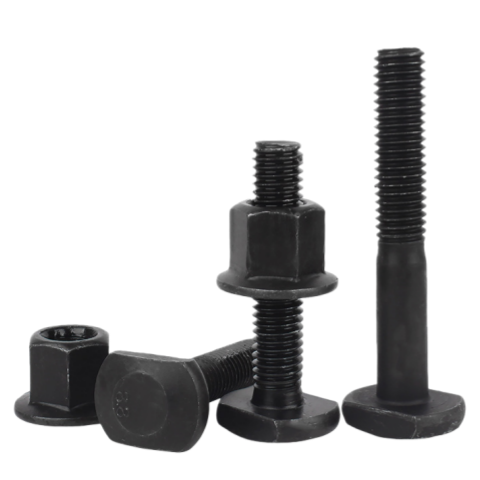
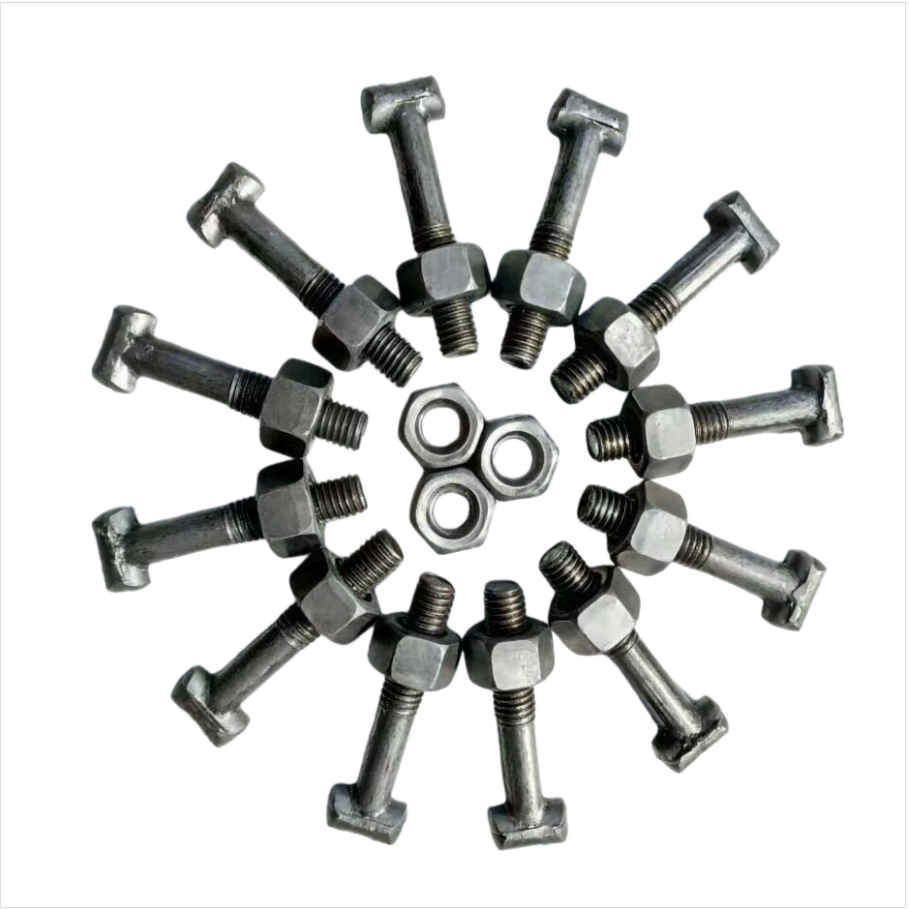
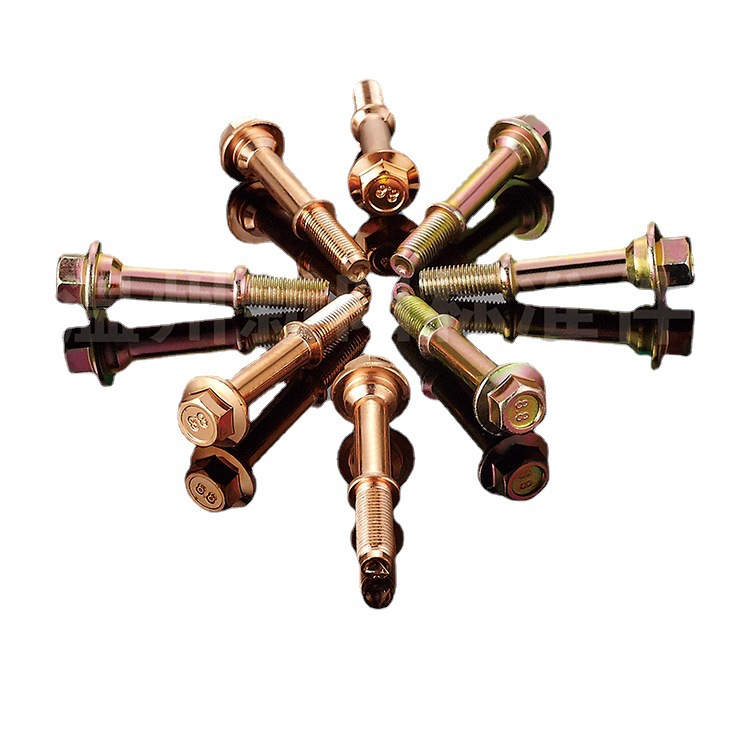

Products
Solutions
Applications





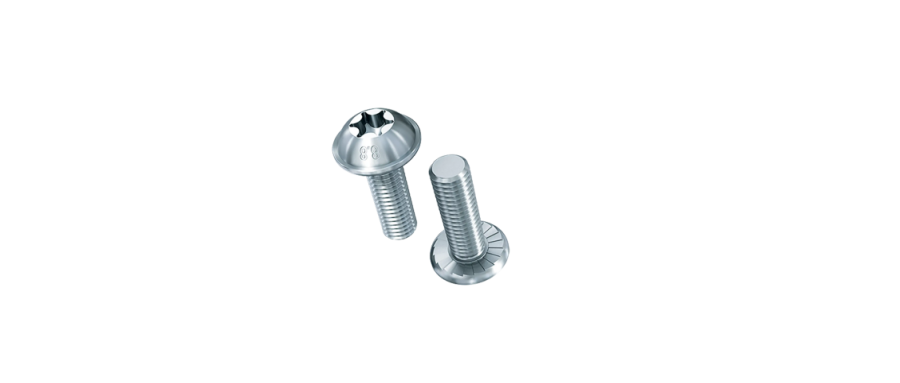
Safety is no small matter; responsibility weighs more than heaven. On the morning of February 27 at 10 a.m., the Ministry of Emergency Management held a press conference. Li Haowen, Director of the Investigation and Statistics Department, detailed China's workplace safety situation for 2025, acknowledging achievements while pointing to deep-rooted problems. The details of the Qinghai Jianzhan Bridge collapse were particularly heartbreaking and served as a deafening safety alarm for the fastener industry. As a fastener industry platform, we understand that although fasteners are small, they are the last line of defense for engineering safety.
Director Li stated that the 2025 safety situation was generally stable. Nine major accidents occurred, killing 129 people, with no extraordinary major accidents. The number of major accidents remained flat year-on-year, while deaths fell 11.6%. Total workplace accidents and deaths fell 8.7% and 7% respectively. However, behind these achievements lie serious hidden dangers.
Li emphasized that every major accident is painful and deserves deep reflection. Problems such as illegal subcontracting, sole reliance on low-bid awards, and multi-layer skimming remain acute, especially in construction and engineering. Procurement loopholes directly push project safety to the edge.
The Qinghai Jianzhan Yellow River Bridge collapse, which killed 16 people, was highlighted as a tragic example. According to the investigation, this was not an accident but an inevitable tragedy caused by layers of responsibility failures. Illegal subcontracting and substandard fasteners were the two fatal factors.
The investigation found that among 21 labor contracts signed for the bridge project, 18 involved illegal subcontracting, a rate of 85.7%. After winning the bid, the legitimate contractor did not organize qualified construction teams but instead broke the project into pieces and subcontracted to multiple unqualified teams lacking technical expertise and safety management capabilities. To cut costs and maximize profits, these teams ignored safety standards, and critical steps such as technical briefings, safety training, and quality control became mere formalities.
Even more fatal was the severe breakdown in material procurement, which became the direct trigger for the collapse. Several substandard screws cost 16 lives. As a critical railway bridge, the Qinghai Jianzhan Bridge required fasteners at key load-bearing locations to undergo strict quality testing to ensure strength, toughness, and corrosion resistance met design standards.
However, in this project, the procurement process was a sham, and quality testing was nonexistent. To reduce procurement costs, responsible parties ignored safety baselines and selected substandard screws. These screws lacked adequate strength and toughness and could not withstand the loads and vibrations during bridge construction. Operating continuously under overload, they eventually fractured, triggering a chain reaction: anchor beams broke, steel cables snapped, and the main arch collapsed. The hundred-meter-long steel arch fell within moments. Sixteen workers performing steel strand tensioning operations high above had no time to react and were killed. Sixteen families were plunged into endless grief.
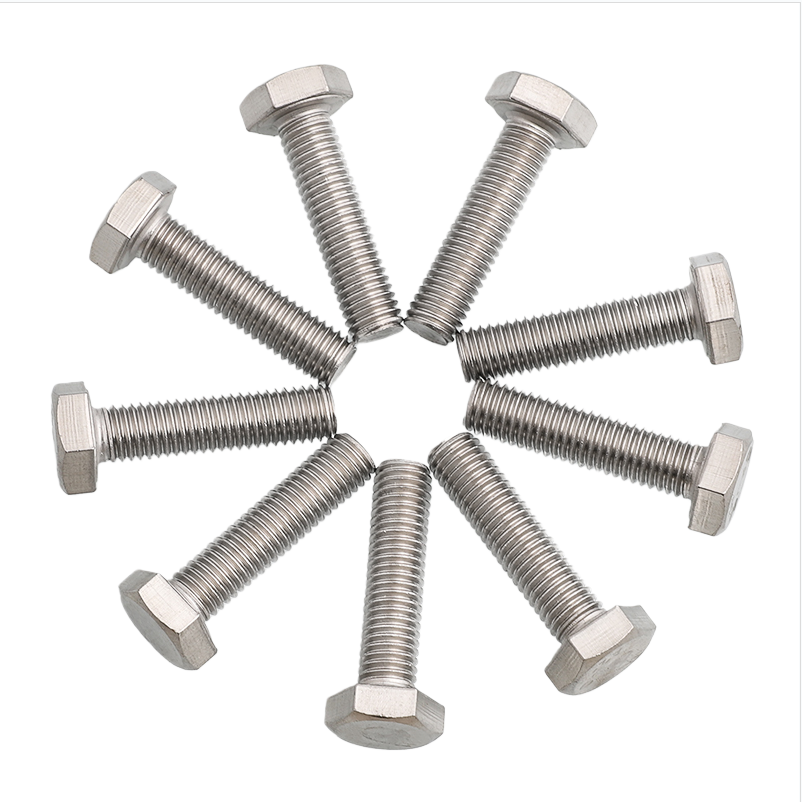
A single small screw, worth virtually nothing compared to the bridge's construction cost of hundreds of millions, became the final straw that brought down the entire structure. This tragedy reflects not only disorder in construction practices but also widespread disregard for the quality of basic components such as fasteners. As the rice of industry, fasteners are core components connecting structures and bearing loads. A single substandard fastener can trigger a systemic safety accident, causing irreversible loss of life and property.
Director Li emphasized that problems such as illegal subcontracting and sole reliance on low-bid awards fundamentally stem from a lack of responsibility and profit-driven corner-cutting. Some companies, in pursuit of maximum profits, sacrifice engineering quality and safety. Multiple layers of subcontracting compress profit margins, ultimately forcing the use of substandard materials and reduced construction standards. Fasteners and other basic components often become the sacrifice.
This phenomenon is not isolated. Similar problems persist in construction and engineering today. Some companies, when sourcing fasteners, excessively focus on price, blindly selecting cheap, low-quality products while ignoring quality and compliance. What seems like cost savings may ultimately result in major accidents and enormous losses. As a fastener industry platform, we have observed that some buyers mistakenly believe that all screws are essentially the same and that lower price is all that matters, ignoring the direct link between fastener quality and engineering safety. This mindset not only harms the buyer but also threatens the safety and stability of entire projects.
In fact, fastener quality directly determines the service life and safety performance of engineering projects. Whether large infrastructure such as bridges, buildings, and roads, or industrial equipment, aerospace, and new energy vehicles, fasteners perform core functions of connecting, fixing, and bearing loads. In construction and engineering, high-strength, high-precision, corrosion-resistant fasteners are critical to ensuring structural stability. Selecting substandard products is equivalent to planting a time bomb that could trigger a safety accident at any moment.
Drawing lessons from the Ministry of Emergency Management press conference and the Qinghai Jianzhan Bridge tragedy, it is clear that standardizing construction processes and upholding fastener quality baselines have become top priorities for workplace safety. On one hand, regulators must strengthen enforcement against illegal subcontracting and low-bid awards, improve oversight systems, and enhance end-to-end monitoring to curb violations at the source while holding companies accountable. On the other hand, fastener industry companies must uphold quality as their core principle, strictly follow national and industry standards, strengthen quality control during production, and prevent substandard products from reaching the market.
For engineering procurers, it is essential to abandon the misguided priority on low price and adopt a quality-first, safety-first sourcing mindset. When sourcing fasteners, prioritize suppliers with proper qualifications, reliable quality, and test reports. Strictly implement inbound inspection procedures to ensure every fastener meets engineering safety requirements. At the same time, strengthen supervision of fastener use during construction to prevent corner-cutting and substitution of inferior products. Build a solid engineering safety defense line across procurement, usage, and inspection.
The stable improvement in China's workplace safety situation in 2025 is the result of collective effort, but there is no room for complacency. The Qinghai Jianzhan Bridge tragedy, with 16 lives lost, taught the entire industry a profound safety lesson. One faulty screw destroyed not only a bridge but also 16 families and public trust in engineering safety.
As a fastener industry platform, we have a responsibility to promote positive industry values, disseminate safety knowledge, and support standardized development. We call on the entire industry to uphold quality baselines and reject substandard fasteners. We call on all engineering and construction companies to abandon corner-cutting, strengthen safety responsibilities, and treat fastener and basic component quality seriously to prevent safety accidents at the source. We call on regulators to strengthen enforcement, strictly investigate illegal activities, and protect public safety.
Safety is no small matter; responsibility weighs more than heaven. Each of the nine major accidents in 2025 reminds us that workplace safety is an ongoing journey. For the fastener industry, we must pursue not only cost-effectiveness but also quality as our lifeline. What we produce and sell is not just a small screw but a weighty safety responsibility. Only through collective effort, upholding quality, fully enforcing responsibility, and standardizing processes can we prevent tragedies like the Qinghai Jianzhan Bridge collapse from recurring, safeguard continued improvement in workplace safety, and ensure every project stands the test of time.
Professional consultant team online, ready to provide solutions for you
Contact NowProducts
Solutions
Applications
Contact
 Contact
 WeChat
Contact: Manager Fan - Tel/WeChat: 135-6073-0094 Email: Flora.Fan@toprecision.com | Manager Ao - Tel/WeChat: 13560729614 Email: Olia.Ao@toprecision.com
Sales Director: Mr. Zhang - Tel: 13510369429 Email: xiaowei.zhang@zcjtech.com
© Copyright 2011 - 2026 Shenzhen Toprecision Precision Technology Co., Ltd. All Rights Reserved.
 粤ICP备2025493240号-1


Cutter Screws
Thread Inserts
Sealing Products
Riveting Products
Locking Products
Direct Assembly
SMT Components
Precision Screws
Screwdriver Bits