
























 Login
Login




Products
Solutions
Applications





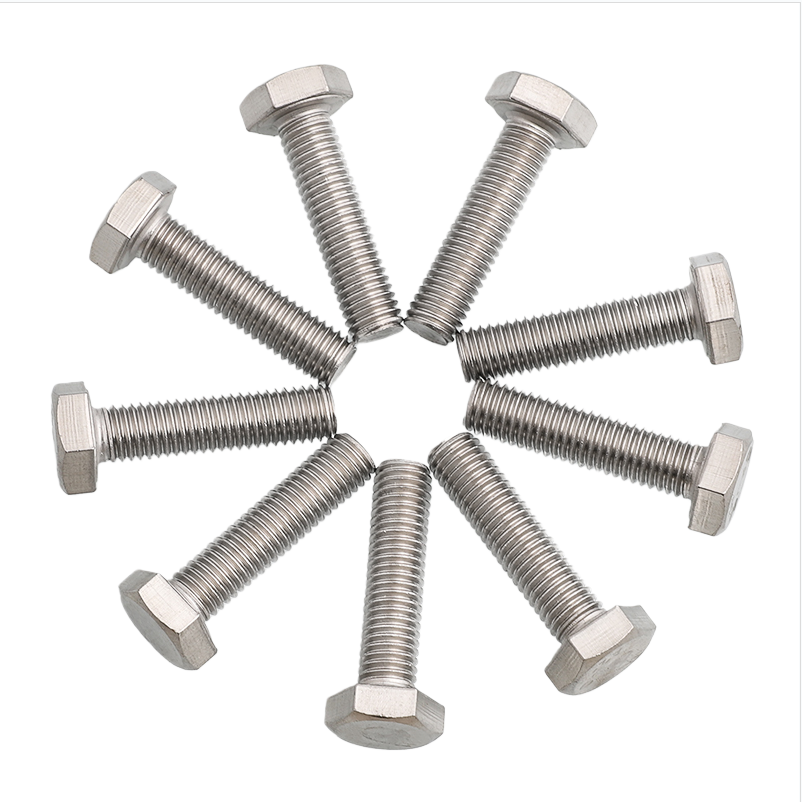
Global trade patterns are shifting rapidly, and new tariff barriers are profoundly affecting fastener export dynamics. Mexico and Canada have recently introduced trade policies imposing significant tariff increases on imports. While these measures have their own policy justifications, they have unexpectedly impacted the Taiwan fastener industry, creating serious challenges for exports to the North American market.
The tariff policy changes began with trade adjustments in the two North American countries. Mexico's tariff increase took effect on January 1, 2026, raising import duties on over 1,400 items from non-FTA countries by 5% to 50%. Fasteners, classified under steel products, were a primary target. Screw and spring screw duties rose from 10% to 30%, with some high-end fasteners facing duties approaching 50%. This policy aims to prevent transshipment of Chinese goods entering North America while encouraging domestic manufacturing and regional supply chains.
Canada's measure is more direct. Since December 26, 2025, a 25% global surtax applies to over 60 steel-derived products, including screws, bolts, and nuts. This applies to all importing countries and is intended to protect domestic steel production. The surtax is included in the VAT base, making the final tax burden significantly exceed 25%.
For Taiwan's highly export-dependent fastener industry, the combined impact of these two policies is severe. Taiwan's fastener sector has cultivated global markets for decades, with North America being a core export destination. Mexico and Canada are not only direct export markets but also critical relay hubs for accessing U.S. automotive, aerospace, and construction supply chains.
Industry data shows Mexico and Canada account for 2.44% and 3.96% of Taiwan's screw exports respectively, totaling 6.4%. While these percentages appear modest, these markets strategically enable Taiwan's access to high-end U.S. supply chains. Taiwan fasteners, offering good value, have entered premium U.S. automotive, aerospace, and construction sectors via Mexico and Canada. The new tariffs have effectively blocked this important channel, severely undermining price competitiveness.
Mexico's tariff increase has caught Taiwan in unintended collateral damage. Taiwan is not an FTA partner with Mexico, so it falls within the tariff hike scope. While Mexico's target is China, Taiwan producers, due to geographic proximity and trade patterns, have become unintended victims. The previous price advantage for Taiwan fasteners in Mexico has been largely erased by 30% or higher duties, forcing some products out of the market entirely.
Canada's 25% surtax poses an even more critical threat. The fastener industry is labor-intensive with thin margins. Most companies maintain gross margins of only 5% to 10%. Canada's 25% surtax, combined with cascading VAT effects, effectively eliminates the entire gross margin for Taiwan fasteners, pushing some companies into loss positions. Industry estimates suggest this tariff policy will impose over 1.3 billion New Taiwan dollars in additional tax burden on Taiwan's fastener industry, directly eroding North American market share. Many small and medium enterprises face order losses and capacity idling.
Beyond direct tariff impacts, Taiwan's fastener exports face long-term challenges from supply chain restructuring. The United States is Taiwan's largest North American fastener market, absorbing about 40% of Taiwan screw exports. As USMCA members, Mexico and Canada enjoy preferential or duty-free access to the U.S. market. This puts Taiwan fasteners at a significant disadvantage compared to local producers in Mexico and Canada and companies from FTA partner countries. Over time, the loss of market share may prove irreversible.
Despite these severe challenges, the Taiwan fastener industry is not without solutions. Experts recommend two main strategies: product transformation and localized production.
Product transformation focuses on moving away from traditional construction screws, a low-value, highly commoditized segment that cannot absorb tariff increases. Experts advise shifting toward high-value segments such as aerospace, medical devices, and electric heavy machinery. These demanding applications require precision, strength, and corrosion resistance, offering much higher unit prices. Aerospace-grade fasteners, for example, can command prices tens or hundreds of times higher than ordinary construction screws, making them viable even with substantial tariffs.
Localized production has emerged as another critical strategy. Major Taiwan fastener manufacturers have begun evaluating factory setups in Mexico to obtain Mexican certificates of origin, thereby circumventing high non-FTA tariffs and regaining access to North American supply chains. Taiwan's Lindward already operates a factory in Queretaro, Mexico, with two-phase investment expansion to serve the U.S. automotive and other high-end markets, setting a benchmark for localized strategy.
For smaller producers facing high barriers to overseas investment due to limited capital and technical resources, experts recommend collaborative approaches. These include joint development of high-end products through partnerships, resource pooling, or cooperation with larger manufacturers to leverage their localized production capacity. Smaller firms can also increase R&D investment to improve precision and quality, creating differentiated competitive advantages while gradually diversifying into European, Southeast Asian, and other overseas markets to reduce North American exposure.
Looking at long-term industry development, the tariff impact, while damaging, also represents an opportunity for transformation. Taiwan's fastener industry has long been trapped in a vicious cycle of low-price competition with limited value addition and weak innovation. This crisis forces the industry to leave its comfort zone, accelerating technology upgrades and product transformation toward high-end, high-precision, and differentiated offerings, ultimately strengthening core competitiveness and enabling sustainable development.
The new tariff barriers demonstrate that no market should be overly concentrated. Both individual companies and the industry as a whole must enhance risk awareness, optimize market diversification, and strengthen technological innovation to remain resilient in a complex global trade environment.
The global fastener industry is at a critical transition stage, with multiple factors, including tariff barriers, technological competition, and supply chain restructuring, testing every company's survival and growth capabilities. For Taiwan fastener producers, confronting the impact, proactively pursuing change, accelerating product transformation, advancing localized production, and strengthening R&D and resource integration are essential to overcoming tariff pressures and regaining competitiveness in North America.
Professional consultant team online, ready to provide solutions for you
Contact NowProducts
Solutions
Applications
Contact
 Contact
 WeChat
Contact: Manager Fan - Tel/WeChat: 135-6073-0094 Email: Flora.Fan@toprecision.com | Manager Ao - Tel/WeChat: 13560729614 Email: Olia.Ao@toprecision.com
Sales Director: Mr. Zhang - Tel: 13510369429 Email: xiaowei.zhang@zcjtech.com
© Copyright 2011 - 2026 Shenzhen Toprecision Precision Technology Co., Ltd. All Rights Reserved.
 粤ICP备2025493240号-1


Cutter Screws
Thread Inserts
Sealing Products
Riveting Products
Locking Products
Direct Assembly
SMT Components
Precision Screws
Screwdriver Bits