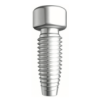
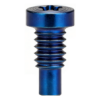
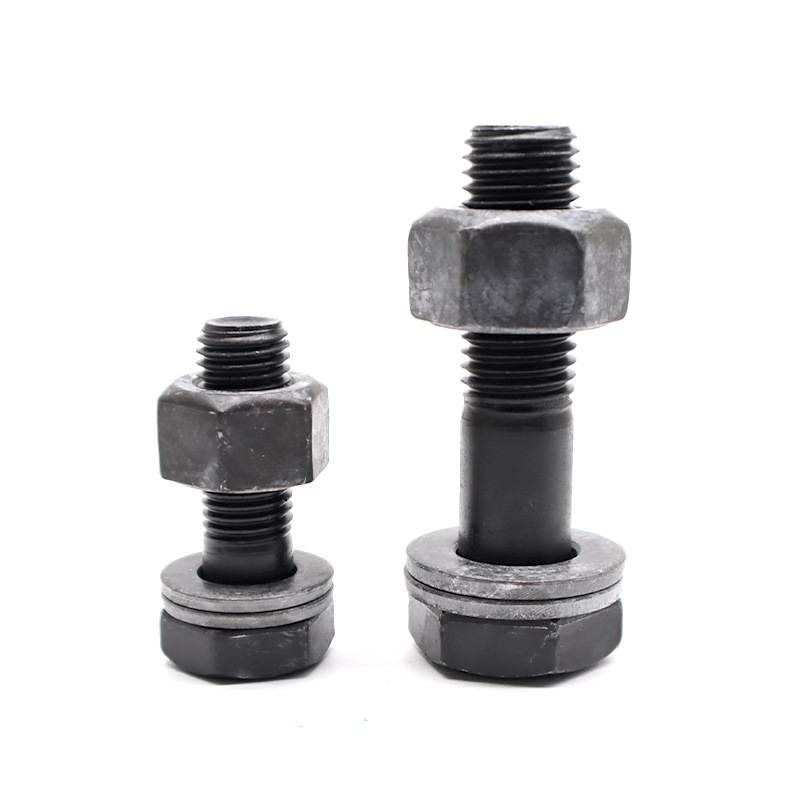
In industrial manufacturing, construction, and automotive equipment, high-strength bolts are core components ensuring structural connection reliability. Among them, Class 10.9 bolts are one of the most widely used specifications due to their optimal balance of strength and toughness. Based on the national standard GB/T 3098.1-2010 ("Mechanical properties of fasteners - Bolts, screws and studs"), this article comprehensively analyzes the mechanical properties, material requirements, heat treatment processes, and application precautions for Class 10.9 bolts, providing a scientific basis for industry selection, usage, and quality control.
1. Core Definition & Grading Basis of Class 10.9 Bolts
The grade marking consists of "number + decimal point + number". For Class 10.9:
-
The first digit "10" represents the nominal minimum tensile strength of 1040 MPa (as clearly stipulated in GB/T 3098.1-2010).
-
The digit after the decimal point "9" represents the yield-to-tensile ratio of 0.9, meaning the minimum yield strength is 936 MPa (1040 MPa × 0.9).
Compared to ordinary grades like 4.8 and 8.8, Class 10.9 bolts offer over 50% higher tensile and yield strengths. They can withstand greater preload and working loads, making them suitable for scenarios requiring high connection strength and reliability, such as steel structure joints, engine block fixing, and wind power flange connections.
2. Key Mechanical Performance Indicators (GB/T 3098.1-2010)
The standard sets clear and rigorous requirements for Class 10.9 bolts. The five core indicators serve as the primary basis for production and testing:
-
Nominal Tensile Strength (σb): Minimum ≥1040 MPa. This is the maximum tensile stress the bolt can withstand before fracturing and is the core indicator of strength. It is tested using a universal testing machine until fracture.
-
Yield Strength (σs): Minimum ≥936 MPa. This is the maximum stress before plastic deformation occurs. Higher yield strength enhances resistance to deformation, preventing loosening under excessive loads.
-
Elongation after Fracture (δ5): Minimum ≥9%. This reflects ductility. Low elongation increases the risk of brittle fracture, especially in low-temperature or vibrating environments.
-
Reduction of Area (ψ): Minimum ≥45%. This measures the reduction in cross-sectional area after fracture, also reflecting ductility. A higher rate indicates better impact and fatigue resistance.
-
Impact Absorbed Energy (KV): Minimum ≥34J at 20℃ (for diameters ≤16mm). This reflects the ability to resist fracture under sudden impact loads.
3. Material & Heat Treatment Requirements
To meet these indicators, material selection and heat treatment must strictly follow national standards:
-
Material Selection: GB/T 3098.1-2010 recommends alloy structural steels, commonly 35CrMoA and 40Cr. These contain chromium and molybdenum, allowing heat treatment to enhance strength and toughness. Ordinary carbon steel (e.g., Q235) cannot achieve Class 10.9 strength. 35CrMoA is the preferred choice, offering tensile strength >1080 MPa and yield strength >930 MPa.
-
Heat Treatment Process: The core process is "Quenching + High-Temperature Tempering" to achieve a uniform tempered sorbite structure.
-
Quenching: Heat blanks to 850-880℃, hold for 30-60 mins (depending on diameter) to fully austenitize, then rapidly cool in oil (oil quenching) to avoid water-cooling cracks. Post-quench hardness reaches HRC 38-42, but ductility is poor.
-
Tempering: Reheat quenched bolts to 380-420℃, hold for 60-90 mins, then slowly cool. This adjusts hardness to HRC 33-39, meeting Class 10.9 strength requirements while significantly improving ductility and toughness.
4. Application Precautions
Even compliant bolts can fail if misused. Key considerations include:
-
Proper Selection: Choose specifications based on load size and environment (high temp, corrosion, vibration). Avoid undersizing or oversizing. For example, wind turbine flanges require high-fatigue Class 10.9 bolts with anti-loosening measures.
-
Preload Control: Strictly adhere to design preload requirements. Insufficient preload causes loosening; excessive preload leads to stretching or fracture. Use torque wrenches or hydraulic tensioners per GB/T 16823.3-1997.
-
Surface Treatment: Select treatments like electro-galvanizing, hot-dip galvanizing, or Dacromet based on the environment. For outdoor steel structures, hot-dip galvanizing is recommended (salt spray resistance >1000 hours).
-
No Reuse: Class 10.9 bolts should not be reused after overload, impact, or disassembly. Even without visible damage, potential plastic deformation compromises reliability and poses safety risks.
5. Quality Inspection & Acceptance Standards
Manufacturers must conduct full-item inspections per GB/T 3098.1-2010 before shipment. Core items include dimensional accuracy (thread tolerance, length, head thickness), mechanical properties (tensile, yield, impact), and surface quality (no cracks, scale, uniform coating).
Purchasers should verify grade markings, material certificates, and test reports, and may perform random sampling tests to ensure compliance.























 Login
Login








 Contact
 WeChat
 粤ICP备2025493240号-1