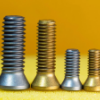
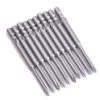
Stainless steel fasteners are widely used in corrosive environments (outdoor, marine, acidic/alkaline) due to their excellent corrosion resistance. However, improper process control during production, processing, or usage can lead to "sensitization," triggering intergranular corrosion. This results in reduced strength and brittle fracture, severely compromising connection reliability.
Based on the national standard GB/T 3098.18-2014 ("Mechanical properties of fasteners - Stainless steel bolts, screws and studs"), this article analyzes the causes and hazards of sensitization. Combined with Yingfeng Zhichengjia's manufacturing expertise, it provides scientific preventive measures to help enterprises select and use stainless steel fasteners correctly, extending their service life.
1. Core Concepts: Sensitization and Intergranular Corrosion
To prevent intergranular corrosion, it is essential to understand that sensitization is the cause, and intergranular corrosion is the result.
-
Sensitization: When stainless steel (especially austenitic grades like 304, 316) is heated or cooled within a specific temperature range (450℃-850℃), carbon combines with chromium to form chromium carbide (Cr23C6). This precipitates at grain boundaries, causing chromium depletion (below 10.5%) in these areas.
-
Intergranular Corrosion: In sensitized stainless steel, chromium-depleted grain boundaries cannot form a dense passivation film. In corrosive environments (salt, acid, humidity), these boundaries corrode preferentially, leading to loss of cohesion between grains, embrittlement, and cracking.
-
Core Hazard: Intergranular corrosion is highly concealed. While the fastener's appearance may remain unchanged, internal grain boundaries are compromised. This drastically reduces tensile strength and toughness, leading to sudden brittle fracture under vibration or impact loads.
2. Common Causes of Sensitization (Production & Usage)
According to GB/T 3098.18-2014, common causes include:
-
Improper Heat Treatment (Primary Cause): Incorrect annealing or solution treatment parameters. For instance, if the solution treatment temperature does not reach 1050℃-1150℃ (recommended by GB/T 3098.18) or holding time is insufficient, precipitated chromium carbides cannot be redissolved into the matrix.
-
Welding Impact: Localized high temperatures (>450℃) during welding create sensitized zones around the weld, becoming weak points for intergranular corrosion.
-
Improper Tempering after Cold Working: Stress-relief tempering performed within the 450℃-850℃ range after cold heading or drawing will induce sensitization.
-
High-Temperature Service: Long-term operation in the 450℃-850℃ range (e.g., boilers, high-temp pipelines) can cause sensitization even if the production process was flawless.
3. Detection Methods (GB/T Standards)
-
Oxalic Acid Etch Test: Suitable for austenitic stainless steel (304, 316). Samples are immersed in oxalic acid; microscopic observation reveals corrosion grooves at grain boundaries if sensitization has occurred.
-
Sulfuric Acid-Copper Sulfate Test: Suitable for various stainless steels. Samples are boiled in the solution; brittleness or cracks indicate intergranular corrosion.
-
Salt Spray Test: Per GB/T 10125-2021. Rapid pitting or cracking concentrated at grain boundaries suggests a high risk of sensitization.
4. Preventive Measures (Production & Usage)
(1) Production Process Control
-
Optimize Solution Treatment: Strictly control temperature (1050℃-1150℃ for austenitic steel) and holding time (30-90 mins depending on size). Use water quenching to cool rapidly, avoiding prolonged停留 in the sensitization range.
-
Standardize Welding: Use low-heat processes like TIG welding. Perform post-weld solution treatment to eliminate sensitization. Ensure welding materials match the fastener base material.
-
Control Cold Working & Tempering: Avoid tempering in the 450℃-850℃ range. Use low-temperature tempering (≤300℃) to relieve stress without inducing sensitization.
-
Strict Testing: Conduct batch sampling for intergranular corrosion detection per GB/T 3098.18-2014 before shipment.
(2) Material Selection Optimization
-
Use Low/Extra-Low Carbon Grades: Opt for 304L or 316L (Carbon ≤0.03%) instead of standard 304. Lower carbon content significantly reduces carbide precipitation and corrosion risk.
-
Use Stabilized Grades (Ti/Nb): Grades containing Titanium (e.g., 321) or Niobium (e.g., 347) form stable carbides with C, preventing chromium depletion. Ideal for high-temperature, corrosive applications.
(3) Usage Environment Control
-
Avoid Sensitization Temperature Range: Ensure operating temperatures avoid 450℃-850℃. If unavoidable, use stabilized or ultra-low carbon grades and inspect regularly.
-
Environmental Maintenance: Regularly clean fasteners in marine/chemical environments. Apply anti-corrosion coatings (e.g., fluorocarbon) to enhance protection.
-
Prevent Galvanic Corrosion: Use insulating washers to isolate stainless steel fasteners from dissimilar metals (carbon steel, galvanized parts) to prevent accelerated corrosion.

















 Login
Login








 Contact
 WeChat
 粤ICP备2025493240号-1