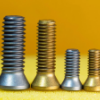
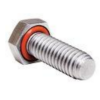
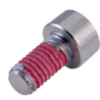
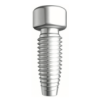
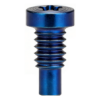
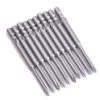
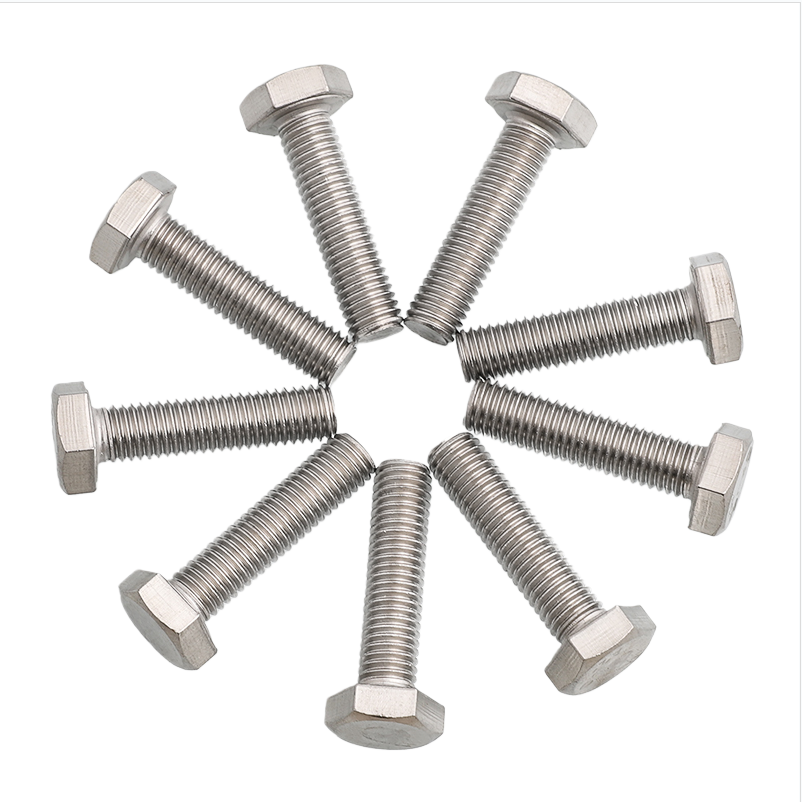
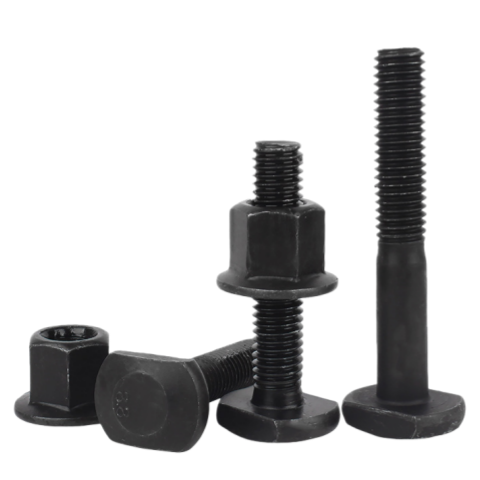
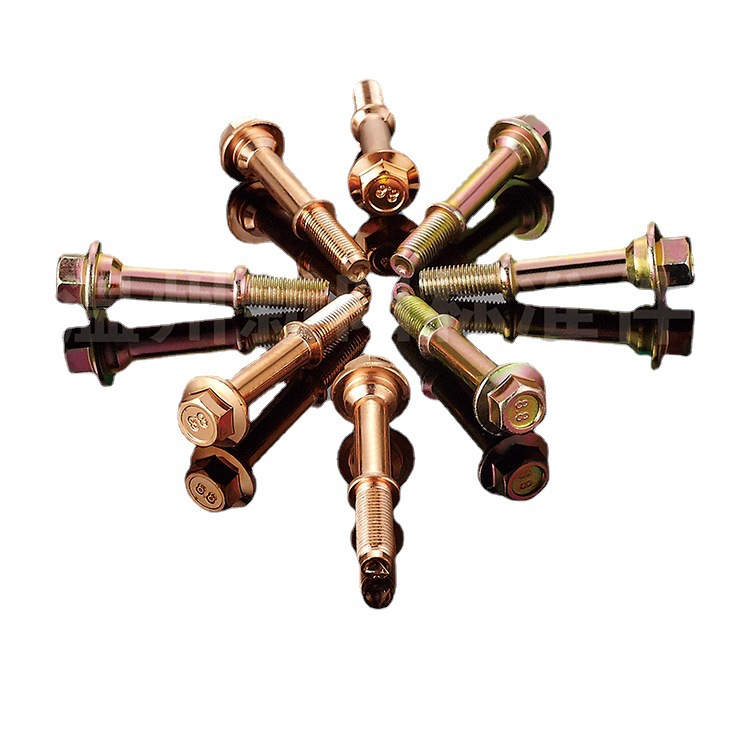
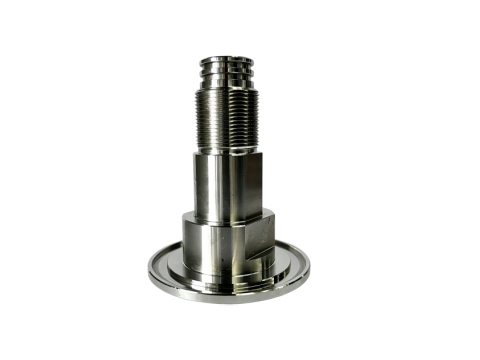
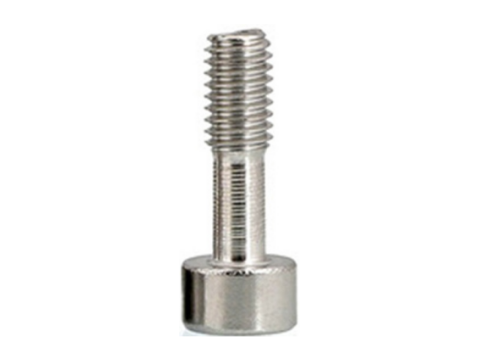
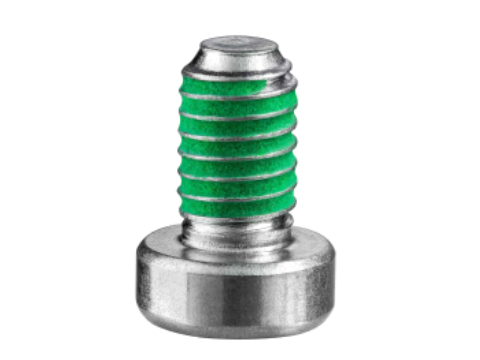
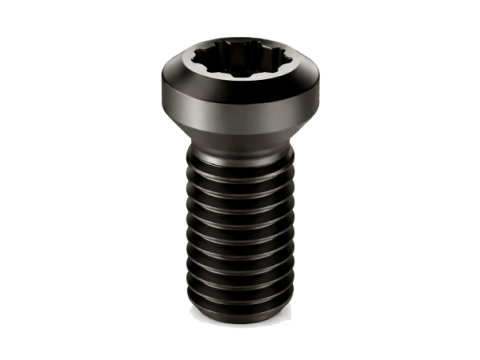
On the automated high-precision wire drawing and cold heading production line at Zhoushan's 7412 Factory, specially treated martensitic stainless steel wire is being continuously processed into precision hexagonal flange bolts. These fasteners are set to be deployed in industrial sectors such as new energy vehicles (NEVs).
Recently, the "Martensitic Stainless Steel Wire Drawing Modification and Cold Heading Forming Technology," listed as a major industrial science and technology project in Zhoushan City, has successfully overcome multiple technical bottlenecks after more than two years of research and development. This breakthrough enables the independent local production of high-end fasteners that were previously prone to cracking, effectively substituting imported products and marking a significant achievement in the upgrading of the local manufacturing industry.
Known as "industrial joints," high-end fasteners are indispensable for critical components like NEV battery packs and engines. Martensitic stainless steel "40Cr10Si2Mo" has become the preferred material for fasteners in high-temperature parts such as engine exhaust pipes and turbocharger systems due to its high strength, heat resistance, and corrosion resistance.
However, the "hard yet brittle" nature of this material has long constrained its mass production. Jiang Yangying, the technical lead of the project, noted, "In the past, using this material to manufacture fasteners often resulted in cracking, making batch production nearly impossible."
In recent years, the Zhoushan Science and Technology Bureau has actively promoted the integration of technological innovation and industrial upgrading by systematically identifying key common technologies in the industry. Through initiatives like "Visiting Hundreds of Enterprises to Solve Problems," staff collected technical needs on the ground, establishing the challenges faced by the 7412 Factory as a major municipal science and technology project. With over 7 million RMB in R&D funding, they have fully advanced the green manufacturing process of "cold wire drawing - cold heading." Notably, this routine enterprise visitation and technical demand collection effort has covered over a hundred local enterprises this year, gathering 118 technical requests, 12 of which have already initiated scientific research.
Jiang Yangying pointed out that the difficulties in cold processing martensitic stainless steel mainly stem from the material's high hardness and poor plasticity, where tiny surface defects easily become crack initiation points. Additionally, traditional lubrication techniques are incompatible, and the material itself struggles to adapt to severe cold deformation. These challenges became the focal points for technological breakthroughs.
To resolve these processing issues, the project team developed a specialized "annealing" process. By precisely controlling the temperature, the material gains optimal toughness and reduced hardness before cold heading. They also upgraded the wire drawing technology by optimizing process parameters to achieve fine surface treatment, and innovated a lubricating skin film technology that forms an efficient protective layer on the material's surface, significantly reducing forming friction.
This series of technical improvements led to a qualitative leap in the material's cold heading performance. Comparative data provided by Jiang Yangying shows that while the tensile strength fluctuation of products made with the original technology reached 44MPa, the new technology stabilizes it within 5MPa. This dramatically improves product consistency, with key performance indicators meeting or surpassing international counterparts.
Meanwhile, Zhoushan has established a collaborative "Technology R&D - Achievement Transformation" mechanism, where technology transfer agencies provide pilot-scale conversion services for teams achieving major results. After conquering key technologies such as wire drawing precision control and heat treatment for cold heading, the Science and Technology Bureau organized experts to provide on-site services. This assisted the 7412 Factory in building a fully automated high-precision wire drawing and cold heading production line, achieving an annual output of 3,000 tons of high-end stainless steel wire and 200 million precision cold-heading parts. This has driven an additional 300 million RMB in annual output value for the enterprise, doubling both capacity and revenue.
Currently, these new high-end fasteners produced in Zhoushan have entered the supply chains of renowned automotive companies like Weichai and Yuchai. They are applied in critical areas such as car engines, battery pack fastening, and seat transmission screw rods. The domestic market share for this product series has reached approximately 70%.
A representative from the 7412 Factory stated, "Our products have successfully replaced imports from international giants like America's ITW and Germany's Wurth, reducing procurement costs for downstream automakers by over 25% and shortening delivery cycles by more than 40%." The new process lowers the cost per unit by 0.76 RMB compared to traditional hot forming, saving 3 million RMB annually and generating over 5 million RMB in yearly project profit. Most notably, it achieves 100% material utilization with zero waste generated throughout the entire production process.
Since the beginning of this year, Zhoushan's fastener industry has seen an increase of 47 million RMB in profits and taxes. New products have secured orders from prominent car manufacturers like BYD and NIO, with supply cycles shortened by over 40%.
A representative from the Zhoushan Science and Technology Bureau commented, "This technological breakthrough is not just progress for a single enterprise, but a vivid example of Zhoushan's manufacturing industry transitioning towards high-end, intelligent, and green development. Moving forward, we will continue to focus on critical links in the industry, driving more traditional manufacturing enterprises to transform into new quality productive forces and injecting new momentum into regional industrial upgrading."











 Login
Login








 Contact
 WeChat
 粤ICP备2025493240号-1