






















 Login
Login



Products
Solutions
Applications





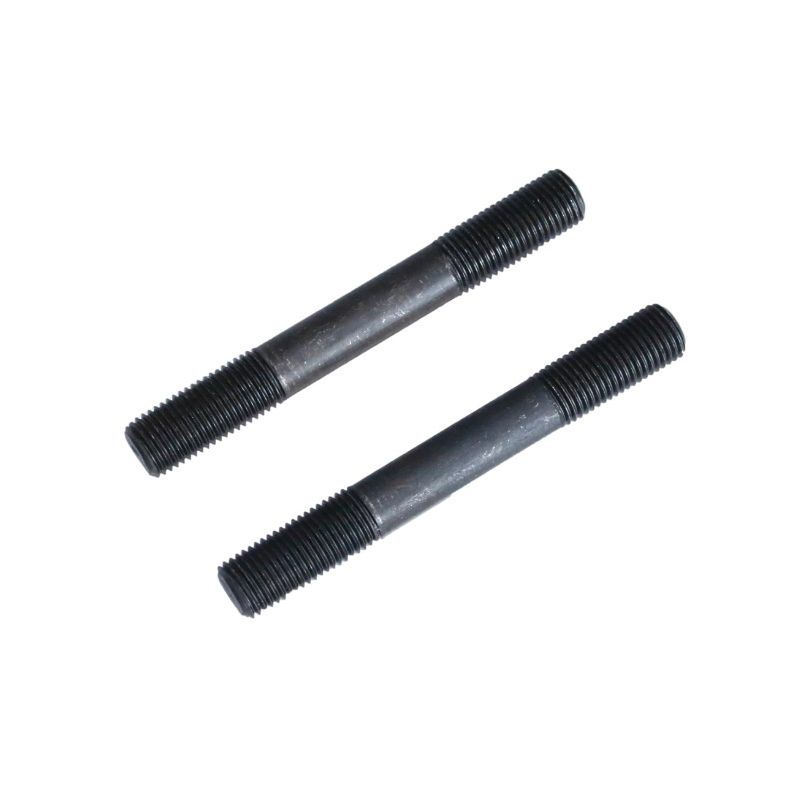
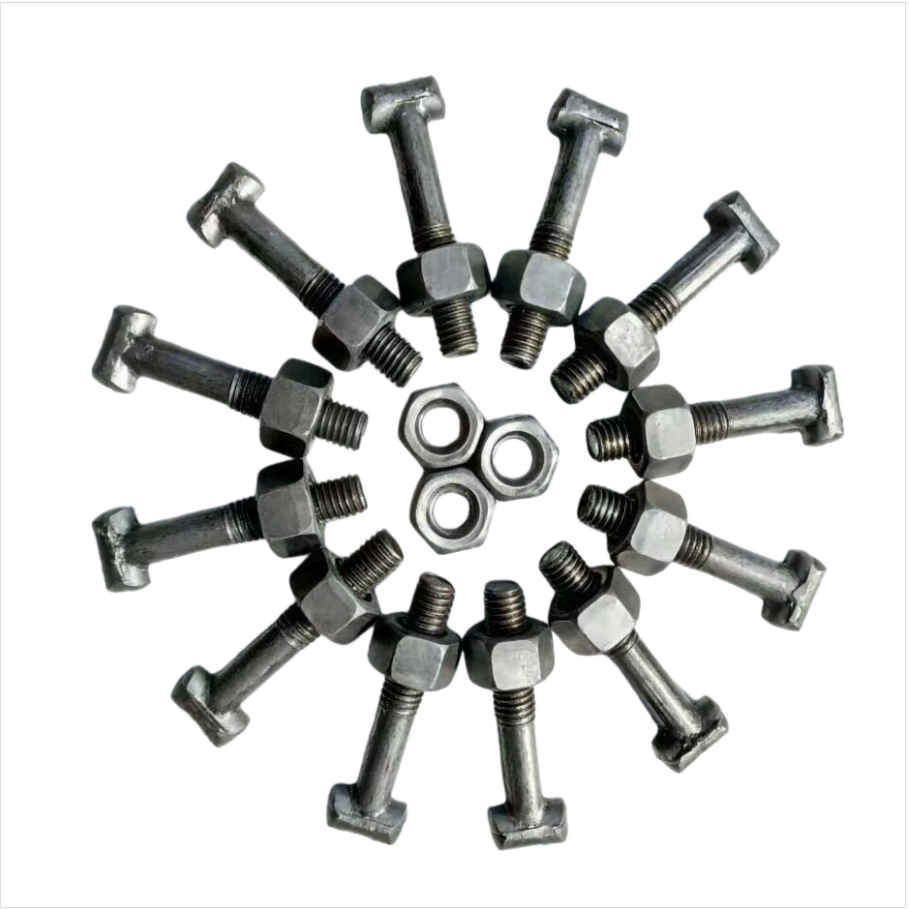
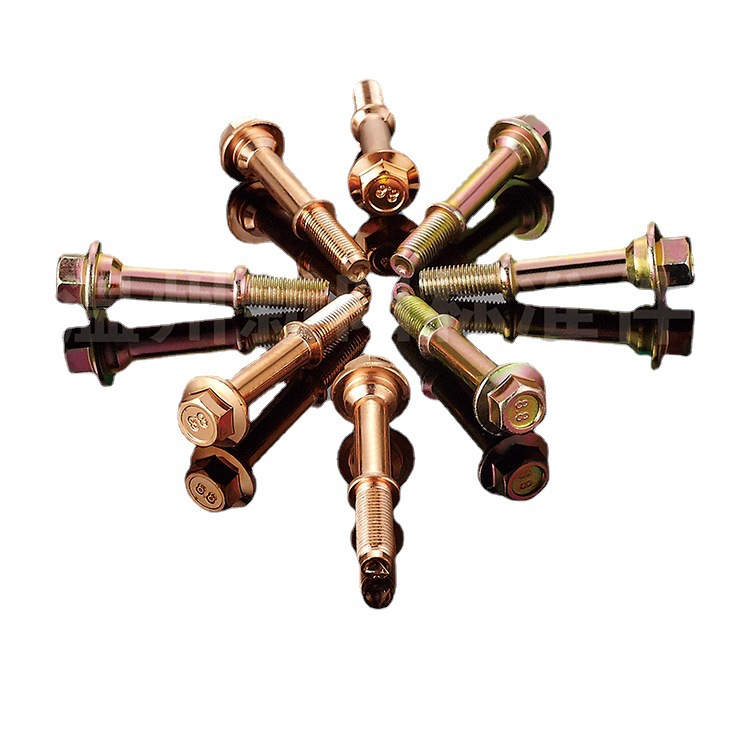
In the fastener market, stud bolts consistently occupy an important position. They can be found in heavy-duty component connections for mining machinery, steel structure fixation for bridges, and critical assemblies in automotive engines. Many people wonder: bolts are also widely used, so why do so many critical applications prefer stud bolts? The answer lies in the structural differences between the two and how well they match actual operating conditions.
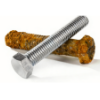
The core structural feature of a stud bolt is quite distinctive. Both ends are machined with precision threads, while the middle section is unthreaded. The diameter of this middle section may be equal to the thread diameter or, in some designs, thinner to better distribute stress. This seemingly simple structure reflects a deep adaptation to connection requirements. A standard bolt, by contrast, has a thread on one end and a bolt head on the other, relying on the bolt head and a nut for fixation. Its structure is relatively simple. These structural differences directly determine how each performs under complex operating conditions.
Connection stability is the key advantage that sets stud bolts apart. In applications subject to intense vibration and alternating loads, such as automotive engine cylinder block-to-head connections, the limitations of standard bolts are clear. The contact area between the bolt head and the base material is limited, and long-term vibration can easily cause preload decay, leading to loosening. Stud bolts, however, have threads at both ends that engage tightly with both the base material and the nut, while the middle section distributes the load evenly and reduces stress concentration. In mining crushers, for example, high-frequency vibration during operation requires standard bolts to be checked and retightened 3 to 4 times per month. After switching to stud bolts, the inspection interval can be extended to once per quarter, with a 70% reduction in loosening failures.
Ease of assembly and lower maintenance costs make stud bolts better suited to the maintenance needs of complex equipment. Standard bolts require sufficient space around the bolt head for wrenches or other tools, making assembly and disassembly extremely difficult in dense or confined spaces. Stud bolts have no bolt head. Both ends are threaded, allowing them to be tightened and removed with nuts using a socket wrench, even in tight spaces. A typical example is inside an automotive transmission, where components are densely packed. Using stud bolts increases assembly and disassembly efficiency by 40% and significantly reduces the rate of part damage during repairs.
Adaptability to complex operating conditions is another reason stud bolts are irreplaceable. In large steel structures such as bridges and towers, connection points often bear combined loads of axial tension and transverse shear. On standard bolts, the transition between the threaded portion and the shank tends to create stress concentration, which can lead to fatigue fracture over time. Stud bolts, however, can have the diameter and length of the middle shank adjusted to optimize stress distribution. The dual-thread fixation at both ends also improves shear resistance. In a cross-sea bridge steel structure application, stud bolts increased the fatigue life of connection points by more than double compared to standard bolts.
Material efficiency also gives stud bolts a cost advantage. The bolt head on a standard bolt consumes additional material and requires multiple manufacturing steps, resulting in higher material waste. The middle section of a stud bolt can be precisely sized based on load requirements without an extra bolt head structure. Material utilization with stud bolts is 15% to 20% higher than with standard bolts. For large enterprises purchasing in bulk, long-term use can significantly reduce material costs.
Of course, standard bolts still have advantages in simple assemblies and light-load applications. Stud bolts are not always the right choice. As a fastener website operator, our role is to provide precise selection recommendations based on each customer's specific operating conditions: load type, available space, maintenance frequency, and other factors. Going forward, we will continue to compile the latest technical developments and application cases for stud bolts, helping customers choose the right fastener and improve equipment reliability.
Professional consultant team online, ready to provide solutions for you
Contact NowProducts
Solutions
Applications
Contact
 Contact
 WeChat
Contact: Manager Fan - Tel/WeChat: 135-6073-0094 Email: Flora.Fan@toprecision.com | Manager Ao - Tel/WeChat: 13560729614 Email: Olia.Ao@toprecision.com
Sales Director: Mr. Zhang - Tel: 13510369429 Email: xiaowei.zhang@zcjtech.com
© Copyright 2011 - 2026 Shenzhen Toprecision Precision Technology Co., Ltd. All Rights Reserved.
 粤ICP备2025493240号-1


Cutter Screws
Thread Inserts
Sealing Products
Riveting Products
Locking Products
Direct Assembly
SMT Components
Precision Screws
Screwdriver Bits