














 Login
Login



Products
Solutions
Applications





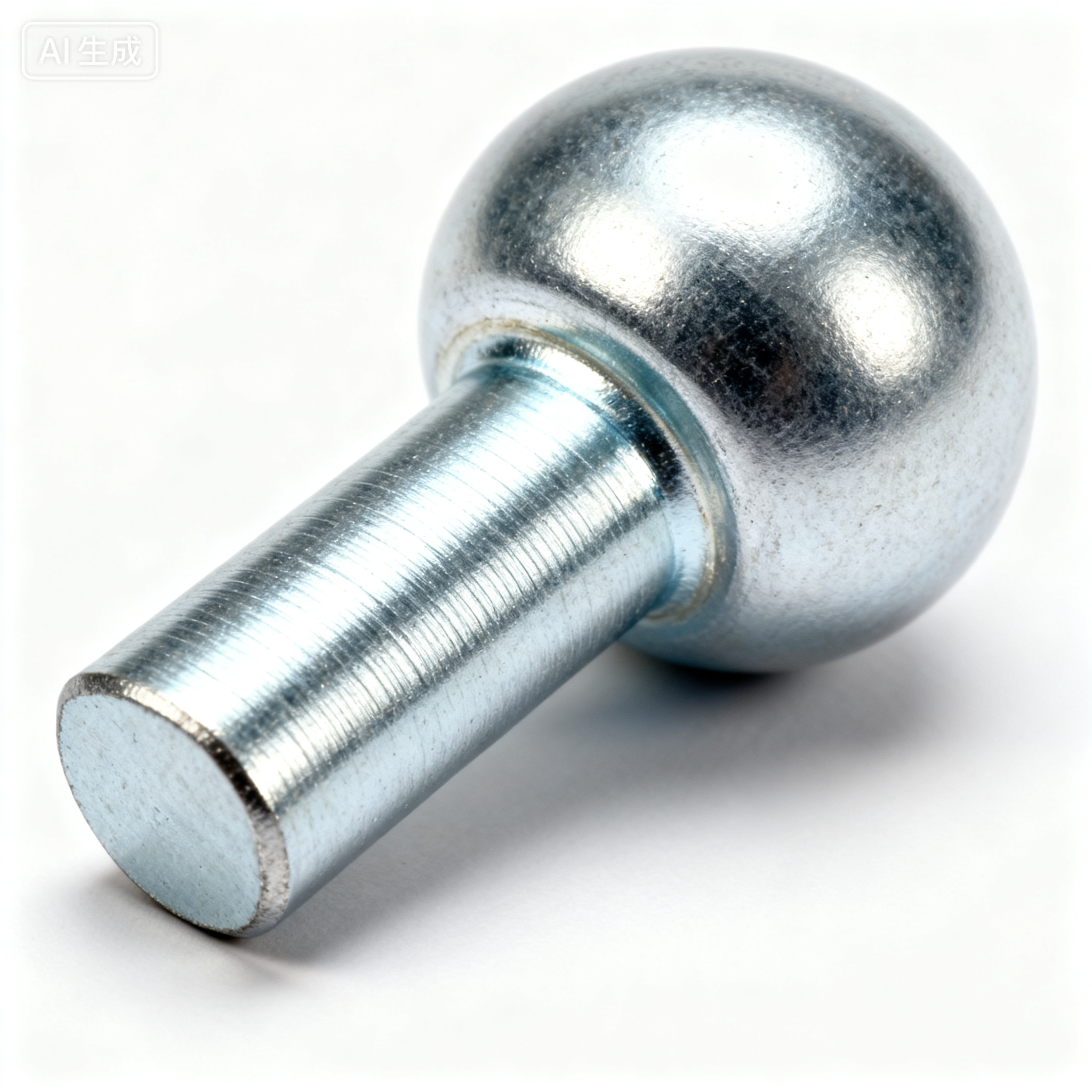
In the wave of automotive transformation toward lightweighting and electrification, lightweight materials such as aluminum alloys, carbon fiber reinforced plastics (CFRP), and engineering plastics are increasingly used. Traditional fastening methods (e.g., welding, conventional threaded connections) are revealing limitations — welding can easily cause deformation and strength loss in lightweight materials, while threaded connections on plastic parts are prone to thread stripping and loosening. Thermal fastening technology, with its dual connection characteristics of "mechanical interlocking plus interfacial fusion," has become a core joining solution for premium automakers like Mercedes-Benz, BMW, and Audi. It is widely used in key areas such as battery packs, body frames, and interior modules, solving the joining challenges of lightweight materials while meeting the high requirements of precision and reliability in premium manufacturing.
The core principle of thermal fastening technology (also known as heat staking / thermal insertion) is to create a molecular-level fusion between the fastener and the substrate through controlled heating, achieving an "embedded" robust connection. In essence, the fastener (typically a thermoplastic or surface-coated metal component) is heated to its melting temperature using specialized equipment and inserted under controlled pressure into a pre-drilled guide hole in the substrate. The heating process not only melts the fastener itself but also locally softens the contacting surface of the substrate, forming a molten mixing zone at the interface. After cooling and solidification, this mixing zone becomes a metallurgical bond layer, while features such as anti-slip ribs, barbs, or threads on the fastener surface create mechanical interlocking with the substrate. The final result is dual fastening through "mechanical locking + metallurgical fusion." This method breaks the limitation of "physical contact" in traditional mechanical connections, achieving strength far beyond simple threaded or snap-fit fastening.
Compared with traditional fastening techniques, thermal fastening offers key advantages that precisely match the high-end needs of premium automakers.
High and stable connection strength: Tests show that the tensile shear strength of thermal fastening is 30%-50% higher than conventional threaded connections. In vibration tests on Mercedes-Benz EQ series battery packs, after 100,000 high-frequency vibrations, the preload retention rate at thermally fastened points remained 92%, far above the 75% for threaded connections.
Significant lightweighting effect: Fasteners for thermal fastening can be made of lightweight engineering plastics such as PA66 + glass fiber or PPS, achieving 40%-60% weight reduction compared to metal bolts. BMW iX's carbon fiber body reduced fastener weight by approximately 8 kg using this technology, directly contributing to extended driving range.
Excellent sealing: After melting and solidification, the interface is seamless, achieving waterproof and dustproof ratings up to IP67, suitable for sealing requirements in new energy vehicle battery packs and motor compartments.
Strong compatibility: It can be applied to engineering plastics (PA, PP, ABS), lightweight metals (aluminum, magnesium alloys), and even carbon fiber composites, solving the challenge of joining dissimilar materials.
Suitability for automated production: A single operation takes only 10-30 seconds. At Audi's Changchun plant, the interior module production line using thermal fastening technology achieved an assembly cycle of 60 seconds per unit, a 40% efficiency improvement over conventional threaded assembly.
The process details of thermal fastening directly determine connection quality. Premium automakers have developed a standardized process framework based on application experience.
Step 1 – Substrate preparation: The surfaces to be joined must be cleaned to remove oil, dust, and oxide layers, which could interfere with fusion. Pre-drilled guide hole dimensions must be precisely controlled, typically 0.1-0.3 mm smaller than the fastener's nominal diameter, ensuring proper pressure transmission during insertion while providing space for melted material.
Step 2 – Fastener selection: Mercedes-Benz, BMW, and Audi customize fasteners according to substrate characteristics. For engineering plastics, thermoplastic fasteners (e.g., PA66 + 30% glass fiber) are used, with heating temperatures matching the substrate's melting point (200-250°C). For aluminum alloys, metal fasteners coated with a hot-melt adhesive layer are used, where the coating's melting point is below that of the substrate, ensuring it melts first to form the bonding layer.
Step 3 – Heating and insertion: Two primary methods are used: electric heating and ultrasonic heating. Electric heating uses a built-in heating element in the fastener to raise the temperature to the set point (±5°C tolerance), suitable for thick-walled substrates. Ultrasonic heating uses high-frequency vibration (20-40 kHz) to generate localized heat with short heating times (1-3 seconds), suitable for thin-walled or heat-sensitive materials. Insertion force is adjusted based on substrate hardness: 5-8 kN for plastic substrates, 10-15 kN for metal substrates, ensuring precise insertion depth (tolerance ≤0.1 mm).
Step 4 – Cooling and solidification: Natural cooling or forced air cooling to room temperature. Cooling time is about 15-30 seconds for plastic substrates and extends to 30-60 seconds for metal substrates, ensuring complete crystallization of the fused interface.
Step 5 – Quality inspection: Methods include pull testing (to verify shear strength), metallurgical microscopy (to observe interfacial fusion), and X-ray inspection (to identify internal voids). Mercedes-Benz's outgoing inspection standard requires destructive testing on 5% of randomly sampled products from each batch to ensure no connection failures.
The differentiated applications of Mercedes-Benz, BMW, and Audi highlight the adaptability of thermal fastening technology.
Mercedes-Benz focuses on battery pack enclosures for new energy models. The battery packs in EQE and EQS use a hybrid connection of PA + glass fiber enclosures and aluminum frames. Conventional bolts often suffer sealing failure due to vibration, while the integrated connection formed by thermal fastening solves sealing issues and withstands static loads from battery weight. Tests show it can resist impact loads of up to 500 kg without loosening.
BMW emphasizes lightweight bodies. The connection between CFRP body panels and aluminum frames in the iX avoids welding (which can damage carbon fibers due to high heat). Thermal fastening achieves damage-free joining, reducing weight by 15% while increasing body torsional rigidity by 20%, improving driving stability.
Audi extends the technology to interior and electronic modules. In A6L and Q4 e-tron models, interior door panels and center console modules use thermal fastening between PP trim panels and metal brackets. Compared to snap-fit connections, this avoids loosening and rattling after long-term use, and the assembly process leaves no scratches, preserving interior appearance integrity. For onboard electronic modules, the technology is used to secure circuit board brackets, eliminating electromagnetic interference issues associated with conventional threaded connections and improving electronic system stability.
The development trends of thermal fastening technology closely align with the upgrading direction of the automotive industry. As the demand for lightweighting and high reliability intensifies in new energy vehicles, this technology is penetrating from premium automakers into mid-range models, while processes continue to improve.
Intelligent control: BMW has introduced intelligent thermal fastening equipment with real-time monitoring of temperature and force, using AI algorithms to adjust process parameters, reducing defect rates to below 0.01%.
Material innovation: Mercedes-Benz is collaborating with fastener manufacturers to develop carbon fiber-reinforced thermal fastening fasteners, further improving connection strength and weight reduction.
Expanded applications: The technology is now being used for fixing hydrogen storage tanks in hydrogen fuel cell vehicles, addressing sealing and vibration challenges under high pressure.
For the fastener industry, the spread of thermal fastening technology brings new market opportunities. Companies should focus on two areas: first, customized development — researching and developing suitable fastener materials (e.g., high-temperature-resistant PPS fasteners, conductive metal-coated fasteners) tailored to different automakers' substrate characteristics and load requirements; second, process support — providing full-service support from fastener design and process parameter optimization to inspection, meeting automakers' needs for automated production.
Thermal fastening technology has become the preferred choice for premium automakers because it precisely solves key industry pain points: lightweighting, sealing, and joining of dissimilar materials. From Mercedes-Benz's battery packs to BMW's carbon fiber bodies and Audi's interior modules, applications of this technology have validated its reliability and advanced capabilities. As the automotive industry undergoes deep transformation toward premium, electrified vehicles, thermal fastening technology will become a core competitive strength for the fastener industry, driving the upgrade from "traditional mechanical fastening" to "integrated fusion joining."
Professional consultant team online, ready to provide solutions for you
Contact NowProducts
Solutions
Applications
Contact
 Contact
 WeChat
Contact: Manager Fan - Tel/WeChat: 135-6073-0094 Email: Flora.Fan@toprecision.com | Manager Ao - Tel/WeChat: 13560729614 Email: Olia.Ao@toprecision.com
Sales Director: Mr. Zhang - Tel: 13510369429 Email: xiaowei.zhang@zcjtech.com
© Copyright 2011 - 2026 Shenzhen Toprecision Precision Technology Co., Ltd. All Rights Reserved.
 粤ICP备2025493240号-1

Cutter Screws
Thread Inserts
Sealing Products
Riveting Products
Locking Products
Direct Assembly
SMT Components
Precision Screws
Screwdriver Bits