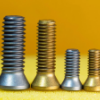
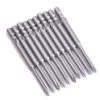
As fundamental yet critical mechanical components in the global manufacturing supply chain, fasteners involve a key corporate decision-making point regarding sourcing selection: imported or domestic products. This choice affects not only direct procurement costs, but also long-term equipment reliability, maintenance cycles and overall supply chain resilience. This article systematically compares imported and domestic fasteners in terms of design standards, material processes, performance characteristics, cost structure and service support, providing objective and comprehensive references for engineers, purchasers and managers.
I. Differences in Design and Standard Systems
Imported fasteners, mainly sourced from Europe (DIN, EN), North America (ANSI/ASME, SAE) and Japan (JIS), are developed based on well-established and mature standard systems. These specifications precisely define dimensions and tolerances, while imposing strict requirements on material chemical composition, mechanical properties, testing methods and surface treatment processes. Clear grading and verification procedures are specified for high-strength bolts regarding hardness, tensile strength, yield strength and low-temperature impact toughness. Adhering to a reliability-oriented design philosophy, imported standards adopt conservative safety factors with sufficient performance redundancy.
Domestic fasteners primarily follow GB (National Standards), which have been largely aligned with international ISO standards in recent years through equivalent or modified adoption. For general-purpose and medium-strength fasteners, GB-compliant products achieve dimensional interchangeability and basic performance close to imported counterparts. Nevertheless, domestic standard systems still have room for improvement in advanced technical dimensions, including special fasteners for extreme working conditions such as ultra-high temperature, ultra-low temperature and high-cycle fatigue scenarios, as well as sophisticated specifications for material purity, microstructure control and long-term durability verification. Some high-end imported products are manufactured in accordance with stringent internal enterprise standards exceeding industry universal norms.
II. Material and Core Process Differences
Material quality determines the ultimate performance of fasteners. High-end imported fasteners adopt extremely strict raw material control. For high-strength alloy steel, precise chemical composition control is mandatory, together with clear specifications for smelting processes such as secondary refining and vacuum degassing, as well as the morphology, grade and grain size of non-metallic inclusions. This ensures high material purity, uniform microstructure and excellent comprehensive mechanical properties. In heat treatment, imported products adopt computer-accurately controlled continuous heat treatment production lines with protective atmosphere such as nitrogen to prevent surface decarburization and oxidation, achieving high batch consistency and stable Cpk performance indicators.
Domestic fastener materials have achieved remarkable progress, with leading domestic manufacturers capable of stably supplying high-quality wire rods. However, gaps remain in the batch stability and metallurgical consistency of premium special materials, such as corrosion-resistant high-temperature alloys and ultra-high-strength steels for extreme service conditions. In terms of heat treatment processes, although leading domestic enterprises are equipped with advanced equipment, the overall industry level is uneven. Some small and medium-sized manufacturers rely on empirical operation with insufficient process control, potentially causing uneven hardness, insufficient toughness and residual internal stress.
III. Performance and Reliability Differences
Performance evaluation must be combined with actual application scenarios. For conventional industrial fields including general mechanical equipment, building structures and consumer products, qualified domestic fasteners complying with GB standards fully meet operational requirements with reliable static strength and anti-loosening performance.
The core gaps lie in extreme performance and long-term reliability:
1. Fatigue Strength
For components under alternating loads such as engine connecting rods and wind turbine main shafts, fastener fatigue life is critical. High-end imported fasteners deliver superior fatigue limits through high-purity materials, optimized thread rolling processes that form streamlined fiber structures to reduce stress concentration, and professional surface strengthening treatments such as shot peening.
2. Batch Consistency
Imported brands benefit from comprehensive performance databases and ultra-high batch stability. Designers can adopt precise safety factors without excessive margin reserves for unpredictable performance fluctuations, enabling structural optimization and lightweight design.
3. Environmental Adaptability
In harsh environments such as chemical and marine corrosion, high-temperature engine and boiler conditions, and low-temperature LNG and polar equipment scenarios, imported special fasteners possess abundant long-term verification data and reliable application records for material formulations and protective coatings including Dacromet, zinc impregnation and special powder coatings.
IV. Comprehensive Trade-off Between Cost and Value
Imported fasteners feature significantly higher direct procurement costs due to premium materials, intensive R&D investment, precise process control and brand premium, together with hidden costs including tariffs, international logistics and long lead times.
Domestic fasteners offer prominent price advantages, flexible delivery and rapid response. However, cost evaluation requires full lifecycle cost (LCC) analysis rather than unit price comparison alone:
Quality Cost: Fastener failure may cause equipment shutdown, product recalls and safety accidents with catastrophic losses. High-reliability imported fasteners deliver prominent risk prevention value for critical positions.
Inventory Cost: The flexible and fast supply of domestic fasteners effectively reduces safety inventory pressure.
Maintenance Cost: Long-life and maintenance-free fasteners reduce inspection frequency and spare parts consumption.
Cost-effective domestic fasteners are the rational choice for non-critical connections with low failure impact. For core equipment, safety-related components and scenarios with high maintenance costs or severe failure consequences, high-cost verified imported fasteners represent a more economical and responsible long-term solution.
V. Supply Chain and Service Support
The supply chain of imported fasteners is vulnerable to international politics, exchange rate fluctuations and shipping uncertainties, posing potential interruption risks. Although imported brands provide professional technical support, their response efficiency is often limited.
Domestic fastener supply chains are independently controllable and highly responsive. Leading domestic enterprises, represented by Shenzhen Yongjing Precision Technology Co., Ltd., continuously increase R&D investment and upgrade technical service capabilities, providing one-stop support including model selection guidance, scheme optimization and on-site problem solving. This localized and efficient service constitutes a core competitive advantage.
Conclusion
The comparison between imported and domestic fasteners is not a simple superiority judgment, but a trade-off between high reliability & premium performance and high cost-performance & flexible supply. The optimal sourcing strategy is graded by application criticality:
Critical Core Connections: Prioritize performance, reliability and batch consistency, adopting high-end imported brands or premium products manufactured by leading domestic enterprises with import-equivalent standards.
Important Connections: Adopt qualified and stable domestic branded fasteners with strict incoming inspection.
General Connections: Cost-effective domestic standard fasteners are the optimal choice.
With the upgrading of China’s manufacturing industry, outstanding domestic enterprises represented by Yongjing Precision are continuously narrowing the core technology gap with imported high-end products through technological innovation and lean management, delivering comprehensive solutions with equivalent performance, lower cost and better localized services. The future trend will witness expanding market share of domestic fasteners in high-end applications, realizing industrial transformation from import substitution to technological leadership.



















 Login
Login








 Contact
 WeChat
 粤ICP备2025493240号-1