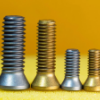
In engineering design, equipment manufacturing and project procurement, fastener selection often faces a dilemma. Pursuing higher performance, premium materials and reliable brands inevitably increases costs. Meanwhile, stringent cost pressure tends to drive the selection of the lowest-price solutions, which may trigger potential quality risks. Achieving an optimal balance between fastener cost and performance represents core engineering and management wisdom. From the perspective of full life-cycle cost (LCC), this paper systematically elaborates practical strategies and methods to realize such balance.
I. Beyond Unit Price: Establish Full Life-Cycle Cost (LCC) Philosophy
The primary principle of cost-performance balance is to break the trap of unit price-oriented thinking. The total ownership cost of fasteners far exceeds the initial procurement expense (CAPEX). The full life-cycle cost covers six dimensions:
1. Acquisition Cost: Procurement price, transportation fee, tariff and warehouse management cost.
2. Installation Cost: Assembly labor hours, tool investment or rental fees (manual, pneumatic and hydraulic torque tools), and expenses for lubricants and adhesives.
3. Operational Cost: Losses caused by unplanned shutdowns, capacity reduction and energy efficiency decline due to fastener failure.
4. Maintenance Cost: Labor, spare parts and equipment downtime costs for regular inspection, retightening and replacement.
5. Failure Cost: Expenses arising from product recalls, legal liabilities, safety accident compensation and brand reputation damage caused by fastener failure, which can be extremely high and even incalculable.
6. Disposal Cost: Environmental treatment fees for fasteners with special materials or coatings after product scrapping.
Accordingly, premium fasteners with 30% higher initial purchase price but substantially lower failure probability and doubled service life deliver far lower overall LCC than low-cost alternatives. The first step of cost-performance balance is to conduct scenario-based risk assessment, estimate potential losses from different failure consequences, and determine a reasonable performance investment threshold.
II. Hierarchical Performance Demand: Avoid Over-Design and Under-Design
Not all connection points require aerospace-grade fasteners. Scientific cost-performance balance relies on refined hierarchical management of performance requirements.
1. Critical Connections (Safety/Function-Critical)
Failure of these connections may cause personal safety accidents, complete equipment malfunction or massive property loss. Typical applications include engine main bearing bolts, wind turbine tower bolts and bridge structural bolts. For critical positions, performance and reliability take absolute priority. Verified high-performance materials such as alloy steel and superalloys, standardized premium manufacturing processes and 100% non-destructive testing are adopted. The cost here essentially serves as risk hedging investment.
2. Important Connections
Failure leads to equipment shutdown and high maintenance costs, without causing immediate safety hazards or catastrophic consequences, such as pump housing bolts, gearbox cover bolts and key bracket fasteners. Qualified products from reputable manufacturers that meet national standards are recommended with sufficient safety margins to balance reliability and economy.
3. General Connections
Failure only affects local functions with low maintenance difficulty and cost, including equipment cover screws, internal cable clamp fasteners and decorative fixing parts. Cost is the core consideration here. Standard fasteners with competitive prices are preferred on the premise of satisfying basic clamping, anti-loosening and anti-corrosion requirements.
III. Technical Approaches to Realize Cost-Performance Balance
After clarifying performance hierarchy, the following technical methods can optimize costs while meeting operational requirements:
1. Optimized Material Selection
Avoid material performance waste: Grade 4.8 ordinary steel screws fully meet the fixing demands of control cabinet panels, while Grade 12.9 alloy steel screws cause unnecessary performance surplus. Conversely, using ordinary galvanized steel instead of stainless steel in corrosive outdoor environments leads to premature rusting, higher maintenance frequency and increased long-term costs.
Adopt composite solutions: For extra-long bolts, composite material design is feasible, such as high-strength alloy steel shanks matched with weldable low-carbon steel heads. For highly corrosive scenarios, carbon steel fasteners with high-performance coatings (DACROMET, zinc-aluminum coatings) deliver equivalent protection life at a lower cost than stainless steel.
2. Process and Standard Optimization
Prioritize standard parts: Standard dimensions and performance grades eliminate additional customized costs such as mold opening, special testing and prolonged lead time. Mature design solutions are based on standardized fastener applications.
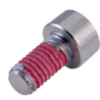
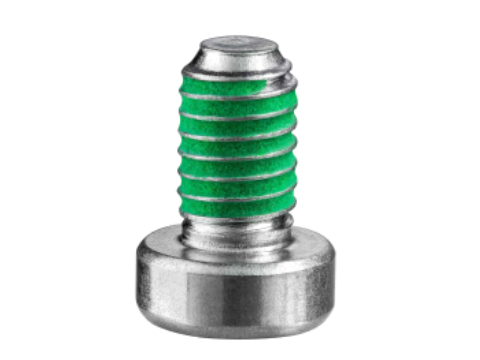
Optimize process routes: For non-load-bearing connections, self-tapping screws or rivets replace the traditional "drilling + tapping + bolting" process to reduce costs and improve efficiency. For anti-loosening positions, evaluate cost-effective solutions including pre-coated adhesive screws, spring/flat washer combinations and double nuts, instead of blindly adopting expensive all-metal locking nuts.
Match surface treatment with service environment: Select coatings precisely according to atmospheric corrosion grades (C1-C5). For indoor dry environments (C1), natural finish or black oxide treatment is sufficient. For humid industrial outdoor environments (C4), thick plating or DACROMET coating is required. Excessive high-grade protection leads to redundant cost waste.
3. Supply Chain and Inventory Strategy
Standardization and centralized procurement: Unify fastener specifications within groups or projects to reduce part varieties, obtain bulk purchase discounts and simplify inventory management.
Strategic supplier collaboration: Cooperate with technology-driven suppliers such as Yongjing Precision. In addition to competitive pricing, professional value analysis/value engineering (VA/VE) services are available to reduce system costs through structural optimization, process upgrading and material replacement while maintaining or improving product performance.
IV. Digital Tools and Data-Driven Support
Modern cost-performance balance is empowered by digital technologies:
FEA Finite Element Analysis: Accurately simulate mechanical conditions of connection positions, avoid over-designed safety coefficients based on experience, and optimize fastener specifications and quantities precisely.
Cost Modeling Software: Evaluate material, process and procurement volume factors to compare the total cost of different solutions efficiently.
Quality Data Feedback: Collect on-site fastener failure modes and service life data, feed back to design and selection procedures, and realize data-based and practical cost-performance decision-making.
Conclusion
Fastener cost-performance balance is not a simple compromise, but a systematic and precise methodology based on system analysis, risk management and value optimization. It requires interdisciplinary capabilities for engineers and purchasers and a full life-cycle cost mindset. The core lies in accurate demand definition, hierarchical performance management, reasonable technical optimization and professional supply chain collaboration.
As a professional fastener solution provider, Shenzhen Yongjing Precision Technology Co., Ltd. engages in in-depth cooperation with customers. We deliver not only high-quality fastener products, but also professional selection analysis, customized cost optimization schemes and full technical support. We help customers achieve optimal cost-performance balance at every connection point and create maximum comprehensive value for engineering projects and equipment operation.



















 Login
Login








 Contact
 WeChat
 粤ICP备2025493240号-1