Rail transit, including high-speed railways, subways, light rails and trams, serves as the backbone of public transportation closely related to social safety and massive passenger flow. Vehicle and track facilities operate under harsh service conditions characterized by long-term high-frequency vibration, mechanical impact, extreme temperature fluctuations and complex chemical environments. As critical structural connectors, fastener failures may cause component detachment, structural instability and even severe safety accidents. Therefore, rail transit fasteners must comply with an extremely rigorous and complete safety standard system covering design, manufacturing and full inspection procedures. This paper systematically interprets the core requirements and implementation guidelines of the standard system.
I. Special Operational Challenges for Rail Transit Fasteners
1. Long-Term High-Frequency Vibration and Impact Loads
Continuous vibration generated during vehicle operation and periodic impact loads from rail joints and turnouts easily induce loosening and fatigue fracture of ordinary fasteners.
2. Complex Dynamic Alternating Loads
Connections between car bodies and bogies, as well as between rails and fastener systems, bear compound alternating stresses of tension, compression, bending and shear, posing high fatigue risks.
3. Strict Environmental Resistance Requirements
Rail transit equipment endures extreme temperature cycles from severe cold to high heat, corrosion caused by rain, snow, deicing agents and cleaning chemicals, as well as humid and contaminated operating environments inside tunnels.
4. Ultra-High Fire Safety Standards
Internal vehicle materials and key components must meet stringent flame retardancy, low smoke and non-toxicity (HL-grade) requirements. Fasteners and their surface coatings or non-metallic accessories are also subject to unified fire safety specifications.
5. Ultra-Long Service Life and Low-Maintenance Demand
Rail transit products are generally designed for a service life of more than 30 years with limited maintenance windows, requiring fasteners to deliver exceptional reliability and long-term durability.
6. Integrated Balance of Lightweight and High Strength
Fasteners must achieve precise balance between structural safety and lightweight design to reduce overall energy consumption without compromising operational stability.
II. Interpretation of the Core Safety Standard System
Rail transit fasteners are mainly governed by European Standards (EN), International Standards (ISO) and national railway specifications such as China Railway TB Standards, among which EN standards are widely recognized and adopted globally.
1. EN 15048-1 & EN 14399-1 Series
These are the foundational standards for non-preloaded and preloaded high-strength structural bolt assemblies. Beyond basic performance specifications, they define standardized design methodologies. The core principle is to ensure connection rigidity, anti-loosening performance and superior fatigue resistance by systematically controlling the matching performance of bolts, nuts, washers and accurate installation preload. The EN 14399 HV system covers strength grades from HV 8.8 to HV 14.10, imposing far stricter requirements on yield strength, toughness and delayed fracture resistance than conventional fastener standards.
2. EN 45545 Series (Railway Vehicle Fire Protection)
As a mandatory fire safety standard, EN 45545 classifies the flammability, smoke density and toxicity of materials (including fastener coatings and non-metallic accessories) into hierarchical levels (R1–R26, HL1–HL3) based on fire risks, operating scenarios and vehicle types. Fasteners applied inside carriages must provide qualified test reports to meet corresponding HL-grade fire safety requirements.
3. EN 50125 Series (Railway Equipment Environmental Conditions)
This standard specifies classification criteria and test requirements for railway equipment under varied climatic, mechanical (vibration and impact) and chemical environments. Rail transit fasteners must pass authoritative tests including EN ISO 9227 salt spray testing and EN 61373 vibration testing to verify environmental adaptability and long-term stability.
4. ISO 898-1 & ISO 3506 Series
As basic mechanical performance standards, they define strength grades for carbon steel and stainless steel fasteners (e.g., 8.8, 10.9, A2-70, A4-80), serving as the fundamental basis for material selection and performance verification.
5. Application-Specific Special Standards
Scenarios including rail fastening systems (EN 13481 series), pantograph mounting and bogie component connections comply with more refined and stringent industry-specific specifications.
III. Key Performance Requirements and Implementation Approaches
1. Superior Anti-Loosening Performance
Systematic Solution: Adopt EN 14399-compliant HV system assemblies with precisely matched bolts, nuts and hardened washers. Install via Direct Tension Indicators (DTI washers) or precise torque-angle control technology to achieve uniform and stable preload, forming friction-locked connections and fundamentally preventing loosening caused by lateral sliding.
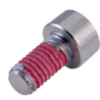
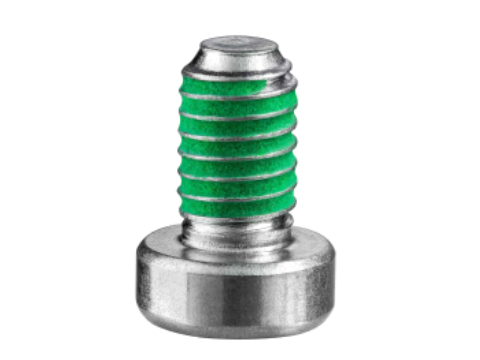
Auxiliary Anti-Loosening Measures: Apply qualified microcapsule pre-applied thread adhesives complying with EN ISO 10964 or high-performance locking washers under permitted working conditions.
2. Excellent Fatigue Resistance
Material and Process Optimization: Adopt vacuum-degassed high-purity steel materials. Thread rolling forms continuous surface compressive stress, while precision quenching and tempering heat treatment generates uniform fine-grained tempered sorbite microstructure.
Structural Optimization: Enlarged fillet transition design reduces stress concentration coefficients.
Precision Installation: Accurate preload ensures tight fitting of connected components and significantly reduces alternating stress amplitude on bolts.
3. Reliable Corrosion Resistance
Material Matching: Select surface treatments including hot-dip galvanizing with sealing, zinc-aluminum coating (DACROMET) and sherardizing, or adopt A4/A5 stainless steel according to atmospheric corrosion grades (C1–C5). Stainless steel fasteners are strictly evaluated to avoid chloride-induced stress corrosion cracking.
Coating Quality Control: Coating thickness and adhesion must fully comply with standards such as EN ISO 10684, and pass cross-cut testing and other authoritative verification procedures.
4. Full Traceability and Batch Consistency
Full-Lifecycle Batch Management: Establish complete traceability records covering raw material heat numbers, production processes and finished product delivery.
Standard Compliance Certification: Obtain third-party type approval certifications such as German DB certification and China CRCC certification, as well as IRIS quality system certification. Continuous supervisory audits ensure consistent performance of mass-produced products.
IV. Compliance Procedures and Supplier Selection Criteria
1. Design and Type Selection
According to actual working conditions including load spectrum, vibration characteristics and environmental grade, OEMs and design institutes select standardized fastener systems complying with EN/ISO/TB specifications, and clarify clear requirements for strength grade, surface coating and anti-loosening performance.
2. Supplier Qualification Audit
Qualified suppliers must establish a sound quality management system (IRIS certification is a core advantage) and possess complete production qualifications and type test reports for rail transit fastener products.
3. First Article Inspection (FAI)
Conduct comprehensive testing on initial samples covering dimensional accuracy, mechanical properties, chemical composition, coating performance and functional indicators to fully meet drawing and standard specifications.
4. Mass Production and Incoming Inspection
Suppliers shall provide material certificates and batch performance test reports for each delivery. Buyers implement standardized incoming inspection procedures with sampling inspection or full inspection on key indicators to ensure batch stability.
Conclusion
The safety standard system for rail transit fasteners features systematic design, preventive control and verifiable management. It forms a closed-loop reliability guarantee chain covering design concept, material application, precision manufacturing, quality control and standardized installation.
Shenzhen Yongjing Precision Technology Co., Ltd. fully recognizes the extreme safety requirements of the rail transit industry. We strictly manufacture high-performance fasteners in accordance with EN, ISO, TB and other authoritative standards, and provide customers with full-process compliance solutions including standard interpretation, type selection support, sample verification and mass production quality assurance. We deliver solid technical and product support for the safe and efficient operation of global rail transit systems.


















 Login
Login








 Contact
 WeChat
 粤ICP备2025493240号-1