With the booming demand for lightweight structures in aerospace, new energy vehicles, high-end sports equipment and other fields, advanced composite materials represented by carbon fiber reinforced polymer (CFRP) have been widely applied. However, composite materials feature anisotropy, low interlaminar strength and high brittleness, making mechanical fastening one of the weakest and most complex links in structural design. Traditional metal connection theories are no longer applicable, giving rise to unique technical challenges. This paper deeply analyzes the core difficulties of composite fastening and discusses targeted solutions.
I. Structural Characteristics of Composites and Root Causes of Connection Challenges
Composites are composed of high-strength fibers (carbon fiber, glass fiber, etc.) and tough resin matrices, with mechanical properties completely different from homogeneous metals:
1. Anisotropy: High strength and modulus along the fiber direction, while extremely weak in the vertical direction.
2. Layered Structure with Low Interlaminar Strength: Layers are bonded only by resin, resulting in poor delamination resistance.
3. High Brittleness and Low Ductility: Lack of plastic deformation capability and extreme sensitivity to notches and stress concentration.
4. Differential Electrical Conductivity: CFRP is electrically conductive and prone to galvanic corrosion when in contact with dissimilar metals.
These inherent characteristics lead to prominent technical difficulties in composite fastening applications.
II. In-Depth Analysis of Core Technical Difficulties
1. Machining Damage and Hole-Edge Delamination
Problems: During drilling, axial thrust and cutting force easily cause fiber tearing, matrix cracking and interlaminar delamination at the hole exit. As the most common and harmful initial defect in composite connections, delamination severely reduces static strength and fatigue performance.
Solutions
Specialized Drilling Tools and Processes: Adopt diamond or carbide three-point drills and core drills with optimized point angles, feed rates and spindle speeds. Apply backup support plates to prevent exit spalling. Optimize drilling sequences via pre-drilling followed by reaming to final dimension.
Process Monitoring: Use automatic feed drilling equipment for stable parameter control. Conduct ultrasonic C-scan inspection to detect post-drilling delamination defects when necessary.
2. Hole-Edge Stress Concentration and Complex Failure Modes
Problems: Composites exhibit much higher stress concentration coefficients than metals. Typical failure modes include net-section tension failure, shear failure, bearing failure and delamination propagation. Micro-cracks expand rapidly without obvious early warning due to material brittleness.
Solutions
Interference Fit Connection: A core technology to improve fatigue life of composite connections. Fasteners with slight oversize diameter (1%–3% interference rate) generate uniform radial compressive stress around holes, reducing stress amplitude under alternating loads and inhibiting crack initiation and propagation. The interference magnitude must be precisely controlled to avoid excessive installation damage and delamination.
Layup Optimization: Increase the proportion of ±45° plies around holes to enhance shear and bearing resistance, and add 0° surface plies to improve tensile performance.
Specialized Washers: Adopt large-area, high-hardness titanium alloy or composite washers to disperse contact pressure and improve bearing strength.
3. Galvanic Corrosion and Material Compatibility
Problems: CFRP acts as a cathode relative to most metals. When paired with active metal fasteners such as aluminum and magnesium in humid electrolyte environments, accelerated anodic metal corrosion occurs, namely galvanic corrosion.
Solutions
Material Matching: Prioritize titanium alloy fasteners (e.g., Ti-6Al-4V) with potential close to CFRP for optimal comprehensive performance. Alternatives include A286 high-temperature alloys and stainless steel. Direct contact between CFRP and aluminum alloys or conventional cadmium/zinc-plated steel is strictly prohibited.
Electrical Isolation: When incompatible metals must be used, isolate contact surfaces via insulating washers, bushings or coatings (polyurethane, epoxy) to block galvanic circuits.
4. Fastener Pull-Out and Clamping Force Control
Problems: Due to low interlaminar strength, excessive bolt clamping force easily causes indentation or pull-out damage to composite laminates under bolt heads and nuts.
Solutions
High-Lock Fasteners and Large-Foot Fasteners: Adopt 100° countersunk heads or large-bearing-area protruding heads to reduce specific pressure by expanding contact areas.
Precise Preload Control: Require higher-precision clamping force regulation than metal connections to ensure tight fastening without panel crushing. Torque-angle method or direct hydraulic tensioning is commonly adopted.
Bushings and Lockbolts: In single-shear connections, lockbolt installation minimizes extrusion damage to composite panels.
5. Thermal Expansion Mismatch
Problems: Significant differences in coefficient of thermal expansion (CTE) between composites and metal fasteners generate additional thermal stress under drastic temperature changes, leading to connection loosening or composite damage.
Solutions: Increase safety margins in structural design to compensate for thermal stress. For extreme service environments, adopt customizable low-CTE composite fasteners such as carbon fiber/titanium hybrid bolts.
III. Design and Selection Trends of Composite-Specific Fasteners
Targeting the above difficulties, composite fastening technology has evolved multiple specialized designs:
1. Hybrid-Structure Fasteners: Titanium alloy shank paired with polymer composite head to achieve lightweighting and insulation performance.
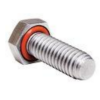
2. Integrated Sealing Fasteners: Built-in O-rings eliminate the need for sealing grooves on composite surfaces, ideal for fuel tanks and other sealed structures.
3. Blind Fastening Solutions: Single-sided installable fasteners such as blind titanium high-lock bolts and composite blind thread bushings for confined assembly spaces.
4. Intelligent Fasteners: Embedded optical fiber sensors for real-time strain monitoring and damage diagnosis of connection joints.
Conclusion
Composite fastening technology is an interdisciplinary field covering material science, mechanics, manufacturing and testing. Its core lies in adaptability and refined control. Traditional metal fastening design logic must be abandoned, and customized full-process solutions including fastener design, material matching, precision drilling, installation control and non-destructive testing are required to adapt to the unique mechanical behaviors of composites.
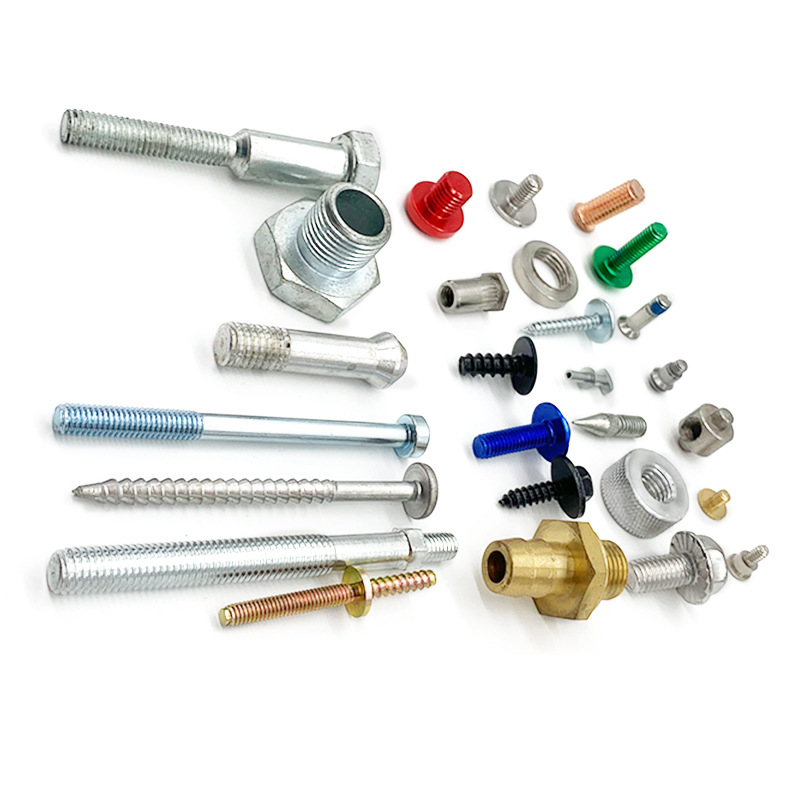
Yongjing Precision keeps deep insight into the frontier applications of composite materials. By developing and integrating special fastener products and providing professional process consulting services, we help customers overcome composite connection challenges and realize the safe, reliable and efficient manufacturing of lightweight structural components.
















 Login
Login








 Contact
 WeChat
 粤ICP备2025493240号-1