How to Inspect Incoming Fasteners? This is a common technical question in fastener design and application. Understanding the relevant principles is essential for improving joint reliability and reducing failure risks.
Technically, this issue involves material selection, manufacturing processes, heat treatment, and surface treatment. The optimal solution varies under different conditions. For example, high-strength bolts require strict control of quenching and tempering parameters per ISO 898-1.
In practice: select appropriate strength grade based on load; understand friction coefficient effects on preload; choose appropriate locking methods (spring washers, thread locker, cotter pins); and periodically inspect torque on critical joints.
Toprecision's engineering team has extensive experience in cold forming, aluminum alloy fasteners, and micro screws. We provide comprehensive technical support from selection to application. Contact us with your specific questions.
I. Pre-Inspection Preparation: Developing an Inspection Plan and Standards
Inspection is not an ad-hoc activity; it requires a predetermined plan:
-
Identify Key Characteristics: Based on the fastener's application in the product (critical/important/general), determine the characteristics that require key control. For example, the strength grade, thread precision, hardness, and anti-corrosion coating thickness of critical connecting bolts are top priorities.
-
Define Acceptance Criteria: The sole basis should be the purchase order, mutually confirmed technical drawings, and referenced national standards (GB), international standards (ISO, EN), or industry/enterprise standards. The standards should clearly specify dimensional tolerances, mechanical properties, materials, surface treatment, appearance, etc.
-
Develop a Sampling Inspection Plan: Typically based on GB/T 2828.1 (ISO 2859-1) Sampling procedures for inspection by attributes. Determine the inspection level (generally Level II) and Acceptance Quality Limit (AQL) based on batch size, quality history (supplier performance), and risk level. For example, the AQL for major items (critical dimensions, performance) can be set at 0.65 or 1.0, while the AQL for minor items (general appearance) can be set at 2.5.
-
Prepare Resources: Calibrated inspection tools (micrometers, calipers, ring/plug gauges, hardness testers, torque testers, salt spray chambers, etc.), inspection record forms, and identification labels (Pass/Fail tags).
II. The "Four-Step" Process for Incoming Acceptance
Step 1: Document Verification & Preliminary Packaging/Marking Check
-
Verify Delivery Note: Check if the product model, specifications, quantity, and batch number match the purchase order.
-
Request and Audit Quality Documents: This is the core环节 (step) of acceptance. Require the supplier to provide a Material Certificate and/or Factory Inspection Report with the shipment. Audit contents include:
-
Consistency of supplier name, production date, and batch number with physical labels.
-
Compliance of material grade and standard (e.g., SWRCH35K, GB/T 6478) with requirements.
-
Whether mechanical property test data (tensile strength, yield strength, hardness, proof load) meets standards.
-
Whether chemical composition analysis results (important for alloy steel) meet standards.
-
Whether surface treatment type and test results (e.g., coating thickness, salt spray test duration) meet requirements.
-
Presence of authorized signatures or stamps on the report.
-
Check Packaging and Marking: Packaging should be intact to prevent transport damage and corrosion. Inner and outer packaging must have clear, durable markings containing product name, specifications, standard, quantity, batch number, production date, etc.
Step 2: Sampling, Appearance, and Dimensional Inspection
-
Sampling: Randomly select samples from the incoming batch according to the established sampling plan.
-
Appearance Inspection:
-
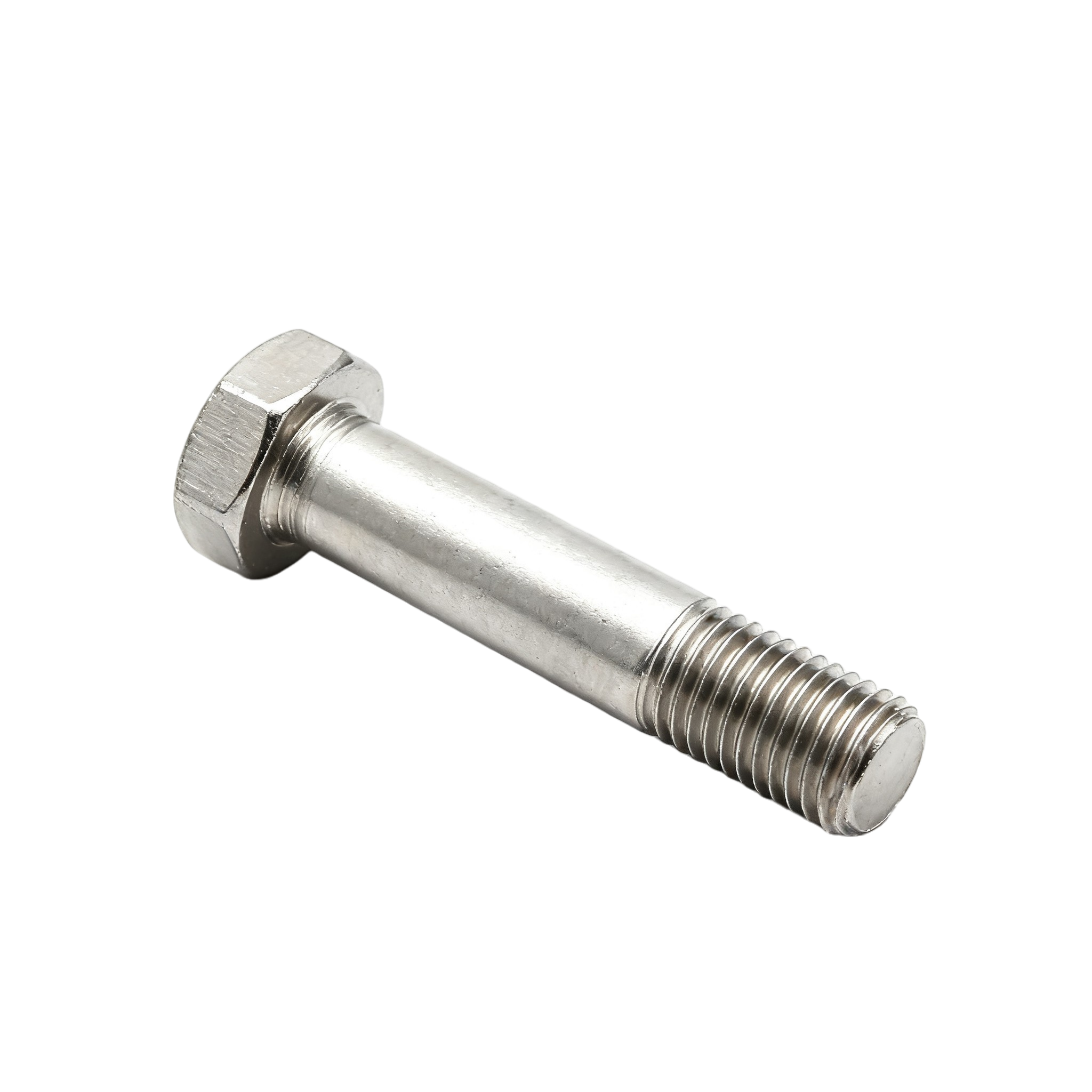
Surface Defects: Check for cracks, burrs, rust, bumps, coating peeling, yellowing, stains, etc.
-
Head Forming: Check if it is full and if markings (such as property class markings) are clear and correct.
-
Thread Quality: Check for stripped threads, flat threads, ripples, or bumps.
-
Dimensional Inspection:
-
General Dimensions: Width across flats (S), width across corners (e), head height (k), nominal length (l), etc.
-
Thread Precision: Use GO/NO-GO gauges (thread plug/ring gauges) for inspection. The GO gauge should screw through smoothly, and the NO-GO gauge should not screw in more than 2-3 turns. This is key to verifying thread interchangeability.
-
Special Dimensions: Measure shank diameter, fillet under the head, point dimensions, etc., as per drawing requirements.
Step 3: Performance and Material Conformity Verification (When Necessary)
For critical parts or the first batch from a new supplier, laboratory verification is required:
-
Mechanical Property Testing:
-
Hardness Test: Measure Vickers (HV) or Rockwell (HRC) hardness on the bolt head or end of the shank. After conversion, it should meet property class requirements (e.g., Grade 10.9 hardness 32-39 HRC).
-
Torque Test: For screws, test their breaking torque or minimum assembly torque.
-
Proof Load Test: Apply the standard-specified proof load to the bolt and measure if its permanent elongation exceeds the limit.
-
Tensile Test (Destructive): Test tensile strength, yield strength, and elongation after fracture on a universal testing machine. Typically used for type testing or major quality disputes.
-
Plating/Coating Testing:
-
Film Thickness Measurement: Use magnetic or eddy current thickness gauges to measure zinc plating or Dacromet layer thickness.
-
Salt Spray Test: Sample and conduct a Neutral Salt Spray (NSS) test to evaluate if anti-corrosion performance reaches the claimed duration (e.g., 96h without white rust).
-
Material Verification:
-
Spectrum Analysis: Use handheld or desktop spectrometers to quickly analyze major alloy element content and verify if the material grade matches the documentation.
Step 4: Judgment, Recording, and Disposition
-
Result Judgment: Compare inspection results item by item against the standard. If all items pass, the batch is accepted. If any item exceeds the AQL rejection number, the batch is rejected.
-
Record Keeping: Fill out the Incoming Inspection Report in detail, recording sample size, inspection items, measured data, and judgment results. Archive the report together with the supplier's quality documents; the retention period should be no less than the product lifecycle.
-
Identification and Segregation: Identify inspected products. Transfer qualified products to the qualified goods warehouse for use. Non-conforming products must be clearly identified and immediately segregated to prevent misuse.
-
Non-Conforming Product Handling: Issue a Non-Conformance Report (NCR) to notify procurement and the supplier. Depending on the severity, actions may include return, replacement, sorting for use (only for minor and sortable defects), or concession acceptance. Concession acceptance must undergo strict approval and must not affect final product safety and critical functions.
III. Optimization of Acceptance Strategies
-
Performance-Based Acceptance: For suppliers with long-term stable quality and good reputation, reduce inspection frequency or switch primarily to "document acceptance" (exemption from inspection), supplemented by periodic spot checks.
-
First Article Inspection (FAI): For new projects or new suppliers, conduct a comprehensive FAI, including full dimensional reports and performance testing.
-
Supplier Collaboration: Communicate and align acceptance criteria with suppliers in advance, or even share inspection gauges to reduce disputes. Invite suppliers to participate in the analysis of major non-conformities.
Conclusion
Incoming fastener inspection is a rigorous and meticulous quality gatekeeping activity, serving as an important checkpoint for supply chain quality control. It requires inspectors to possess professional knowledge, skilled techniques, and a rigorous, responsible attitude. By implementing a systematic inspection process, enterprises can not only effectively intercept non-conforming products but also drive supplier quality improvement through data accumulation, forming a positive supply chain quality ecosystem. As a supplier, Yongjing Precision welcomes and actively cooperates with our clients' rigorous inspection procedures. We promise that every batch of products we provide is accompanied by authentic, accurate, and complete quality documentation, and the products themselves can withstand any standardized inspection. We view our clients' strict acceptance as a re-verification and promotion of our product quality, working together to ensure safe and reliable connections.


 135-6073-0094