Decoding Fastener Head Markings:The Science Behind the Symbo? This is a common technical question in fastener design and application. Understanding the relevant principles is essential for improving joint reliability and reducing failure risks.
Technically, this issue involves material selection, manufacturing processes, heat treatment, and surface treatment. The optimal solution varies under different conditions. For example, high-strength bolts require strict control of quenching and tempering parameters per ISO 898-1.
In practice: select appropriate strength grade based on load; understand friction coefficient effects on preload; choose appropriate locking methods (spring washers, thread locker, cotter pins); and periodically inspect torque on critical joints.
Toprecision's engineering team has extensive experience in cold forming, aluminum alloy fasteners, and micro screws. We provide comprehensive technical support from selection to application. Contact us with your specific questions.
I. Property Class Markings: The Core Code of Strength
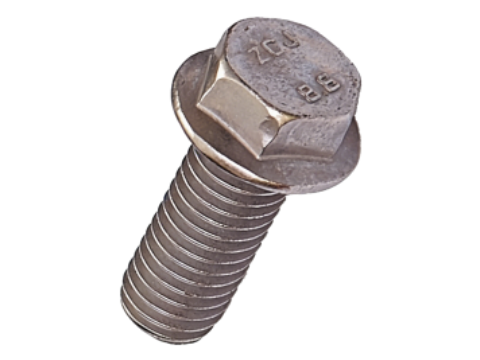
For metric steel bolts, screws, and studs, the most common marking on the head is the property class designation, which is the core representation of its mechanical properties.
-
Marking Format: Typically consists of two numbers separated by a dot, such as 4.8, 8.8, 10.9, and 12.9.
-
Meaning Breakdown:
-
The number before the dot: Represents 1/100 of the nominal tensile strength (σb, in MPa). For example, "8" indicates a tensile strength grade of 800 MPa.
-
The number after the dot: Represents 10 times the yield-to-tensile ratio (yield strength σs / tensile strength σb). For example, ".8" indicates that the yield strength is approximately 80% of the tensile strength.
-
Calculation Example: An 8.8 grade bolt means its nominal tensile strength is ≥800MPa, and its nominal yield strength is ≥800×0.8=640MPa.
-
Importance: The property class directly determines the load limit a fastener can withstand. Incorrectly substituting a lower-grade product for a higher-grade one poses a significant safety hazard.
II. Material and Standard Markings: Proof of Origin and Compliance
-
Material Markings:
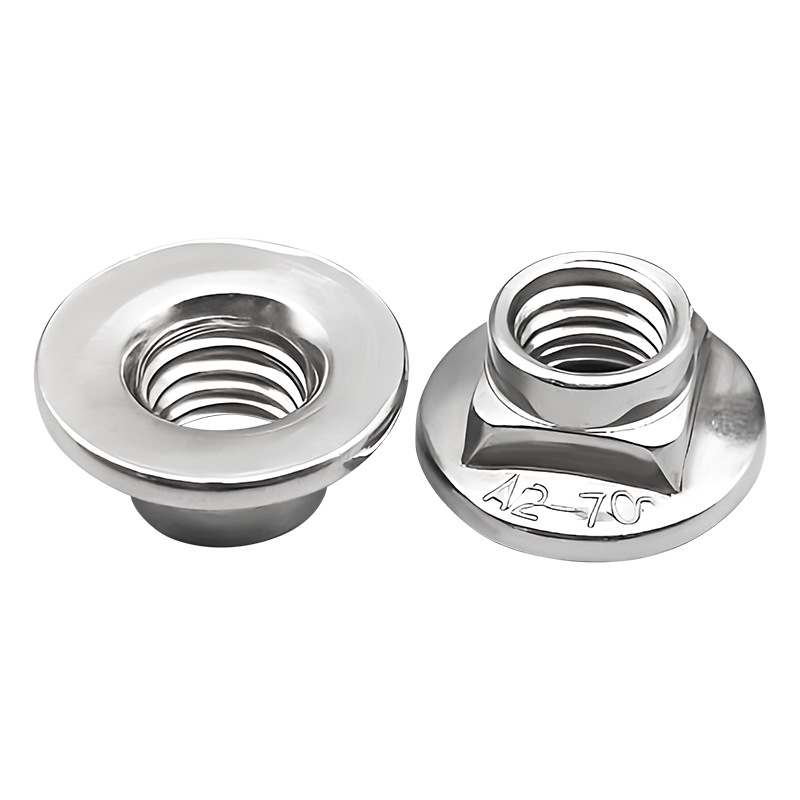
For stainless steel fasteners, common markings include A2-70, A4-80, etc.
-
Letter Part (A2/A4): Indicates the material group. A2 refers to the 304 series austenitic stainless steel, while A4 refers to the 316 series acid-resistant steel.
-
Number Part (70/80): Indicates the minimum tensile strength (in MPa/10). A2-70 means a tensile strength of ≥700MPa.
Some high-strength or special alloy fasteners may directly mark the material grade or an enterprise-defined code.
-
Standard Markings:
Some markings represent compliance with a specific national standard or industry specification, often using specific shaped symbols. Manufacturers may also engrave abbreviated forms of the executed standard numbers (such as GB, ISO, DIN).
III. Manufacturer Markings and Traceability Information
-
Manufacturer's Logo:
This is the unique trademark or code of the manufacturer, symbolizing the brand and responsibility. For example, "Yongjing" or a specific graphic symbol. It signifies that the product was manufactured by a specific enterprise and can be traced back to its quality management system.
-
Production Batch/Code:
More and more manufacturers, especially those serving high-end sectors like automotive and aerospace, engrave production batch numbers, heat numbers, or date codes. This is key to achieving full lifecycle traceability. In the event of an issue, the production scope can be quickly identified to analyze the cause.
IV. Special Markings and Safety Warnings
-
Left-Hand Thread Marking: Standard right-hand threads usually have no special marking, but left-hand threads must be prominently marked on the head, commonly using "L" or a left-pointing arrow to prevent incorrect installation leading to loosening.
-
Safety Certification Markings: Products that have passed specific industry safety certifications (such as rail transit or nuclear power) may bear the dedicated logos of the certification bodies.
-
Head Drive Type Indication: Although not engraved, the head shape itself (hex socket, cross recess, torx, etc.) serves as an indicator of the required installation tool type.
V. Risks of Missing or Blurred Markings
-
Unknown Origin: Impossible to trace the manufacturer, making it difficult to define quality liability.
-
Unknown Performance: Unable to confirm its strength grade, posing safety risks during use.
-
Standard Confusion: Causes difficulties in warehousing, management, and selection.
-
Counterfeit Risk: Provides an opportunity for inferior products to enter the market.
VI. Yongjing Precision's Marking Practices
Shenzhen Yongjing Precision Technology Co., Ltd. employs clear cold heading or laser engraving technologies on the heads of all eligible products to ensure markings are:
-
Clearly Legible: Markings remain distinct even after electroplating or coating.
-
Complete in Information: At a minimum, including the property class and the Yongjing manufacturer logo.
-
Compliant with Standards: Strictly adhering to GB, ISO, and other international and domestic regulations regarding markings.
-
Traceable: Through an internal coding system, enabling precise traceability from the product back to the raw material batch and production process.
Conclusion
Within the square inch of a fastener's head lies core information concerning safety, quality, and responsibility. Mastering the ability to interpret these markings is a fundamental skill for every engineering technician, procurement specialist, and quality manager. It is not merely technical knowledge but also a reflection of rigorous industrial culture. Shenzhen Yongjing Precision Technology Co., Ltd. pledges that every fastener bearing our marking represents a steadfast commitment to this rigor and responsibility, providing customers with a source of assured and reliable products.


 135-6073-0094