Salt Spray Testing of Coatings: Quantitative Corrosion Resis? This is a common technical question in fastener design and application. Understanding the relevant principles is essential for improving joint reliability and reducing failure risks.
Technically, this issue involves material selection, manufacturing processes, heat treatment, and surface treatment. The optimal solution varies under different conditions. For example, high-strength bolts require strict control of quenching and tempering parameters per ISO 898-1.
In practice: select appropriate strength grade based on load; understand friction coefficient effects on preload; choose appropriate locking methods (spring washers, thread locker, cotter pins); and periodically inspect torque on critical joints.
Toprecision's engineering team has extensive experience in cold forming, aluminum alloy fasteners, and micro screws. We provide comprehensive technical support from selection to application. Contact us with your specific questions.
I. Salt Spray Test Standards and Interpretation Basics
-
Common Standard: The Neutral Salt Spray (NSS) test per GB/T 10125 (equivalent to ISO 9227) is the most widely applied standard. Typical conditions include a 5% NaCl solution at 35°C with continuous spraying.
-
Core Evaluation Metric: Time to first appearance of red rust (in hours). This is an intuitive indicator of the failure of the coating's "barrier protection." Generally, a longer duration indicates stronger protective capability.
-
Important Note: The salt spray test is a comparative test, not a direct predictor of service life. Actual service life is influenced by climate, pollution, wet/dry cycles, and other factors; there is no simple linear conversion between salt spray hours and real-world lifespan.
II. Comparative Analysis of Common Coating Salt Spray Performance
The following data represents common ranges under typical processes; actual performance varies with process parameters, film thickness, and substrate pretreatment.
-
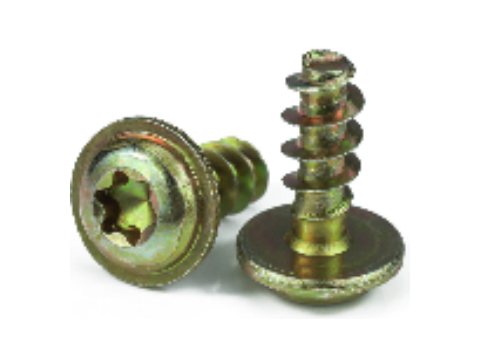
Standard Zinc Plating + Rainbow Chromate Passivation (Yellow Zinc):
-
Performance: Red rust appears in 72–240 hours.
-
Mechanism: The zinc layer provides sacrificial anode protection. The passivation film (rainbow color) slightly delays zinc consumption but is thin. Once the zinc layer is locally depleted, the steel substrate rusts rapidly. Performance fluctuates and is sensitive to process control.
-
Characteristics: Low cost, common appearance, but average corrosion resistance; suitable for general indoor environments.
-
Zinc Plating + Blue-White/Black Passivation:
-
Performance: 96–360 hours.
-
Analysis: Thick-film passivation (blue-white, black) or organic sealants provide better barrier protection, delaying zinc consumption, thus typically offering longer corrosion resistance than yellow zinc.
-
Zinc-Nickel Alloy Plating (typically 10-15% Nickel):
-
Performance: Over 720–1500 hours.
-
Mechanism: The zinc-nickel alloy layer itself has far superior corrosion resistance to pure zinc. Its corrosion products are denser, and it retains some sacrificial properties. It is an upgraded alternative to pure zinc plating.
-
Characteristics: Excellent corrosion resistance and good heat resistance; widely used in automotive and high-end fastener applications.
-
Dacromet / Geomet (Zinc Flake Coating):
-
Performance: Over 1000–3000 hours (depending on thickness and topcoat).
-
Mechanism: Composed of flake zinc powder, aluminum powder, and chromates, providing dual protection: physical shielding (overlapping flakes blocking paths) and chemical passivation (chromate self-healing). No risk of hydrogen embrittlement.
-
Characteristics: No hydrogen embrittlement, excellent corrosion resistance, high-temperature resistance; however, the thicker coating affects precision, and surface hardness is lower, making it less wear-resistant.
-
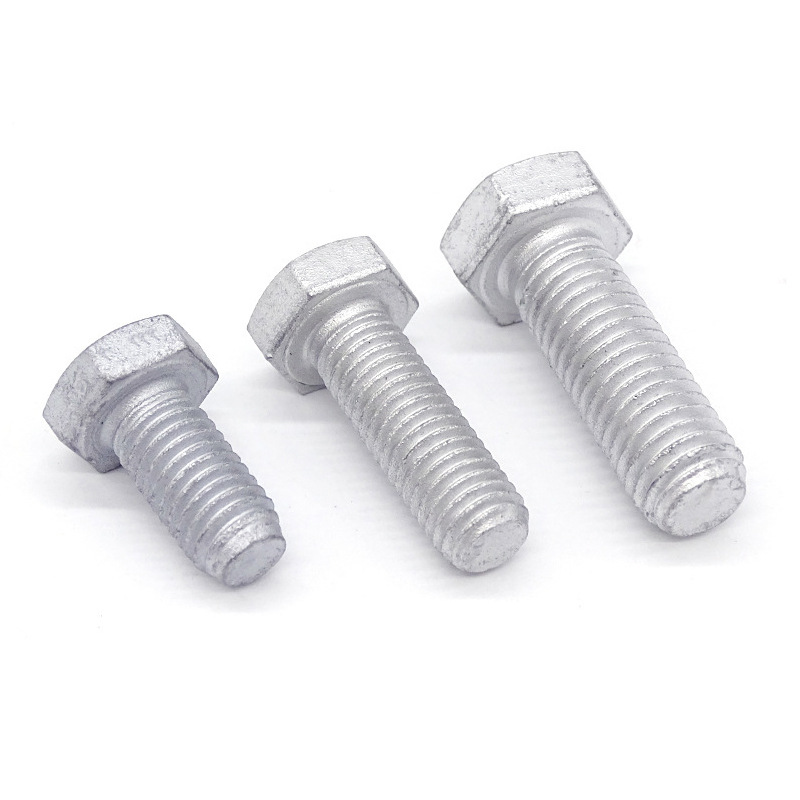
Hot-Dip Galvanizing:
-
Performance: Over 600–1200 hours (directly related to zinc layer thickness, which is usually thick).
-
Analysis: Thick coating with pure zinc providing sacrificial protection. However, the appearance is rough, dimensional accuracy is poor, and there is a risk of hydrogen embrittlement (requires baking); mostly used for large structural components rather than precision fasteners.
-
Mechanical Plating:
-
Performance: Varies with thickness, typically 200–800 hours.
-
Analysis: No hydrogen embrittlement, suitable for parts susceptible to hydrogen embrittlement, but coating uniformity and adhesion are generally inferior to electroplating.
III. Beyond Red Rust: Other Evaluation Dimensions
-
White Rust vs. Red Rust: For zinc-based coatings, the appearance of "white rust" (mainly basic zinc chloride and other zinc corrosion products) indicates zinc layer consumption, but the substrate is not yet corroded. The time from "white rust" to "red rust" reflects the coating's sacrificial protection capability.
-
Scribe Test: Tests the "creep corrosion" capability after the coating is scratched, evaluating its sacrificial protection effect.
-
Adhesion and Post-Aging Performance: Check for blistering or peeling after salt spray testing to evaluate adhesion. Cyclic tests combining salt spray and UV aging can also simulate outdoor environments.
IV. Yongjing Precision’s Coating Selection Recommendations
Selecting a coating requires balancing corrosion resistance requirements, cost, dimensional accuracy, hydrogen embrittlement risk, appearance, and environmental factors:
-
General Indoor/Mild Environments: Standard zinc plating is sufficient.
-
Automotive, Outdoor Facilities, Higher Requirements: Zinc-nickel alloy or Dacromet is recommended.
-
High-Strength Parts (≥10.9 Grade) with Zero Tolerance for Hydrogen Embrittlement: Dacromet or mechanical plating is preferred.
-
Conductivity or Special Appearance Required: Consider tin plating, nickel plating, etc.
Yongjing Precision is equipped with standard salt spray chambers and can provide comparative test data for various coatings as well as customized coating solutions.
Conclusion
Salt spray testing acts as a mirror, intuitively reflecting the intrinsic corrosion protection potential of different coating technologies. Understanding the protection mechanisms and limitations behind these data points is key to scientific selection, avoiding over-engineering or insufficient protection. Shenzhen Yongjing Precision Technology Co., Ltd. not only offers a variety of high-performance coating options but is also dedicated to guiding customers toward the most economical and reliable choices through authentic test data and professional analysis, ensuring fasteners remain durable even in harsh environments.


 135-6073-0094