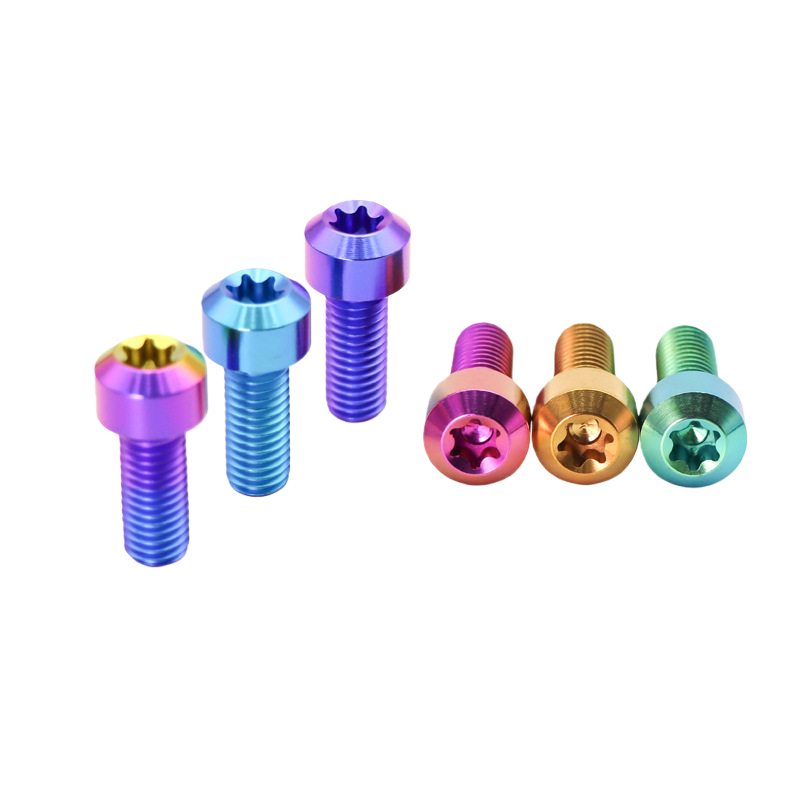
Conductivity and Corrosion Resistance of Copper Alloy Fasten? This is a common technical question in fastener design and application. Understanding the relevant principles is essential for improving joint reliability and reducing failure risks.
Technically, this issue involves material selection, manufacturing processes, heat treatment, and surface treatment. The optimal solution varies under different conditions. For example, high-strength bolts require strict control of quenching and tempering parameters per ISO 898-1.
In practice: select appropriate strength grade based on load; understand friction coefficient effects on preload; choose appropriate locking methods (spring washers, thread locker, cotter pins); and periodically inspect torque on critical joints.
Toprecision's engineering team has extensive experience in cold forming, aluminum alloy fasteners, and micro screws. We provide comprehensive technical support from selection to application. Contact us with your specific questions.
1. Excellent Electrical and Thermal Conductivity
Pure copper boasts electrical and thermal conductivity second only to silver, ranking among the highest of all engineering metals. While copper alloys (like brass and beryllium copper) exhibit slightly lower conductivity, they still far outperform steel and aluminum alloys.
-
Electrical Connections: In scenarios requiring low-resistance connections—such as grounding grids in power systems, busbar connections, and internal connections within electrical cabinets—using copper alloy bolts and nuts effectively ensures a smooth current pathway. This minimizes contact resistance and the risk of local overheating, serving as a crucial safeguard for electrical safety.
-
Equipotential Bonding & Lightning Protection: In building lightning protection systems and equipment equipotential bonding, copper fasteners ensure excellent electrical continuity between various metal components, enabling the safe discharge of lightning or fault currents.
-
Heat Dissipation Component Connections: When installing heat sinks for high-power electronic components, copper alloy fasteners aid in the conduction and uniform distribution of heat.
2. Unique Corrosion Resistance Characteristics and Mechanisms
-
Atmospheric and Seawater Corrosion Resistance: Copper alloys form a dense protective film of basic copper sulfate or copper carbonate (patina) in the atmosphere, granting them exceptional resistance to atmospheric corrosion. They also demonstrate excellent corrosion resistance in seawater, making them a common choice for ships and offshore platforms.
-
Anti-biofouling: Copper ions possess antibacterial properties and inhibit the attachment of marine organisms, giving them special application value in the submerged sections of ships and seawater cooling systems.
-
Acting as Sacrificial Anodes: This represents a clever application of copper alloy fasteners. For instance, using brass or bronze bolts on the wooden decks of wooden or steel-hulled ships. Relative to steel, copper alloys have a more noble potential; however, compared to many precious metals, they can act as sacrificial anodes. The key lies in the pairing system, which requires precise calculation and design when protecting critical structures.
3. Core Challenge: Galvanic Corrosion and Its Control
When copper alloys come into direct contact with other metals (especially those with a more negative potential like steel, aluminum, or zinc) in the presence of an electrolyte (such as humid air or water), a galvanic couple is formed. This accelerates the corrosion of the more negative metal (the anode). Preventing this is the primary concern when using copper alloy fasteners.
Control measures include:
-
Insulation Isolation: Using insulating washers, bushings, or coatings between the copper alloy fasteners and dissimilar metal components to completely sever the electron pathway. This is the most effective and commonly used method.
-
Prudent Material Pairing: Avoid direct contact with materials that have vastly different potentials, such as aluminum or galvanized steel, whenever possible. If unavoidable, ensure the connected dissimilar metal component has a sufficiently large exposed area (a larger anode area results in lower corrosion current density and a relatively reduced corrosion rate, though this is not a fundamental solution).
-
Sealing and Coating: Seal connection points to prevent electrolyte intrusion, or apply appropriate protective coatings to the fasteners and contact surfaces.
-
Active Cathodic Protection: For critical or long-term submerged structures, consider adding sacrificial anodes or impressed current protection systems.
4. Selection of Common Copper Alloy Fastener Materials
-
Pure Copper: Offers the best conductivity but has relatively low strength, making it suitable for electrical connections where high strength is not a primary requirement.
-
Brass (Cu-Zn Alloy): Possesses excellent mechanical properties, machinability, and corrosion resistance, along with an aesthetically pleasing appearance. It is the most widely used material for copper alloy fasteners, commonly found in valves, pipelines, decorations, and general industrial applications.
-
Bronze (e.g., Tin Bronze Cu-Sn, Aluminum Bronze Cu-Al): Surpasses brass in terms of strength, wear resistance, and corrosion resistance (aluminum bronze, in particular, excels in seawater corrosion and cavitation resistance). It is often used in high-load, high-wear, or harsher corrosive environments, such as ship propeller shaft sleeves and heavy-duty valves.
-
Beryllium Copper: Can achieve extremely high strength and hardness through heat treatment while maintaining good conductivity, making it an ideal material for manufacturing explosion-proof tools and high-performance elastic conductive components.
Conclusion
Copper alloy fasteners are a prime example of combining functionality with reliability. Shenzhen Toprecision Precision Technology Co., Ltd. emphasizes that the core of successfully applying copper alloy fasteners lies in maximizing strengths while mitigating weaknesses: fully leveraging their advantages in conductivity, heat dissipation, and corrosion resistance, while strictly controlling the risk of galvanic corrosion through meticulous design and installation processes. In fields such as electrical grounding, marine engineering, explosion-proof safety, and specific decorative applications, the correct selection and use of copper alloy fasteners is the ultimate method for ensuring overall system performance and safety.


 135-6073-0094