Bolt Anti-Loosening Measures and Core Principles? This is a common technical question in fastener design and application. Understanding the relevant principles is essential for improving joint reliability and reducing failure risks.
Technically, this issue involves material selection, manufacturing processes, heat treatment, and surface treatment. The optimal solution varies under different conditions. For example, high-strength bolts require strict control of quenching and tempering parameters per ISO 898-1.
In practice: select appropriate strength grade based on load; understand friction coefficient effects on preload; choose appropriate locking methods (spring washers, thread locker, cotter pins); and periodically inspect torque on critical joints.
Toprecision's engineering team has extensive experience in cold forming, aluminum alloy fasteners, and micro screws. We provide comprehensive technical support from selection to application. Contact us with your specific questions.
In mechanical equipment assembly, bolts are highly versatile fasteners widely used in fields such as machine tools, automobiles, construction machinery, and aerospace due to their simple structure, ease of disassembly, and strong load-bearing capacity. The reliability of bolted connections directly determines the overall operational safety of the equipment. Once loosening occurs under conditions like vibration, impact, or temperature fluctuations, it not only leads to a loss of preload and increased component clearance but can also cause bolts to fall off and components to break, potentially resulting in major safety accidents and severe losses.
Many practitioners wonder why some bolted connections remain tight for a long time while others frequently loosen. The core reason lies in whether appropriate anti-loosening measures are selected for the specific operating conditions. The essence of bolt loosening is the loss of preload, and the key to prevention is stopping the relative rotation between the bolt and nut (or connected parts) through mechanical structures or friction enhancement. Based on practical industry experience, this article systematically reviews mainstream anti-loosening measures to provide professional reference for fastener application, equipment assembly, and maintenance.
II. Detailed Explanation of Common Bolt Anti-Loosening Measures
Bolt anti-loosening measures should be chosen based on factors like load intensity, disassembly needs, and cost budget. Currently, common methods in the industry fall into three categories: friction locking, mechanical locking, and permanent locking. Each has its own pros, cons, and applicable scenarios.
(A) Friction Locking: Preventing Loosening Through Friction
Friction locking is the most basic and widely used method. Its core principle is to increase the friction between the bolt and nut (or the nut and connected parts) through structural design, counteracting the loosening torque caused by vibration and impact without compromising the connection's reusability.
-
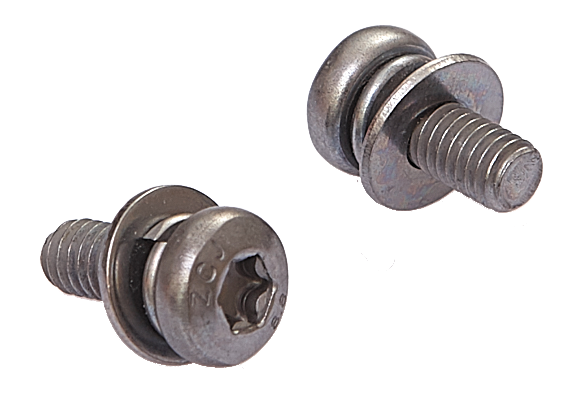
Spring Lock Washer: Made from elastic material, a spring lock washer is compressed during assembly to generate an elastic reaction force, keeping the threaded surfaces tightly fitted to form continuous friction. It is simple, low-cost, and suitable for ordinary conditions with stable loads and slight vibrations, such as household appliances and light machinery. However, prolonged stress can cause plastic deformation and loss of elasticity, making its effect limited under strong vibrations; thus, it is unsuitable for precision equipment or heavy-load scenarios.
-
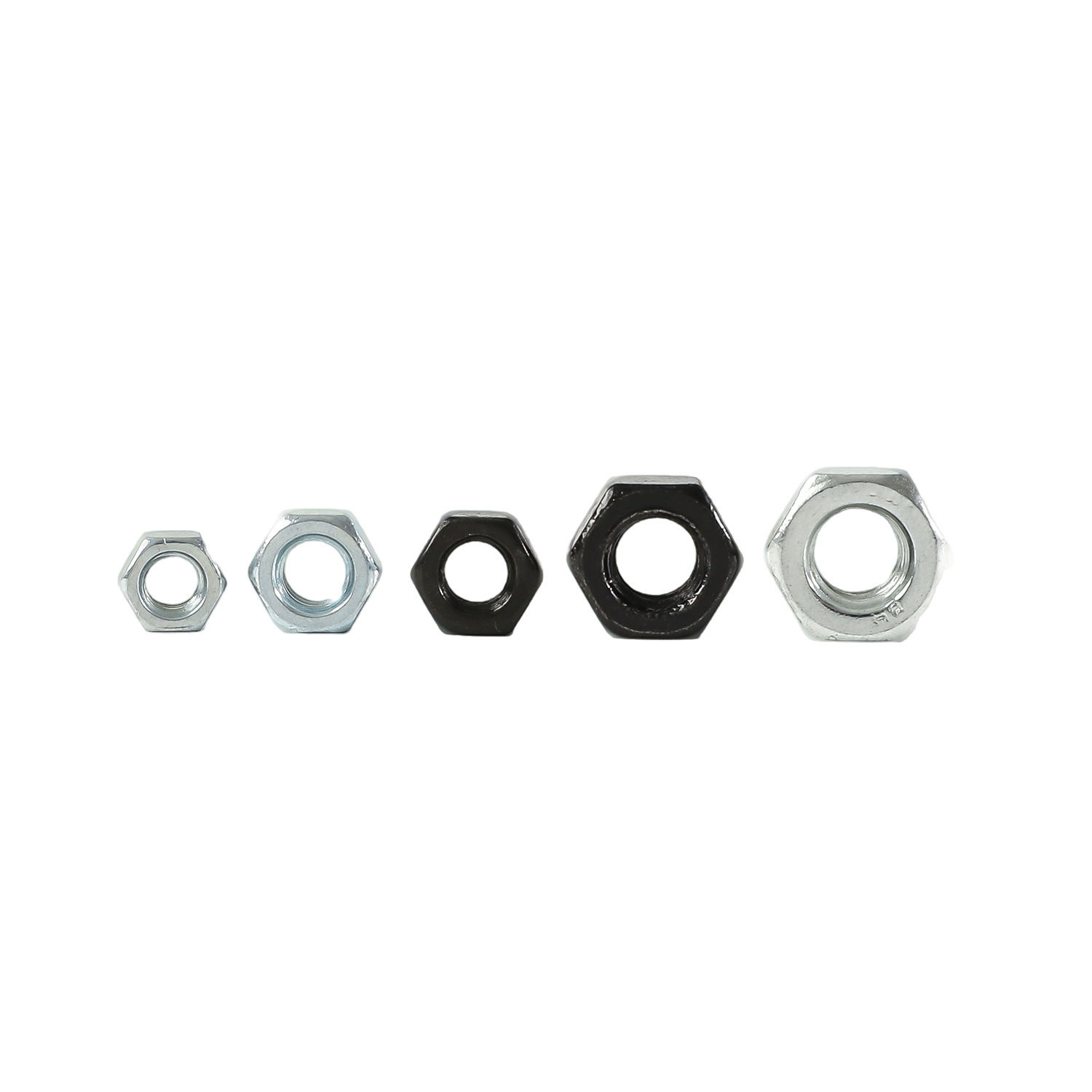
Double Nut Locking: By tightening two nuts against each other, the threaded surfaces between them generate a mutual compressive preload, forming a reverse friction torque that prevents a single nut from loosening. This method is more effective than spring washers and suits scenarios with moderate vibration and frequent disassembly needs, like engineering machinery bracket connections. The downside is that it requires more installation space, demands precise synchronous tightening, and may see reduced effectiveness over time due to nut wear.
-
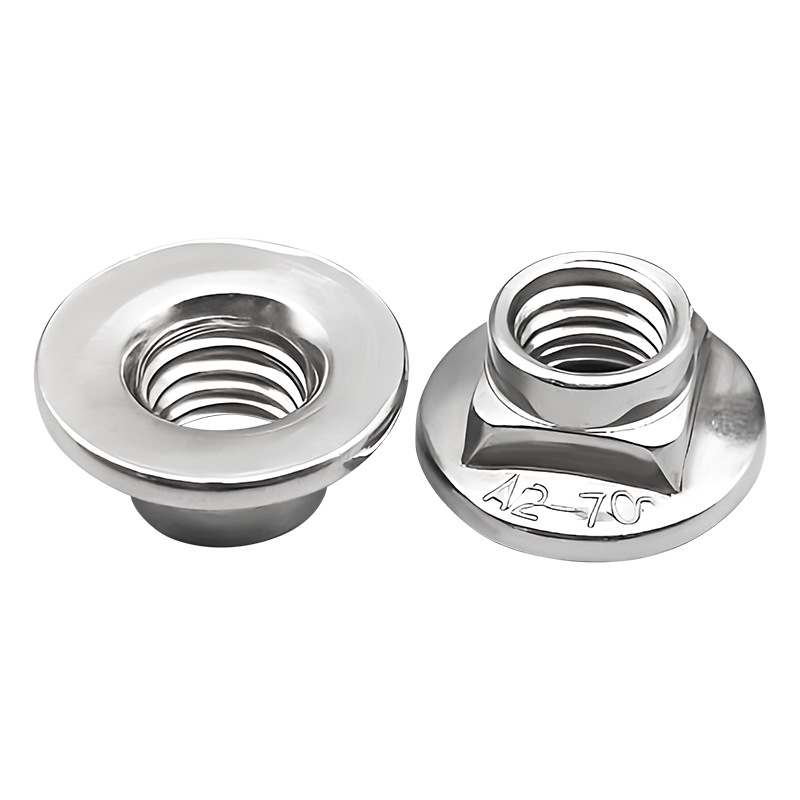
Lock Nuts: Optimized from standard nuts, common types include nylon insert lock nuts and all-metal lock nuts. Nylon lock nuts have an embedded nylon ring that deforms when engaged with the bolt threads, tightly wrapping them to create significant friction. All-metal lock nuts use an elastic deformed section at the top that forms an interference fit with the threads after tightening. These nuts offer stable anti-loosening performance and easy disassembly, making them ideal for high-vibration, high-precision scenarios like automotive engines and precision machine tools. They are currently one of the mainstream anti-loosening accessories in the fastener industry.
(B) Mechanical Locking: Limiting Movement Through Physical Structures
Mechanical locking uses additional mechanical parts to physically restrict the relative rotation of bolts and nuts. It offers high reliability and is suitable for critical conditions with intense vibration and complex loads. The drawback is that some structures add assembly steps, and certain forms cannot be repeatedly disassembled.
-
Cotter Pin and Castle Nut: After the castle nut is tightened, a cotter pin is inserted through the nut's slots and the bolt's end hole, with the pin's ends bent out to secure it. This completely prevents nut rotation via physical limiting. Highly effective, it suits critical parts exposed to high temperatures, high speeds, and strong vibrations, such as train wheels and ship engines. However, it requires matching castle nuts and bolts with pin holes, involves a tedious assembly process, and the cotter pin is single-use and must be replaced after removal.
-
Tab Washers: These come in single-tab, double-tab, and external tongue varieties. During assembly, one side of the washer rests against the edge of the connected part, while the other is bent up against the flat of the nut, restricting rotation through deformation. Single-tab washers suit nuts near component edges, while double-tabs work when the bolt axis is parallel to the edge. They offer stable locking and can be reused a few times (by bending them back), though they do require specific assembly space.
-
Wire Locking: High-strength wire is threaded through small holes in the heads of multiple bolts, series-connecting adjacent bolts. Tightening the wire creates a mutually constraining torque that prevents individual bolts from loosening. Ideal for densely packed bolt arrangements like engine blocks and gearbox casings, it offers high reliability. However, the wiring path must be precisely designed, making assembly and disassembly difficult and demanding skilled operators.
(C) Permanent Locking: Fixing Through Structural Alteration
Permanent locking renders the bolt and nut an inseparable unit by altering or destroying the thread structure. It provides the most reliable locking but is strictly for one-time assemblies where disassembly is not required.
-
Spot Welding: After tightening, the nut is spot-welded to the bolt or the connected part, completely preventing rotation. Suitable for extreme conditions like high temperature, high pressure, and strong vibration (e.g., aerospace equipment, large pressure vessels). However, welding alters the bolt's mechanical properties, may cause stress concentration, and requires cutting to remove, damaging both the bolt and connected parts.
-
Punching: After tightening, a punch is used to create indentations at the junction of the bolt and nut. This causes local plastic deformation of the threads, forming an interference fit to prevent loosening. Simple and extremely low-cost, it suits low-load, one-time assemblies like small farm tools. However, it damages the threads, making neither the bolt nor nut reusable, and effectiveness heavily depends on punching precision.
-
Chemical Locking (Threadlockers): Threadlocking adhesive is applied to the bolt threads. After tightening, the liquid cures, bonding the bolt and nut threads together while filling gaps, providing both sealing and locking. Common adhesives come in removable and permanent grades. Removable types allow disassembly with higher torque, suiting parts needing regular maintenance; permanent types cure to a high hardness and cannot be removed, fitting one-time assemblies. Chemical locking suits various conditions, especially narrow spaces where mechanical parts won't fit, but the adhesive's temperature and corrosion resistance must match the bolt material and environment.
III. Selection Principles and Practical Points
When selecting bolt anti-loosening measures, it is essential to comprehensively consider operating conditions, disassembly needs, cost budgets, and equipment safety to avoid failures caused by blind selection. For ordinary conditions with slight vibration and stable loads, low-cost friction locking like spring washers or double nuts is preferred. For critical safety parts with intense vibration, highly reliable methods like lock nuts or cotter pins with castle nuts are necessary. For one-time assemblies requiring no disassembly, permanent methods like spot welding or permanent threadlockers can be adopted.
Key practical points to note include:
-
Control Preload: Excessive tightening can lead to bolt fatigue failure, while insufficient tightening fails to generate enough friction, compromising the anti-loosening effect.
-
Clean Threads: Oil, rust, and impurities on the threads must be cleaned before assembly to ensure proper fit and maintain locking reliability.
-
Environmental Matching: In high-temperature or corrosive conditions, select anti-loosening parts and threadlockers with corresponding resistance, and regularly inspect their status to promptly replace aged components.
IV. Conclusion
Bolt anti-loosening is a crucial link in ensuring the stable operation of mechanical equipment. There is no absolute "best" measure, only the choice that best fits the operating conditions. As fastener industry practitioners, we must master the principles and applicable scenarios of various anti-loosening measures and formulate precise plans based on equipment conditions and assembly requirements. Meanwhile, with the advancement of fastener technology, new anti-loosening parts and materials are constantly emerging. Practitioners need to continuously follow industry trends, update their professional knowledge, and use scientific anti-loosening designs and practices to mitigate loosening risks and safeguard the safe operation of equipment.


 135-6073-0094