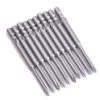
Fastener failures are major triggers of equipment breakdowns and safety incidents, mainly classified into fatigue fracture, corrosion failure, thread damage and overload fracture. Prevention covers full lifecycle including material selection, production processing and field installation.
Fatigue Fracture
Accounting for over 60% of total failures, it occurs under cyclic dynamic loads such as engine connecting rod bolts and wind turbine flange fasteners, marked by fatigue striations formed from gradual microcrack propagation. In a 2024 wind power project, Grade 10.9 flange bolts fractured after 18-month vibration from wind loads, causing over RMB 5 million downtime losses. Three core preventive measures: adopt fatigue-resistant materials like 42CrMo alloy steel for Grade 10.9 bolts instead of Grade 8.8 substitutes; apply rolled threads rather than cut threads to triple fatigue lifespan; deploy torque wrenches for uniform preload and reduced stress concentration.
Corrosion Failure
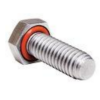
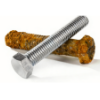
Prevalent in humid and saline environments with rust formation, degraded mechanical strength or complete rupture. Carbon steel bridge bolts along coastal areas lost 40% tensile strength and developed red rust after 2 years under chloride erosion. Adopt triple protection of material, coating and structural design: select 316 stainless steel or alloy steel; apply Dacromet or hot-dip galvanizing plus extra sealant for offshore service; design drain grooves on bolt heads to avoid water accumulation. Dongguan Lizheng’s corrosion-resistant bolts combining 316L substrate, Dacromet finish and sealing washers pass 3000-hour salt spray test for tropical marine applications in Southeast Asia.
Thread Damage
Caused by improper mounting including thread stripping, galling and thread deformation, responsible for 70% of assembly-stage failures. Improper forced tightening with standard spanners led to 200 scrapped Grade 12.9 bolts daily on one automotive production line. Preventive solutions: match thread tolerance (6H internal thread paired with 5g external thread); apply anti-seize lubricants for stainless steel fasteners against metal adhesion; use calibrated torque wrenches instead of hammer striking for high-strength bolts. Zhejiang Sijin Machinery’s intelligent tightening system cuts thread damage ratio from 5% to 0.3% via real-time torque and rotation monitoring.
Overload Fracture
Sudden brittle rupture triggered by loads exceeding design limits, seen on crane hook bolts under overloading. Precise load calculation is essential: specify fastener rating for 1.5 times maximum working load, e.g., bolts rated for 15-ton ultimate load for 10-ton working tension; install buffers at vibrating joints to absorb shock loads; conduct regular ultrasonic flaw detection for inner defects. CGN implements semi-annual ultrasonic inspection and annual load testing on nuclear fasteners with zero overload fractures in the past five years.
Hidden False Tightening
A commonly overlooked invisible failure where fasteners appear tightened yet loose due to trapped contaminants causing insufficient preload. Clean mating surfaces thoroughly to remove grease and rust before installation; verify critical joint tightness with torque-angle method. Standardized assembly reduces failure risk by 60% and routine maintenance further cuts hazards by another 25%, making full-lifecycle management the fundamental remedy.


















 Login
Login








 Contact
 WeChat
 粤ICP备2025493240号-1