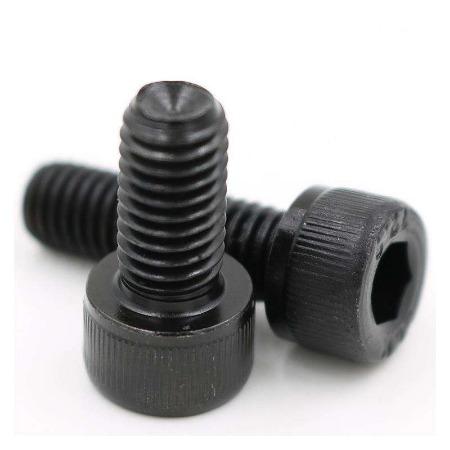
High-Strength vs. Ordinary Bolts: Differences and Installati? This is a common technical question in fastener design and application. Understanding the relevant principles is essential for improving joint reliability and reducing failure risks.
Technically, this issue involves material selection, manufacturing processes, heat treatment, and surface treatment. The optimal solution varies under different conditions. For example, high-strength bolts require strict control of quenching and tempering parameters per ISO 898-1.
In practice: select appropriate strength grade based on load; understand friction coefficient effects on preload; choose appropriate locking methods (spring washers, thread locker, cotter pins); and periodically inspect torque on critical joints.
Toprecision's engineering team has extensive experience in cold forming, aluminum alloy fasteners, and micro screws. We provide comprehensive technical support from selection to application. Contact us with your specific questions.
Core Differences in Materials and Heat Treatment
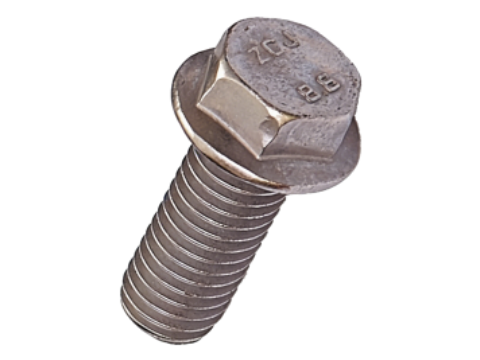
The primary distinction lies in the materials and heat treatment processes. Ordinary bolts are mostly made of low-carbon steel (such as Q235) or low-alloy steel and do not require quenching and tempering. Their tensile strength is generally below 400MPa, corresponding to property classes like 4.6 and 5.6.
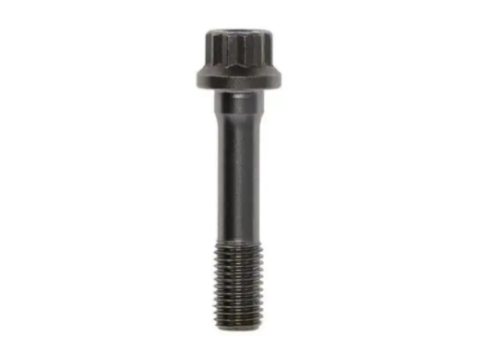
High-strength bolts, on the other hand, utilize medium-carbon steel (such as No. 45 steel) or alloy steel (such as 42CrMo). They undergo a precise "quenching + high-temperature tempering" heat treatment to form a tempered sorbite structure. Their minimum tensile strength starts at 800MPa (Class 8.8) and can reach up to 1400MPa (Class 14.9). For instance, Baosteel's Class 10.9 bolts incorporate vanadium to refine grain size, achieving a yield strength of 900MPa—3.7 times that of a same-specification Class 4.6 bolt.
Performance and Load-Bearing Principles
Performance differences are also evident in connection principles and load-bearing methods. Ordinary bolts rely on clearance fits between the bolt shank and hole walls, transmitting loads through friction generated by tightening the nut. This belongs to a "friction-shear" mixed load-bearing mode, suitable for static load scenarios.
High-strength bolts employ interference fits or large preloading connections. Preload forces the connected parts to fit tightly together, relying entirely on friction to transmit loads. With an anti-slip coefficient exceeding 0.55, they can withstand dynamic loads and vibrations. A bridge steel structure using Class 8.8 high-strength bolts demonstrated an anti-slip bearing capacity 2.5 times that of ordinary bolts, showing no loosening during seismic simulation tests.
Distinct Application Scenarios
The disparity in application scenarios is even more pronounced. Ordinary bolts are widely used in non-critical areas, such as furniture assembly and light equipment fixation. Priced at $0.01-$0.15 per piece, their failure consequences are relatively minor.
High-strength bolts are reserved for applications involving life safety or core equipment, including building steel structures, aerospace, and new energy vehicle battery packs. Class 10.9 bolts cost around $0.30-$0.75 per piece, while Class 12.9 bolts can range from $1.50-$3.00. The C919 aircraft uses over 5,000 Class 12.9 titanium alloy bolts for wing connections; the failure of any single bolt could trigger a severe accident.
Critical Installation Process Requirements
Specialized installation processes are key to the proper use of high-strength bolts. Ordinary bolts can be installed manually with adjustable wrenches, with relatively lenient torque control. High-strength bolts, however, must strictly adhere to three major principles: "Precise Preloading, Sequential Installation, and Full-Process Monitoring."
-
Preload Control: Torque wrenches or hydraulic tensioners must be used. For example, the preload for a Class 8.8 M20 bolt must be strictly controlled between 200-220N·m, with a deviation of no more than ±5%.
-
Installation Sequence: Follow the principle of "tightening symmetrically from the center to both ends" to avoid stress concentration. Bridge node bolts typically require a three-step process: initial tightening, re-tightening, and final tightening.
-
Full-Process Monitoring: Torque data must be recorded throughout the process. Critical areas often require ultrasonic flaw detection to ensure there is no false tightening or thread stripping.
A Zhejiang steel structure project incurred over 2 million RMB in retrofitting costs because high-strength bolts were not installed in the correct sequence, leading to uneven node stress.
Storage and Maintenance Standards
Additionally, the storage and maintenance of high-strength bolts follow strict regulations: they must be stored in dry, well-ventilated environments to prevent rust; thread oil stains must be cleared before installation, and rusty bolts are strictly prohibited; regular re-inspection is required after use—for example, wind turbine bolts need their preload recalibrated every 6 months. While these requirements increase procedural complexity, they extend the service life of high-strength bolts from 3-5 years (typical of ordinary bolts) to 15-20 years, delivering significant comprehensive benefits.


 135-6073-0094