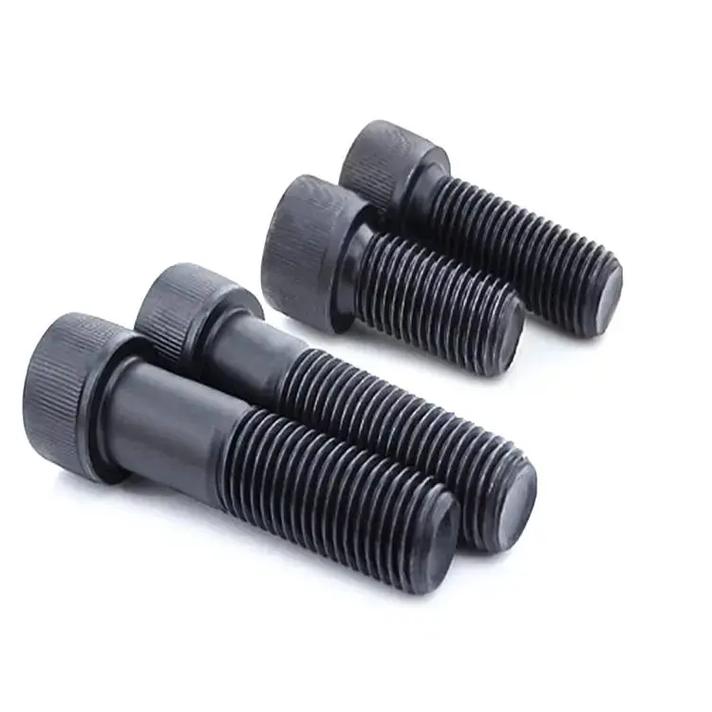
Solving the Galling Problem in Stainless Steel Fasteners? This is a common technical question in fastener design and application. Understanding the relevant principles is essential for improving joint reliability and reducing failure risks.
Technically, this issue involves material selection, manufacturing processes, heat treatment, and surface treatment. The optimal solution varies under different conditions. For example, high-strength bolts require strict control of quenching and tempering parameters per ISO 898-1.
In practice: select appropriate strength grade based on load; understand friction coefficient effects on preload; choose appropriate locking methods (spring washers, thread locker, cotter pins); and periodically inspect torque on critical joints.
Toprecision's engineering team has extensive experience in cold forming, aluminum alloy fasteners, and micro screws. We provide comprehensive technical support from selection to application. Contact us with your specific questions.
The Mechanism Behind Galling
Galling is essentially a combined effect of "adhesive wear" and "thread deformation." Stainless steel generally has low hardness (304 stainless steel is about HV 150), and its surface oxide film is easily damaged by friction during assembly. This exposes the metal substrate, which comes into direct contact and undergoes atomic bonding under pressure and heat, forming a "cold weld." At the same time, stainless steel has poor thermal conductivity (only 1/3 that of carbon steel). The heat generated by assembly friction cannot dissipate quickly, causing local temperatures to exceed 300℃. This leads to thread softening and deformation, further aggravating the seizing. For instance, an electronic equipment factory assembling 304 stainless steel bolts without anti-galling measures experienced a galling rate as high as 12%, scrapping over 300 bolts per day.
Key Factors Contributing to Galling
Key factors triggering galling fall into three categories: material matching, assembly methods, and environmental conditions.
-
Material: Matching the same type of stainless steel (e.g., 304 bolt with 304 nut) carries a much higher risk of galling than combining dissimilar materials. Stainless steels with higher carbon content (such as 316L compared to 304) tend to have a weaker tendency to gall.
-
Assembly: Excessive tightening speed (over 30r/min), excessive preload (exceeding 80% of the yield limit), and unlubricated assembly will cause the risk of galling to rise exponentially.
-
Environment: High temperatures, humidity, or dusty environments accelerate the breakdown of the oxide film, increasing the probability of galling.
Systematic Solutions to Prevent Galling
Solving the galling problem requires a systematic approach built on material optimization, process improvement, and assembly standardization.
1. Material Optimization
Adopt a "dissimilar pairing" strategy, such as pairing a 304 bolt with an alloy steel nut, utilizing the hardness difference to reduce adhesion. Alternatively, opt for high-end stainless steels with added molybdenum or niobium (like 316Ti) to enhance wear resistance and oxidation resistance. Dongguan Lizheng developed an anti-galling stainless steel bolt by adding 0.2% niobium to 316L, raising the surface hardness to HV200 and reducing the galling rate from 12% to 1.5%.
2. Process Improvement
The core of process improvement lies in optimizing the thread surface condition. First, use thread rolling instead of thread cutting. Rolling forms a work-hardened layer on the thread surface, increasing hardness by 20% and reducing surface roughness to below Ra0.4μm, which minimizes frictional resistance. Second, apply surface treatments, such as plating a thin nitride layer (0.5-1μm thick) or using passivation to enhance the stability of the oxide film. Third, coat the thread surface with a solid lubricant, such as a molybdenum disulfide coating, which forms a lubricating film during assembly to prevent direct metal-to-metal contact. Zhejiang Sijin Machinery's rolling plus coating process has kept the galling rate of stainless steel bolts below 0.5%.
3. Assembly Standardization
Assembly standardization is the final line of defense against galling, strictly following the "Lubrication - Speed Control - Torque Limiting" principles.
-
Lubrication: Every bolt must be coated with a specialized anti-seize agent (such as copper-based lubricant) before assembly; substituting it with engine oil is strictly prohibited.
-
Speed Control: The speed of electric wrenches must be controlled between 10-20r/min, and manual tightening should be done with slow, even force.
-
Torque Limiting: Use a torque wrench to keep the preload within 70% of the yield limit. For example, the preload for an M16 304 bolt should not exceed 120N·m.
By implementing these standards, an automotive parts factory reduced its stainless steel bolt galling rate from 8% to 0.3%, saving over 500,000 RMB annually.
Maintenance and Best Practices
Furthermore, post-assembly maintenance cannot be overlooked. If slight jamming of a bolt is detected, stop tightening immediately, pour in a small amount of lubricant, and loosen it in reverse—never force it. For components requiring frequent disassembly, it is recommended to use stainless steel bolts with a PTFE coating. Their self-lubricating properties can increase the number of repeat assemblies to over 50 times, far exceeding the 10-time limit of ordinary stainless steel.


 135-6073-0094