
One-stop Fastener
Custom Manufacturing Expert

Cold Extrusion for Fasteners: A Practical Guide

[Abstract]:In large-scale fastener production, cold extrusion technology has become one of the core manufacturing processes due to its high efficiency, material savings, and high strength.
Cold Extrusion for Fasteners: A Practical Guide

In large-scale fastener production, cold extrusion technology has become one of the core manufacturing processes due to its high efficiency, material savings, and high strength. It is widely used in automotive, aerospace, electronics, construction, and other industries. As a fastener industry platform, we have observed that many practitioners, while familiar with cold extrusion, often encounter quality issues, low efficiency, or equipment failures due to unfamiliarity with technical principles, improper process parameters, or unsuitable equipment selection.

This guide combines industry practical experience to provide a comprehensive overview of cold extrusion technology for fasteners, covering technical principles, core processes, equipment selection, application scenarios, practical operating points, common problems, and solutions. It aims to help practitioners quickly master key points, standardize operating procedures, fully leverage the advantages of cold extrusion, reduce production costs, and enhance product competitiveness.

Core Principles

Cold extrusion technology refers to the process of applying high pressure to metal wire or blanks using dedicated molds and pressure equipment at room temperature, forcing the material to undergo plastic deformation to form fasteners with required shapes, dimensions, and properties. Compared with traditional machining, cold extrusion requires no high-temperature heating. Its room-temperature forming characteristics maximize retention of the metal's original properties while significantly improving production efficiency and saving raw materials. It is a key enabler of efficient, green production in the fastener industry.

Core Advantages

Material utilization is high. Traditional machining generates 60 to 70 percent scrap, while cold extrusion only requires cutting blank length, achieving material utilization rates of 85 to 95 percent, significantly reducing raw material waste.

Production efficiency is high. Multi-station cold extrusion equipment can produce 200 to 500 standard fasteners per minute, 20 to 30 times faster than traditional equipment, suitable for large-scale batch production.

Product performance is excellent. During cold extrusion, metal grains become densified, forming a favorable fiber flow distribution. This increases tensile strength by 15 to 20 percent and significantly optimizes fatigue performance, meeting medium to high strength requirements without additional heat treatment.

Product precision is high. Dimensional accuracy reaches IT7 to IT8, with surface roughness Ra0.2 to Ra0.6, requiring no subsequent finishing, further reducing production steps and costs.

Core Process Steps

Mastering the core process steps is the foundation for standardized operation. A complete cold extrusion production process for fasteners consists of four key stages.

The first stage is blank pretreatment, which is a prerequisite for ensuring extrusion quality. This includes surface treatment to remove oxide scale and rust, typically using phosphating to improve lubricity, and dimensional cutting. The blank surface must be smooth and dimensions precise to avoid mold wear and forming defects caused by surface impurities or dimensional deviations. Blank hardness must be controlled within a reasonable range. Mild steel should not exceed 180 HB. Medium to mild steel should not exceed 200 HB. Total decarburization layer thickness must not exceed 1.0 percent to prevent fracture during extrusion.

The second stage is mold installation and debugging. Molds are the core equipment in cold extrusion, directly determining product shape, dimensions, and precision. In practice, select matching molds including punches, dies, and guide molds based on fastener specifications and shapes. Ensure precise positioning and secure fixing during installation to prevent mold shifting during extrusion. During debugging, calibrate mold clearance. Excessive clearance causes excessive burrs on product edges, while insufficient clearance increases extrusion resistance and damages molds and equipment. Apply dedicated lubricant on mold surfaces to reduce friction between material and mold, extending mold service life.

The third stage is extrusion forming, the core process step. Place the pretreated blank into the mold cavity and apply high pressure using cold extrusion equipment, forcing the blank to undergo plastic flow within the cavity, conforming to the mold shape to form a fastener blank. In practice, strictly control three key parameters. Extrusion pressure, typically 1000 to 2500 MPa, must be adjusted based on material type and product specifications. Insufficient pressure causes incomplete forming, while excessive pressure damages molds and equipment. Extrusion speed should be controlled at 5 to 15 mm per second. Excessive speed creates impact loads affecting product precision, while too slow speed reduces efficiency. Dwell time, typically 1 to 3 seconds, must be adjusted based on product thickness to ensure stable forming and avoid spring-back deformation.

The fourth stage is post-processing. Fastener blanks after extrusion forming require deburring, cleaning, surface treatment, and quality inspection to become finished products. Deburring removes excess metal from edges and threads to avoid affecting subsequent assembly. Cleaning removes surface lubricant and impurities to prepare for surface treatment. Surface treatment enhances corrosion resistance and appearance quality to suit different application scenarios. Quality inspection focuses on product dimensions, precision, strength, and surface quality. Non-conforming products must be reworked or scrapped to ensure products leaving the factory meet industry standards.

Equipment Selection

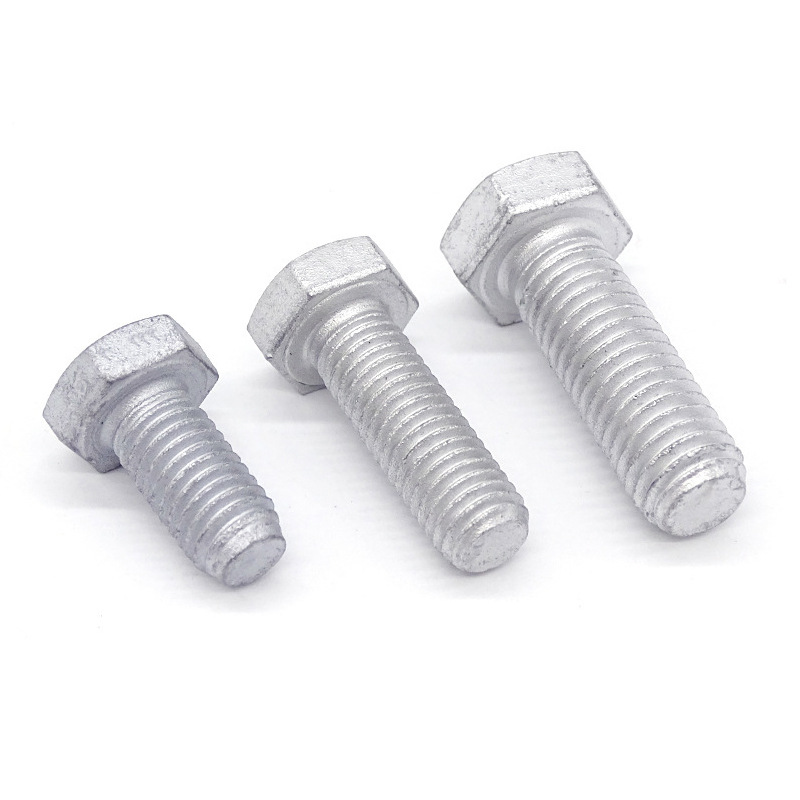
Equipment selection is critical for applying cold extrusion technology. Choose suitable equipment based on production needs, product specifications, and cost budgets. Cold extrusion equipment currently on the market falls into two main types. Single-station cold extrusion presses have simple structures and lower costs, suitable for small batch production of simple fasteners such as standard rivets and small diameter bolts. Multi-station cold extrusion presses integrate multiple processing stations, completing pre-forming, heading, punching, thread rolling, and other processes on the same equipment. They offer high production efficiency and stable product precision, suitable for large batch production of complex fasteners such as hexagon socket bolts and special shaped fasteners, and are currently the mainstream choice.

Equipment selection must also consider material characteristics. For mild steel and medium carbon steel fasteners, standard hydraulic cold extrusion presses are sufficient. For high-strength materials such as stainless steel and titanium alloy, high-pressure cold extrusion presses are required to ensure adequate power. Additionally, consider equipment intelligence. Equipment with parameter adjustment and fault warning functions reduces operational difficulty, minimizes human error, and improves production stability.

Application Scenarios

Cold extrusion technology is widely used across multiple industries for fastener production, with different focus areas.

In the automotive industry, cold extrusion is used to produce engine bolts, new energy battery connectors, and chassis fasteners. Its high strength and precision ensure driving safety, while lightweight production supports energy saving. For example, engine bolts made from SCM435 alloy steel using cold extrusion achieve tensile strength of 1200 MPa, withstanding 1500 degrees Celsius high temperatures and severe vibration.

In aerospace, cold extrusion is used for titanium alloy fasteners, achieving 15 percent weight reduction while improving impact resistance by 30 percent, suitable for core applications such as aircraft landing gear.

In electronics, cold extrusion produces micro fasteners such as 0.8 mm screws for smartphones, enabling miniaturization and lightweighting of electronic devices.

In construction, cold extrusion produces high-strength bolts and anchors, with enhanced strength and corrosion resistance for outdoor and humid environments.

In general machinery, cold extrusion produces various standard fasteners, balancing efficiency and cost for large-scale production.

Common Problems and Solutions

In practice, common problems include incomplete forming, excessive burrs, rapid mold wear, and dimensional deviations.

Incomplete forming is mainly caused by insufficient extrusion pressure, blank dimensional deviations, or excessive mold clearance. Solutions include adjusting extrusion pressure, calibrating blank dimensions, and adjusting mold clearance.

Excessive burrs are mainly caused by worn mold cutting edges or uneven lubricant application. Solutions include timely mold replacement and even lubricant application.

Rapid mold wear is mainly caused by inadequate blank surface treatment or excessive extrusion pressure. Solutions include strengthening blank pretreatment, reasonably adjusting extrusion pressure, and performing regular mold maintenance and polishing.

Dimensional deviations are mainly caused by inaccurate mold positioning or unstable equipment parameters. Solutions include recalibrating molds and stabilizing equipment parameters.

Safety Precautions

Operators must wear protective equipment including gloves and safety glasses to avoid injury from material splashing during high-pressure extrusion. Check equipment status before operation, ensuring molds are securely fixed and lubricant is sufficient to avoid equipment failure. Do not adjust parameters or open molds during equipment operation. If abnormalities are detected, stop the machine immediately for inspection to ensure production safety.

Conclusion

We hope this guide helps practitioners fully master the key points of cold extrusion technology, standardize operating procedures, and avoid common problems. The application of cold extrusion technology not only improves fastener production efficiency and product quality but also promotes the industry toward green, efficient, and high-end development. As intelligent and automated technologies advance, cold extrusion technology will gradually achieve intelligent parameter control and automatic mold changing, further reducing operational difficulty and improving production efficiency.

Finally, we remind practitioners that when applying cold extrusion technology, they must precisely control process parameters, select suitable equipment, standardize operating procedures, and perform regular maintenance on equipment and molds to fully leverage the advantages of cold extrusion, reduce production costs, and enhance product competitiveness. We will continue to provide practical tips and equipment selection guides for cold extrusion technology to help practitioners improve their expertise and promote high-quality development of the fastener industry.

Professional consultant team online, ready to provide solutions for you

Contact Now
WeChat

WeChat

Scan to add WeChat

Long press to scan

Service