






















 Login
Login



Products
Solutions
Applications





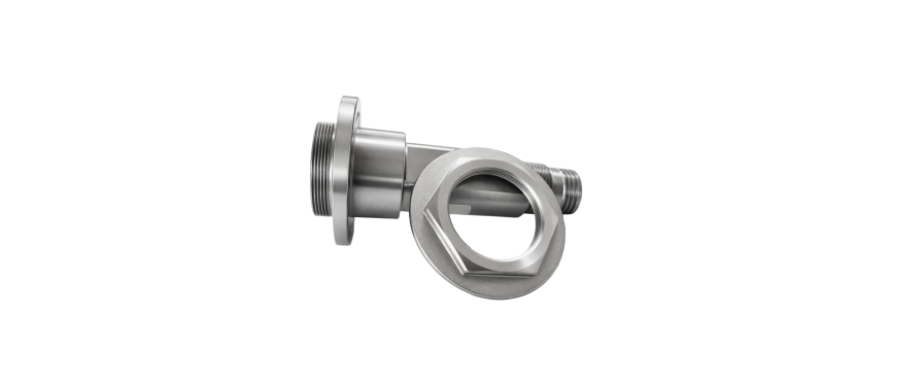
Within the aluminum alloy system, both 6061 and 6063 belong to the heat-treatable Al-Mg-Si series and are the two most widely used grades in industrial manufacturing, architectural decoration, and other fields. Due to differences in their alloying element ratios, they exhibit significant variations in performance and processing characteristics, which directly determine their respective application scenarios and cost ranges. For professionals in procurement, design, and production, accurately understanding the differences in performance, applications, and costs between these two alloys is key to optimizing material selection, controlling costs, and improving product quality. Drawing on practical industry experience and authoritative data, this article comprehensively breaks down the core differences between 6061 and 6063 aluminum alloys to help practitioners make precise selections and achieve efficient applications.
Performance Differences
Performance differences represent the core distinction between 6061 and 6063 aluminum alloys. The root cause lies in their alloying element ratios, which subsequently affect key indicators such as mechanical properties, processing characteristics, and corrosion resistance, ultimately defining the boundaries of their applicable scenarios. In terms of alloy composition, 6061 has a more complex makeup. In addition to the core elements magnesium (0.8%-1.2%) and silicon (0.4%-0.8%), it also contains small amounts of copper (0.15%-0.4%) and chromium (0.04%-0.35%). The addition of these trace elements significantly enhances its strength and fatigue resistance. In contrast, 6063 has a simpler composition with slightly lower magnesium (0.45%-0.9%) and silicon (0.20%-0.60%) content and strictly controlled impurities, placing greater emphasis on balancing plasticity and formability.
Regarding mechanical properties, the differences are particularly pronounced. 6061 stands out for its superior strength, while 6063 excels in ductility. In the commonly used T6 temper, 6061-T6 achieves a tensile strength of up to 310 MPa, a yield strength of 270 MPa, and a Brinell hardness (HB) of approximately 93, making it suitable for structural components that bear certain loads. Meanwhile, 6063-T6 has a tensile strength of about 240 MPa, a yield strength of 210 MPa, and a Brinell hardness (HB) of only 73—roughly 77% of 6061's strength. However, its elongation reaches 11%, higher than 6061's 10%, making it better suited for forming complex shapes. Additionally, 6061 offers better fatigue resistance and is less prone to deformation under repeated stress, whereas 6063 boasts higher impact toughness and lower sensitivity to defects, reducing the risk of fracture.
In terms of processing characteristics, the two present a dynamic of "the stronger is easier to machine, the weaker is easier to form." 6063 possesses excellent thermoplasticity, a wide quenching temperature range, and low sensitivity. It can be extruded at high speeds into thin-walled, hollow, and structurally complex profiles. Its extrusion speed is far higher than that of 6061, with minimal die wear and a longer lifespan (about 30% longer than dies used for 6063). It is especially suitable for producing products with complex shapes like decorative grooves and curved surfaces. After processing, it yields a high surface finish that requires no complex polishing before surface treatment. Conversely, due to its higher strength, 6061 is more difficult to extrude and requires a slower extrusion speed, making it better suited for producing simple管材 (tubes) and棒材 (bars). However, it offers superior machinability, allowing for high-precision processing via lathes and milling machines. Its welding performance is also outstanding, suitable for processes like TIG (Tungsten Inert Gas) welding, where most of its strength can be restored through post-weld heat treatment.
Regarding corrosion resistance, both exhibit good resistance to atmospheric corrosion and easily form a dense oxide film, though their optimal environments differ slightly. Due to its low impurity content, 6063 shows no tendency for stress corrosion cracking—it is the only variety in the Al-Mg-Si series where this phenomenon has not been observed. It performs better in ordinary atmospheric and mildly corrosive environments, making it ideal for outdoor decorative applications. While 6061's corrosion resistance is slightly inferior to 6063 due to its copper content, the chromium it contains enhances its resistance to salt spray and chemical corrosion in extreme environments like marine or chemical settings. In fact, after a 48-hour salt spray test, its corrosion depth is only 0.02 mm, outperforming 6063's 0.03 mm.
Application Scenarios
These performance differences directly dictate the division of labor between 6061 and 6063 aluminum alloys. Each has its own focus, covering different industry scenarios and precisely matching diverse needs.
Leveraging its high strength, high corrosion resistance, good weldability, and machinability, 6061 aluminum alloy is primarily used in industrial manufacturing, transportation, aerospace, and other fields that demand high strength and stability, serving as the "load-bearing主力 (main force)" in industrial applications.
Cost Differences
Cost differences are a crucial factor in selecting between the two. The price gap between 6061 and 6063 aluminum alloys mainly stems from raw material ratios, processing difficulty, and production efficiency. Cost correlates positively with performance, meaning the higher-performing 6061 comes at a higher cost.
In terms of raw material costs, because 6061 contains trace elements like copper and chromium and has slightly higher magnesium and silicon content, its procurement cost is 10%-15% higher than 6063. Taking common specifications as an example, the unit price of 6061-T6 is approximately 38 RMB/kg, while 6063-T5 is around 30 RMB/kg, representing a price difference of about 26%.
Regarding processing costs, 6063 holds a more obvious advantage. Its fast extrusion speed and low die wear result in much higher production efficiency than 6061, significantly reducing the processing cost per unit. Furthermore, its high surface finish simplifies subsequent steps like sanding and polishing, saving further on processing expenses. On the other hand, 6061 is harder to extrude, places higher demands on molds, experiences faster die wear requiring frequent replacements, and has a slower extrusion speed leading to lower efficiency. Additionally, welding 6061 often requires post-weld heat treatment to restore strength, adding extra processing steps and costs. This results in a unit processing cost roughly 20% higher than 6063.
Overall, the comprehensive cost of 6061 is 15%-25% higher than 6063. However, this price gap is not absolute and must be evaluated based on specific application scenarios. For instance, in load-bearing structural scenarios, using 6061 can allow for a 30% reduction in profile cross-sectional area to achieve weight savings, thereby offsetting the material price difference and resulting in a lower overall cost. Conversely, in scenarios involving mass-produced architectural profiles or simple decorative parts, 6063 offers significant cost advantages that effectively control total production costs. It's also worth noting that market supply and demand, specifications, and surface treatment processes can affect final prices. For example, anodized 6063 profiles may cost slightly more than standard painted 6061 profiles, but they remain cheaper overall than anodized 6061 profiles of the same specification.
Selection Guide
In practical selection, one must combine performance requirements, application scenarios, and budget to achieve "performance suitability and cost optimization."
It is important to note that both are heat-treatable alloys, and their properties can be optimized through different heat treatment processes to suit more specific scenarios. 6061 commonly uses the T6 process (solution heat treatment + artificial aging) to maximize strength. 6063 mostly adopts the T5 process (air cooling quenching + artificial aging) to balance strength and formability; if higher strength is needed, the T6 process can also be used, though it increases forming difficulty. Additionally, both have good surface treatment capabilities. 6063 is better suited for anodizing, presenting a delicate and aesthetic surface effect, while 6061 is more suitable for spraying and electrophoretic coating to meet different color requirements. The appropriate surface treatment can be chosen based on aesthetic needs.
Conclusion
In summary, although 6061 and 6063 aluminum alloys both belong to the Al-Mg-Si series, they differ significantly in performance, applications, and cost. There is no absolute superiority or inferiority; the key lies in matching the scenario requirements. 6061 centers on "high strength, high corrosion resistance, and easy welding," targeting industrial load-bearing and high-end manufacturing scenarios. 6063 features "easy forming, high aesthetics, and low cost," focusing on architectural decoration and standard profile scenarios.
For industry practitioners, accurately grasping these differences prevents selection errors—avoiding the cost waste of choosing 6061 when excessive strength isn't needed, and preventing the safety hazards of choosing 6063 when load-bearing capacity is insufficient. Looking ahead, as industrial manufacturing transitions toward high-end and lightweight designs, the application of 6061 in high-end equipment will continue to expand. Meanwhile, thanks to its cost advantage, 6063 will continue to dominate the architectural decoration field. The two will complement each other, jointly supporting the high-quality development of various industries.
Professional consultant team online, ready to provide solutions for you
Contact NowProducts
Solutions
Applications
Contact
 Contact
 WeChat
Contact: Manager Fan - Tel/WeChat: 135-6073-0094 Email: Flora.Fan@toprecision.com | Manager Ao - Tel/WeChat: 13560729614 Email: Olia.Ao@toprecision.com
Sales Director: Mr. Zhang - Tel: 13510369429 Email: xiaowei.zhang@zcjtech.com
© Copyright 2011 - 2026 Shenzhen Toprecision Precision Technology Co., Ltd. All Rights Reserved.
 粤ICP备2025493240号-1


Cutter Screws
Thread Inserts
Sealing Products
Riveting Products
Locking Products
Direct Assembly
SMT Components
Precision Screws
Screwdriver Bits