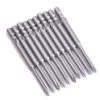
Stainless steel is the preferred material for fasteners in many demanding environments due to its excellent corrosion resistance and strong mechanical properties. However, a localized form of corrosion known as "Stress Corrosion Cracking" (SCC) can silently occur, causing unexpected brittle fractures under tensile stress far below the material's yield strength when combined with specific corrosive media. This issue is particularly prominent in the chemical, marine, energy, and consumer goods industries. As a professional manufacturer of precision fasteners, Shenzhen Yongjing Precision Technology Co., Ltd. is committed to deeply analyzing the causes of SCC and providing clients with practical and effective protection strategies.
Understanding the Mechanism of SCC
The occurrence of SCC requires three fundamental conditions to be met simultaneously: a susceptible material, sufficient tensile stress, and a specific corrosive environment.
-
Susceptible Material: Austenitic stainless steels (such as the 304 and 316 series) are highly sensitive to SCC caused by chloride ions. Their face-centered cubic crystal structure provides a path for crack propagation under specific conditions. Martensitic stainless steels, on the other hand, are more sensitive to sulfide or alkaline environments.
-
Tensile Stress: This acts as the "driving force" for SCC. The stress originates not only from the preload applied during assembly (working stress) but also from residual stresses generated during manufacturing (such as internal stresses caused by cold heading, thread rolling, or improper heat treatment).
-
Corrosive Environment: This serves as the "catalyst." For austenitic stainless steel, the most common culprit is chloride ions. Even low concentrations of chlorides (found in seawater, salt spray, industrial atmospheres, and even human sweat) can induce SCC when temperatures rise (typically above 60°C). Other common cracking agents include sulfides and high-temperature alkaline solutions.
SCC cracks usually initiate from surface defects or corrosion pits, expanding into the material in a branching pattern along specific grain boundaries or transgranular paths. Macroscopically, the fracture site may show only slight signs of corrosion, but microscopic cracks have already spread extensively until the remaining cross-section can no longer bear the load, resulting in instantaneous fracture—a highly hazardous failure mode.
Yongjing Precision's Comprehensive Protection System
Based on a profound understanding of the SCC mechanism, Yongjing Precision has built an all-encompassing protection system across four dimensions: material selection, structural design, manufacturing process, and post-treatment.
1. Strategic Material Selection
We adhere to the principle of "selecting materials based on needs." For humid environments with chloride ion risks, we prioritize recommending materials with superior SCC resistance. For instance, compared to 304, 316 stainless steel contains added molybdenum, which significantly enhances its resistance to pitting and SCC. For even harsher environments, such as high-temperature and high-pressure chemical equipment, we suggest using high-nickel corrosion-resistant alloys (e.g., Inconel 625, Hastelloy C-276) or Duplex stainless steels. Thanks to their mixed microstructure of austenite and ferrite, Duplex stainless steels effectively hinder crack propagation and offer exceptional anti-SCC performance.
2. Structural Design & Manufacturing Process
Our core goal at this stage is to reduce stress concentration and eliminate harmful residual stresses.
-
Optimized Design: Yongjing Precision's engineering team utilizes advanced Finite Element Analysis (FEA) software to optimize the transition fillet between the head and shank, as well as the shape of the thread root. This ensures smooth stress distribution and avoids local stress peaks.
-
Precision Manufacturing: We strictly control the amount of cold heading deformation and employ high-precision thread rolling technology to ensure continuous metal flow lines, minimizing the generation of internal micro-cracks.
-
Stress Relief Annealing: Crucially, we introduce a stress relief annealing process. For high-strength stainless steel fasteners that undergo significant plastic deformation or machining, we arrange a low-temperature stress relief annealing step prior to final treatment. Conducted below the material's tempering temperature, this process uses thermal energy to rearrange dislocations within the crystal lattice, significantly reducing or eliminating residual internal stresses introduced by cold working and machining—without compromising the original mechanical properties or corrosion resistance. This fundamentally weakens the "stress" condition among the three elements of SCC, making it one of the most effective preventive measures.
3. Post-Treatment & Surface Protection
We spare no effort in enhancing surface integrity. High-quality passivation treatment forms a dense, stable chromium oxide protective film on the stainless steel surface, serving as the foundation for improving overall corrosion resistance and delaying the initiation of corrosion pits. For fasteners exposed to extreme corrosive environments, we also provide advanced surface treatment solutions such as Physical Vapor Deposition (PVD) coatings and Dacromet coatings. These coatings not only effectively isolate the substrate from corrosive media but also possess excellent corrosion resistance and low friction coefficients, further elevating the product's comprehensive performance.
In summary, Stress Corrosion Cracking in stainless steel fasteners is a complex interaction of material, environment, and mechanics. Leveraging deep technical expertise and rigorous engineering practices, Shenzhen Yongjing Precision Technology Co., Ltd. provides clients with one-stop solutions ranging from material consultation and structural optimization to customized processes. We understand that every single fastener is vital to the safety and stability of the overall structure. Therefore, we always approach every potential risk with a scientific mindset and forge product reliability with exquisite craftsmanship, ensuring that Yongjing Precision fasteners demonstrate exceptional durability and safety under various complex operating conditions.















 Login
Login








 Contact
 WeChat
 粤ICP备2025493240号-1