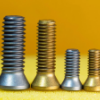
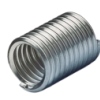
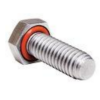
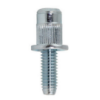
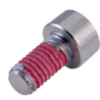
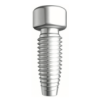
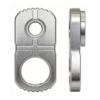
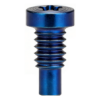
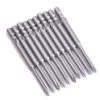
Cold heading forming serves as the core manufacturing process for fasteners. It shapes wire rods into target profiles through metal plastic deformation at room temperature. This process not only determines the geometric dimensions of fasteners but also fundamentally affects key characteristics such as metal flow line distribution, work hardening degree and surface quality, thereby defining the final mechanical properties of fasteners. With years of manufacturing experience, Shenzhen Yongjing Precision Technology Co., Ltd. fully recognizes the profound influence of cold heading technology on product performance.
I. Integrity and Continuity of Metal Flow Lines
The greatest advantage of cold heading is its ability to retain the inherent metal fiber structure of raw materials and form continuous flow lines along the fastener contour. Unlike material removal processes such as turning and milling that cut off metal fibers, cold heading realizes metal forming through extrusion and upsetting without destroying fiber continuity, making the internal microstructure denser and more uniform.
Performance Improvement: Continuous metal flow lines enable smooth stress transmission under external loads and avoid stress concentration caused by fractured fibers. This significantly enhances the fatigue strength, impact toughness and stress corrosion resistance of fasteners. Key components bearing alternating loads, such as engine connecting rod bolts and wind turbine foundation bolts, achieve excellent fatigue durability mainly benefiting from the complete fiber structure formed by cold heading.
II. Work Hardening Effect
During room-temperature plastic deformation, metal grains are elongated and broken with sharply increased dislocation density, resulting in improved strength and hardness while reduced plasticity and toughness. This phenomenon is defined as work hardening.
Positive Effects: The cold heading process itself serves as a physical strengthening method. Through reasonable deformation distribution, the shank, head and thread of fasteners obtain significant work hardening effects. Certain strength grades such as Grade 4.8 and 6.8 can be achieved without heat treatment, which reduces energy consumption and production costs while avoiding thermal deformation and surface decarburization risks caused by heat treatment.
Negative Effects: Excessive or uneven work hardening leads to insufficient toughness reserve and increased brittleness, easily causing brittle fracture during assembly and service. Excessively high hardness reduces plastic deformability, resulting in poor performance in riveting and micro-deformation working scenarios.
III. Dimensional Accuracy and Surface Quality
Cold heading die accuracy directly determines the dimensional precision of finished fasteners. High-precision dies produce fasteners with standard head profiles and high thread accuracy, ensuring excellent interchangeability and assembly performance.
Under high-pressure extrusion, metal fits closely with the die cavity, forming a smooth and flawless surface. The superior surface quality reduces friction coefficient for easier assembly and minimizes micro-notches on the surface, effectively restraining fatigue crack initiation and extending fatigue service life.
IV. Internal Defect Control
Cold heading compacts internal looseness and micro-pores of raw materials, improving material density and structural compactness. However, improper parameter settings may induce new internal defects and damage mechanical performance.
Folding Defects: Surface metal is folded into the interior during unbalanced metal flow, forming sharp notches at folding positions. Such defects act as severe stress concentration sources and drastically reduce static strength and fatigue resistance.
Cracking Defects: Cracks are mainly caused by poor material plasticity, excessive single-station deformation or insufficient lubrication. As direct structural failure sources, cracks must be completely eliminated during production.
Shrinkage Cavity and Central Fracture: Unreasonable deformation distribution in multi-station cold heading easily causes central shrinkage or internal cracking at the head or shank, seriously deteriorating tensile strength and toughness.
V. Standard Process Control Measures of Yongjing Precision
To maximize the technical advantages of cold heading and eliminate potential negative impacts, Yongjing Precision has established a comprehensive and standardized process control system.
Raw Material Optimization: High-quality cold-heading-grade wire rods with excellent plasticity and stable hardening rate are selected to ensure outstanding formability and deformation uniformity.
Scientific Deformation Design: Finite element simulation and repeated trial production are adopted to reasonably distribute deformation capacity of each station, ensuring smooth metal flow and preventing folding and cracking defects.
High-Precision Die Manufacturing: Premium die steel and ultra-precision machining technology are applied to guarantee high dimensional accuracy, superior surface finish and long wear resistance of dies.
Professional Lubrication Management: Special phosphating and saponification lubricants are used to form a stable and high-strength lubricating film between metal and dies, reducing friction and die wear, and effectively avoiding surface scratching and die adhesion.
VI. Conclusion
Cold heading is a double-edged process for fastener manufacturing. Precise and standardized cold heading craftsmanship endows fasteners with superior comprehensive mechanical properties, while improper process control will leave fatal hidden dangers for structural safety. Yongjing Precision insists on in-depth process research and refined parameter control, ensuring every delivered fastener possesses stable and reliable intrinsic quality.




















 Login
Login








 Contact
 WeChat
 粤ICP备2025493240号-1