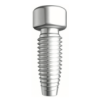
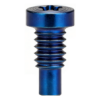
Heat treatment is the core process that determines the mechanical performance of medium and high-strength fasteners. By precisely controlling the heating, holding and cooling procedures, heat treatment optimizes the internal microstructure of steel and achieves targeted strength, hardness, plasticity and toughness. For Shenzhen Yongjing Precision Technology Co., Ltd., accurate interpretation and strict control of heat treatment parameters are essential to guarantee consistent performance and long-term reliability of fastener products.
I. Heating Temperature
Heating temperature is the primary heat treatment parameter that determines the austenitization degree of steel materials.
1. Quenching Temperature
The purpose of quenching heating is to achieve full and uniform austenitization. Insufficient heating temperature leads to incomplete austenitization, leaving undissolved ferrite or carbides in the microstructure, which results in insufficient hardness and uneven strength after quenching. Excessively high temperature causes rapid growth of austenite grains and forms coarse martensite after quenching. Although the hardness may meet standards, the material toughness and plasticity decrease significantly with increased brittleness, accompanied by higher risks of quenching deformation and cracking.
2. Tempering Temperature
Tempering temperature is the decisive parameter for final mechanical properties. Quenched martensite features high hardness but extreme brittleness. Tempering eliminates internal residual stress, stabilizes microstructure and balances comprehensive mechanical properties. Tempering temperature is positively correlated with toughness and plasticity and negatively correlated with strength and hardness. Low-temperature tempering retains high strength and hardness but sacrifices toughness; high-temperature tempering improves toughness and plasticity with a slight reduction in strength. Performance grading of 8.8, 10.9 and 12.9 grade bolts is realized through differentiated tempering temperature settings.
II. Holding Time
Holding time ensures thorough and uniform heating of workpieces and complete microstructural transformation.
1. Quenching Holding Time
Sufficient holding time guarantees that both the surface and core of fasteners reach the quenching temperature and achieve uniform austenite distribution. Insufficient time leads to incomplete structural transformation; excessive time causes grain coarsening, severe surface decarburization and energy waste.
2. Tempering Holding Time
Reasonable tempering holding time promotes the full transformation of quenched martensite into tempered sorbite or tempered troostite and completely releases residual internal stress. Inadequate tempering results in residual stress concentration and unstable dimensional accuracy. Overlong holding time leads to excessive hardness attenuation and carbide aggregation.
III. Cooling Speed
Cooling speed determines the transformation products of supercooled austenite and is the key to martensite formation.
1. Quenching Cooling Speed
The quenching cooling rate must exceed the critical cooling rate of steel to suppress the formation of pearlite and bainite, so that the material can be supercooled below the martensite start (Ms) temperature to form martensite. Insufficient cooling speed produces mixed non-martensite microstructures and fails to meet hardness requirements. In contrast, excessively fast cooling generates huge thermal and structural stress, causing workpiece deformation and cracking. Therefore, selecting appropriate quenching media such as fast quenching oil and water-based quenching liquid, and controlling medium temperature and stirring speed are critical for stable quenching quality.
2. Post-Tempering Cooling
General fasteners have no strict requirement on post-tempering cooling speed and adopt natural air cooling. For alloy steels with temper brittleness tendency, rapid cooling such as oil cooling or water cooling is required after tempering to restrain brittleness and stabilize mechanical performance.
IV. Furnace Atmosphere Control
Furnace atmosphere directly affects the surface chemical composition and surface quality of workpieces during heating.
1. Decarburization
Heating in open or oxidizing atmosphere causes surface carbon oxidation and loss, forming a soft ferrite layer. Surface decarburization severely reduces surface hardness, wear resistance and fatigue strength, which is a fatal defect for high-strength fasteners.
2. Carburization and Atmosphere Protection
Controlled carbon potential atmosphere and protective mixed gas such as nitrogen and hydrogen are applied to prevent decarburization. For special fasteners requiring ultra-high surface hardness, targeted carburizing treatment is implemented to enhance surface strength and wear resistance.
3. Oxidation
Uncontrolled furnace oxidation forms scale on workpiece surfaces, resulting in material loss, poor surface finish and reduced assembly accuracy.
V. Standardized Heat Treatment Practices of Yongjing Precision
Shenzhen Yongjing Precision Technology Co., Ltd. adopts systematic control measures to ensure accurate and stable execution of heat treatment parameters.
Equipment Guarantee: Continuous mesh-belt heat treatment furnaces equipped with high-precision temperature control, carbon potential control and circulating cooling systems are applied to ensure stable and repeatable technological processes.
Real-Time Process Monitoring: Furnace temperature profilers are used regularly to calibrate temperature zones and instrument accuracy. Quenching oil and cooling liquid are inspected, filtered and maintained periodically to stabilize cooling performance.
Strict First-Article and Patrol Inspection: Hardness and decarburization layer detection are conducted for each batch before and after heat treatment. Regular metallographic analysis and mechanical property testing are carried out to realize data-driven process optimization and stable production control.
VI. Conclusion
Heat treatment is not a simple heating and cooling process, but a systematic project relying on the precise coupling of temperature, holding time, cooling speed and furnace atmosphere. Scientific parameter analysis and strict full-process control are the fundamental guarantee for stably producing high-strength fasteners with excellent performance and high operational safety.






























 Login
Login








 Contact
 WeChat
 粤ICP备2025493240号-1