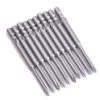
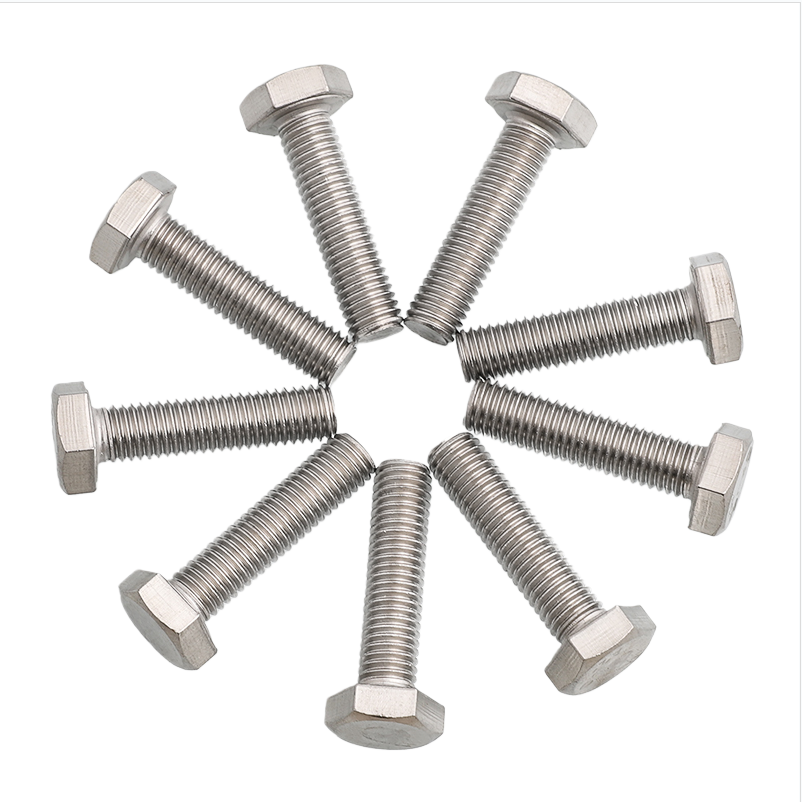
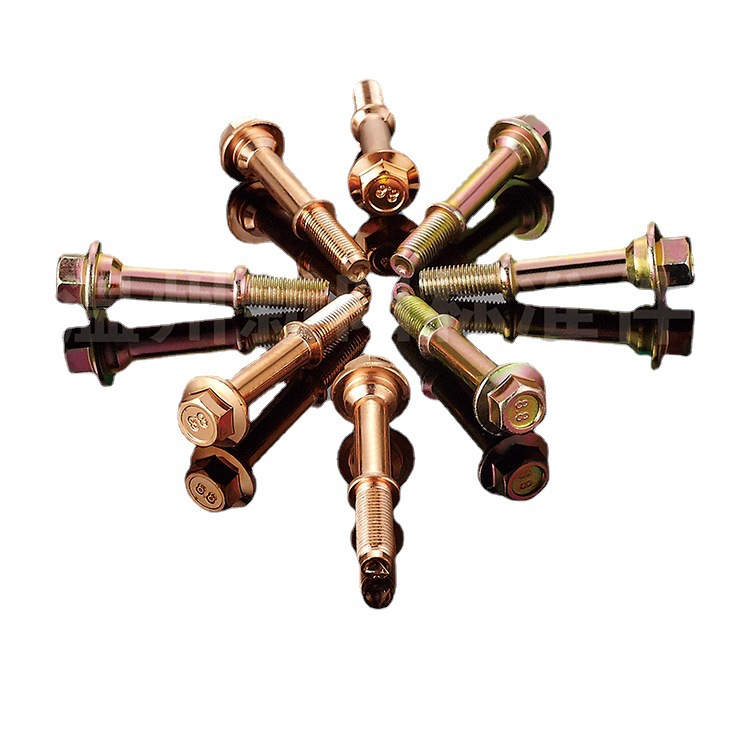
Dimension accuracy is one of the most fundamental and critical quality characteristics of fasteners, directly affecting assembly convenience, connection reliability and uniform load distribution. As a professional precision manufacturer, Shenzhen Yongjing Precision Technology Co., Ltd. implements full-process dimension accuracy control covering every manufacturing procedure from raw material input to finished product delivery.
I. Accuracy Planning at the Design Stage
Precision control starts from design. According to specific application scenarios and functional requirements, designers reasonably define dimensional tolerances, geometric tolerances such as straightness, roundness and coaxiality, and thread precision grades including 4h, 6g and 6H. Excessively high precision standards unnecessarily increase production costs, while insufficient tolerance standards fail to guarantee assembly and service performance. Scientific precision planning balances functional reliability and economic efficiency.
II. Precision Control During Manufacturing Process
1. Raw Material Accuracy Control
The diameter tolerance and ovality of cold heading wire rods constitute the foundation of fastener dimensional consistency. Only precision-rolled wires that meet national standards or higher industrial requirements are adopted to ensure stable raw material precision and eliminate dimensional deviation at the source.
2. Cold Heading Forming Precision Control
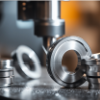
Die Precision Assurance: Dies determine the final forming accuracy. The company adopts high-precision CNC grinding machines and EDM equipment for die manufacturing, achieving micron-level precision in cavity dimension, surface finish and concentricity. High-quality cemented carbide and powder high-speed steel are selected for die materials, with PVD and CVD surface coatings applied to enhance wear resistance and extend precision retention life.
Equipment Stability Control: High-rigidity multi-station cold heading machines provide reliable hardware guarantee for precision production. Spindle runout, slider movement accuracy and feeding stability directly affect product dimensional consistency. Regular equipment maintenance and precision calibration are implemented to maintain long-term operational stability.
Process Parameter Optimization: Through finite element simulation and repeated trial debugging, optimal upsetting force, forming speed and station transfer coordination are confirmed. This avoids incomplete material filling and excessive flash caused by unsmooth metal flow, ensuring stable forming dimension and contour accuracy.
3. Thread Machining Precision Control
Thread rolling is the mainstream thread forming process, whose accuracy depends on the following key factors.
Rolling Tool Accuracy: The tooth profile, lead and half-angle precision of thread rolling plates and rollers must be strictly higher than the finished product tolerance requirements to reserve precision margin.
Blank Diameter Control: The shank blank diameter before rolling is the decisive factor of thread pitch diameter. Excessive blank diameter causes thread crest collapse, while insufficient diameter leads to incomplete tooth filling and sharp-tooth defects. The consistency of blank size is guaranteed through precise cold heading dimension control and fixed-diameter grinding processes.
Equipment Calibration: Parallelism of rolling plates and center distance between rolling rollers and workpieces are strictly calibrated to prevent common thread defects such as oversize pitch diameter (go gauge pass / no-go gauge fail) and undersize pitch diameter (go gauge block).
4. Heat Treatment Deformation Control
Thermal stress and structural stress during heat treatment easily cause dimensional deviation and structural distortion, including bending deformation and pitch variation.
Uniform Heating and Cooling: Strictly control furnace temperature uniformity, workpiece heating consistency and quenching cooling uniformity to reduce differential stress.
Special Tooling Fixtures: Special tempering fixtures are adopted for long and easily deformed parts to implement in-process straightening and shaping and suppress bending distortion.
Thermal Process Optimization: Isothermal quenching and staged quenching processes are applied to effectively minimize heat treatment deformation.
III. Inspection and Closed-Loop Feedback System
Precision manufacturing relies on scientific inspection and real-time data feedback. A complete quality inspection system is established to realize full-process precision monitoring.
First Article Inspection: Full-dimensional inspection is conducted for the first batch of products after startup or die replacement to verify compliance with drawing specifications before mass production.
In-Process Patrol Inspection: Key dimensions are sampled and tested periodically during production using digital calipers, micrometers and optical comparers to discover dimensional deviation in a timely manner.
Thread Gauge Inspection: Thread plug gauges and ring gauges are used for rapid comprehensive judgment of effective pitch diameter, single pitch diameter, major diameter and minor diameter.
High-Precision Metrology: In the professional measurement laboratory, thread micrometers, length measuring machines, tool microscopes and contour measuring instruments are adopted to accurately detect thread pitch, tooth half-angle and pitch diameter, so as to analyze error sources and optimize processes.
SPC Statistical Process Control: Key dimensional data are collected and statistically analyzed to generate control charts. Real-time process stability monitoring and trend early warning realize predictive adjustment, transforming traditional post-inspection quality control into pre-prevention quality management.
IV. Environmental and Human Factor Management
Constant temperature and humidity metering environments are strictly maintained to ensure accurate and repeatable measurement results. Continuous skill training and quality awareness education for operators and inspectors ensure the effective implementation of all precision control standards and standardized operating procedures.
V. Conclusion
Fastener dimension accuracy control is a systematic project covering design planning, manufacturing optimization, precision inspection and full-process management. Relying on standardized design logic, high-precision equipment, stable manufacturing processes, scientific detection means and comprehensive quality management culture, Shenzhen Yongjing Precision Technology Co., Ltd. builds a full-dimensional precision control system, ensuring excellent dimensional consistency and interchangeability of all delivered fasteners.


















 Login
Login








 Contact
 WeChat
 粤ICP备2025493240号-1