
























 Login
Login






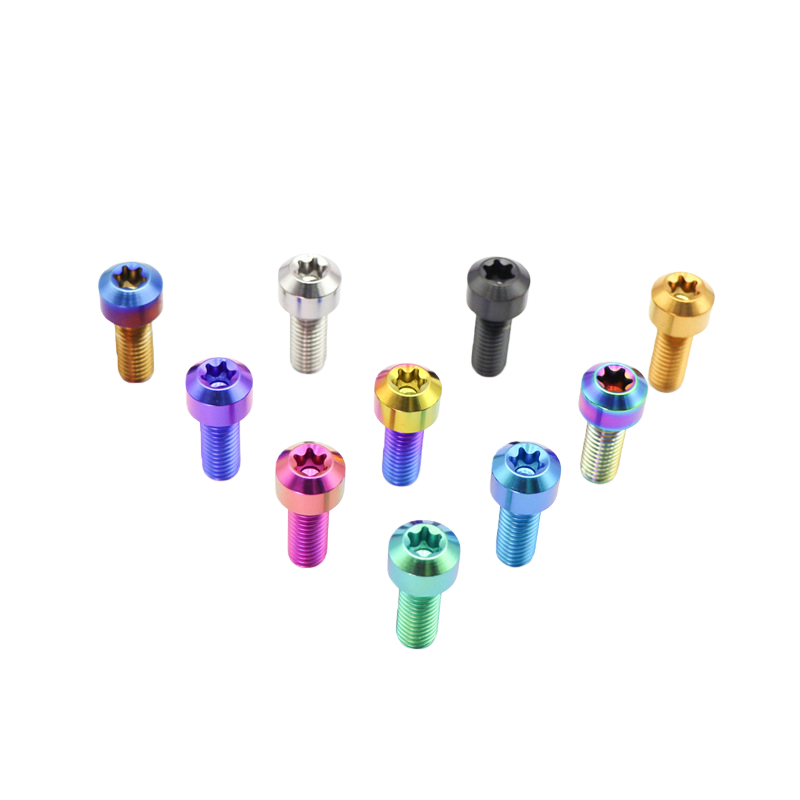
Hydrogen embrittlement, also known as hydrogen-induced delayed fracture, is one of the most insidious and dangerous failure modes for high-strength steel fasteners, especially bolts of performance class ≥10.9. It manifests as a sudden brittle fracture of a fastener under static stress below the material's yield strength, after a certain incubation period. Shenzhen Yongjing Precision Technology Co., Ltd. regards hydrogen embrittlement as the "number one enemy" in high-end fastener production and has established a comprehensive prevention and control system.
1. Mechanism of Hydrogen Embrittlement
The widely accepted theories are the "hydrogen pressure theory" and the "decohesion theory."
-
Ingress of Hydrogen: Hydrogen atoms (H) enter the steel during manufacturing processes such as smelting, electroplating, and pickling, or from corrosion reactions in the service environment.
-
Diffusion and Accumulation of Hydrogen: The intruding hydrogen atoms diffuse through the crystal lattice and accumulate at stress concentration zones (such as thread roots or triaxial stress zones at the head-shank junction) or micro-traps (such as grain boundaries or inclusion interfaces), where they combine to form hydrogen molecules (H₂).
-
Crack Formation: Hydrogen molecules continuously accumulate within micro-voids, generating extremely high internal pressure. When this pressure, combined with the external tensile stress, exceeds the local fracture strength of the material, micro-cracks initiate and propagate.
-
Delayed Fracture: The diffusion and accumulation of hydrogen take time, so fracture does not occur immediately but after an incubation period, which makes it highly sudden and destructive.
2. Main Causes of Hydrogen Embrittlement
-
Material Strength Level: The higher the strength (hardness), the more rapidly the sensitivity to hydrogen embrittlement increases. This is the fundamental reason why the risk of hydrogen embrittlement for grade 12.9 bolts is much higher than for grade 8.8 bolts.
-
Source of Hydrogen (Hydrogen-Generating Processes):
-
Pickling: When removing scale from fasteners after heat treatment, if the pickling solution concentration, temperature, or time is excessive, the reaction between steel and acid produces hydrogen atoms that penetrate the metal.
-
Electroplating: This is the most common step where hydrogen enters. During cathodic electroplating (e.g., zinc plating), the workpiece acts as a cathode, and hydrogen evolution occurs, generating large numbers of hydrogen atoms on the workpiece surface that penetrate into the material.
-
Cathodic Degreasing: Cathodic electrolytic degreasing, a pre-treatment step before electroplating, can also introduce hydrogen.
-
Environmental Corrosion: In acidic environments containing hydrogen sulfide, corrosion reactions can also produce hydrogen.
-
-
Stress Level: Fasteners are subjected to high tensile stress after installation, which provides a strong driving force for hydrogen accumulation.
3. Prevention and Control Measures for Hydrogen Embrittlement
Preventing hydrogen embrittlement requires a systematic strategy combining both "prevention" and "treatment."
-
Design Level: Where functionality permits, avoid using ultra-high strength grades (e.g., above grade 12.9) that are extremely sensitive to hydrogen embrittlement. Optimize structural design to reduce stress concentration.
-
Manufacturing Process Control:
-
Reducing Hydrogen Ingress:
-
Replace Pickling: Use mechanical methods for scale removal, such as shot blasting, shot peening, or tumbling, to fundamentally avoid the hydrogen introduced by pickling.
-
Optimize Electroplating Process: Use low-hydrogen embrittlement electroplating processes, such as zinc-nickel alloy plating or Dacromet coating, which produce far less hydrogen than ordinary zinc plating. If ordinary zinc plating is necessary, add corrosion inhibitors to the plating solution and use higher current efficiency to reduce hydrogen evolution.
-
-
Removing Intruded Hydrogen (Baking/Debydrogenation):
-
This is the most critical and effective measure. For all high-strength fasteners (typically specified as ≥ grade 10.9) that have undergone pickling or electroplating, a baking/dehydrogenation treatment must be performed as soon as possible after plating (typically within 4 hours).
-
Process Specification: Heat the parts in an oven at 190°C to 230°C for a sufficiently long time (typically 8 to 24 hours, depending on part thickness and strength grade). Heating gives hydrogen atoms in the steel energy to diffuse to the surface and escape, thereby significantly reducing the internal hydrogen content.
-
-
-
Strict Process and Final Inspection:
-
Hardness Control: Strictly control the final hardness of the finished product to avoid increasing hydrogen embrittlement sensitivity due to excessive hardness.
-
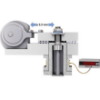
Hydrogen Embrittlement Testing: For parts with stringent requirements, perform hydrogen embrittlement tendency tests such as the parallel bearing surface method or the stress ring method to simulate a high-stress state and observe whether fracture occurs within the specified time.
-
At Yongjing Precision, we have established a mandatory dehydrogenation treatment process for all high-risk products, with strict monitoring and recording of the temperature and time of the dehydrogenation ovens. At the same time, we actively promote low-hydrogen-embrittlement and hydrogen-free surface treatment technologies. We understand that any negligence regarding hydrogen embrittlement could cause irreparable consequences. Therefore, with a "zero tolerance" attitude and through meticulous management of the entire process, we ensure that every high-strength fastener we delivers remains free from the threat of hydrogen embrittlement.



 粤ICP备2025493240号-1