
One-stop Fastener
Custom Manufacturing Expert

Why 10.9/12.9 Bolts Dominate Automotive Chassis

[Abstract]:The automotive chassis serves as the vehicle's "skeleton," supporting the engine, transmission, suspension, and braking systems while withstanding complex dynamic loads
Why 10.9/12.9 Bolts Dominate Automotive Chassis

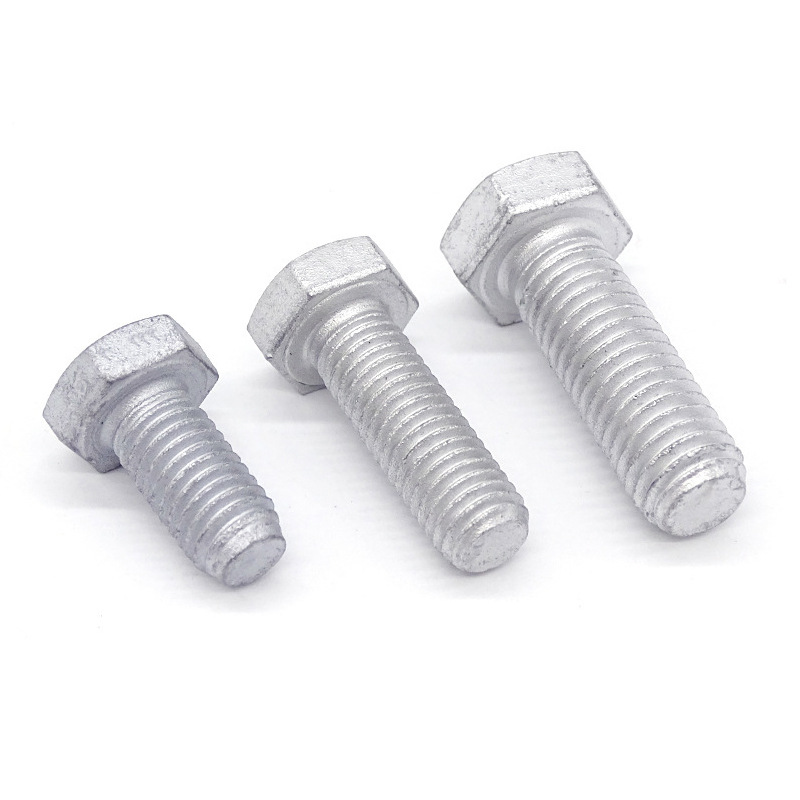
The automotive chassis serves as the vehicle's "skeleton," supporting the engine, transmission, suspension, and braking systems while withstanding complex dynamic loads – impact from rough roads, lateral forces during cornering, longitudinal forces during braking, and alternating vibrations. Bolts are the core fasteners connecting chassis components, and their performance directly determines connection reliability, driving safety, and service life. In chassis design, 10.9 and 12.9 grade high-strength bolts are widely adopted – not ordinary 4.8 or 8.8 grade bolts – because these two grades precisely match the demanding operating conditions of automotive chassis, balancing strength, toughness, and lightweighting requirements.

Understanding Strength Grades

Bolt strength grades are determined by tensile strength and yield strength. The number before the decimal point is 1/100 of tensile strength (MPa); the number after is the yield-to-tensile ratio. For 10.9 grade bolts: tensile strength ≥1040MPa, yield strength ≥940MPa. For 12.9 grade: tensile strength ≥1220MPa, yield strength ≥1100MPa. By comparison, 8.8 grade bolts have only 830MPa tensile strength and 660MPa yield strength – far below chassis requirements.

High Strength and Fatigue Resistance

Chassis bolts operate under alternating loads. During acceleration, bolts endure instantaneous tension and torque. During braking, inertial forces concentrate on brake and suspension connections, creating huge longitudinal tension. During cornering, lateral loads act on knuckles and control arms. Road bumps deliver continuous shock and vibration. Over time, alternating loads cause fatigue failure. Insufficient bolt strength leads to stretching, fracture, suspension detachment, or brake failure.

10.9 and 12.9 grade bolts effectively withstand these complex loads. For control arm bolts connecting the arm to knuckle – under shock and lateral forces – an 8.8 grade bolt might fracture during hard cornering or rough roads. A 10.9 grade bolt has 1.2-1.3 times higher tensile and shear strength. For even higher-load locations like engine mount and transmission mounting bolts, 12.9 grade bolts are used, resisting high-frequency vibration and torque.

Lightweighting Advantage

Lightweighting is a core industry trend. Under the same load requirement, higher strength allows smaller cross-section. A 12.9 grade bolt can be smaller in diameter and shorter than an 8.8 grade bolt, reducing weight. With dozens of bolts in suspension, brake, and drivetrain systems, cumulative weight savings improve fuel economy and EV range.

Toughness and Hydrogen Embrittlement Resistance

High-strength bolts are susceptible to hydrogen embrittlement – hydrogen atoms penetrate during pickling or electroplating, then gather under stress, causing brittle delayed fracture. 10.9 and 12.9 grade bolts undergo strict heat treatment (quenching + tempering) to improve both strength and toughness while reducing embrittlement risk. The industry also applies hydrogen baking to further enhance resistance, ensuring no sudden fracture during long-term service.

Corrosion Resistance

Chassis bolts face rain, mud, salt (especially winter de-icers). Poor corrosion resistance leads to rust and strength loss. 10.9 and 12.9 grade bolts typically receive zinc plating, Dacromet, or e-coating. Dacromet offers excellent salt spray performance with low hydrogen embrittlement risk – ideal for high-strength chassis bolts – matching the chassis design life of 10-15 years.

Differentiated Application by Location

Not all chassis locations need 12.9 grade. High-load locations – engine mounts, transmission bolts, steering knuckle connections, brake caliper bolts – use 12.9 grade. Lower-load locations – suspension arm auxiliary connections, stabilizer bar links – use 10.9 grade, balancing strength and cost.

Cost-Performance Comparison

4.8 and 6.8 grade bolts are too weak for chassis loads. 14.9 grade bolts offer higher strength but are complex to manufacture, costly, and less tough – used in aerospace, unnecessary for automotive chassis. 10.9 and 12.9 grade bolts have mature production processes, moderate cost, satisfy performance requirements, and support mass production.

Safety Standards

Automotive safety standards increasingly demand chassis bolt reliability. China's GB/T 3098.1 standard explicitly requires that bolts in critical chassis load-bearing locations be no lower than 10.9 grade, driving adoption of 10.9 and 12.9 grade bolts.

New Energy Vehicles

EV battery packs (weighing hundreds of kilograms) are mounted under the chassis and require high-strength bolts to prevent loosening or detachment. EV motors operate at higher vibration frequencies, demanding better fatigue and anti-loosening performance. 10.9 and 12.9 grade bolts meet these requirements effectively.

Conclusion

Automotive chassis predominantly use 10.9 and 12.9 grade bolts because they precisely match demanding chassis conditions: excellent strength and fatigue resistance to withstand complex alternating loads; lightweighting benefits to improve fuel economy; good toughness and hydrogen embrittlement resistance for long-term reliability; mature production processes and moderate cost for mass production. As the automotive industry evolves, performance demands on chassis bolts will continue to rise. 10.9 and 12.9 grade bolts – balancing performance and cost – will remain the core fasteners for automotive chassis, providing a solid foundation for driving safety.


Professional consultant team online, ready to provide solutions for you

Contact Now
WeChat

WeChat

Scan to add WeChat

Long press to scan

Service