
Products
Solutions
Applications
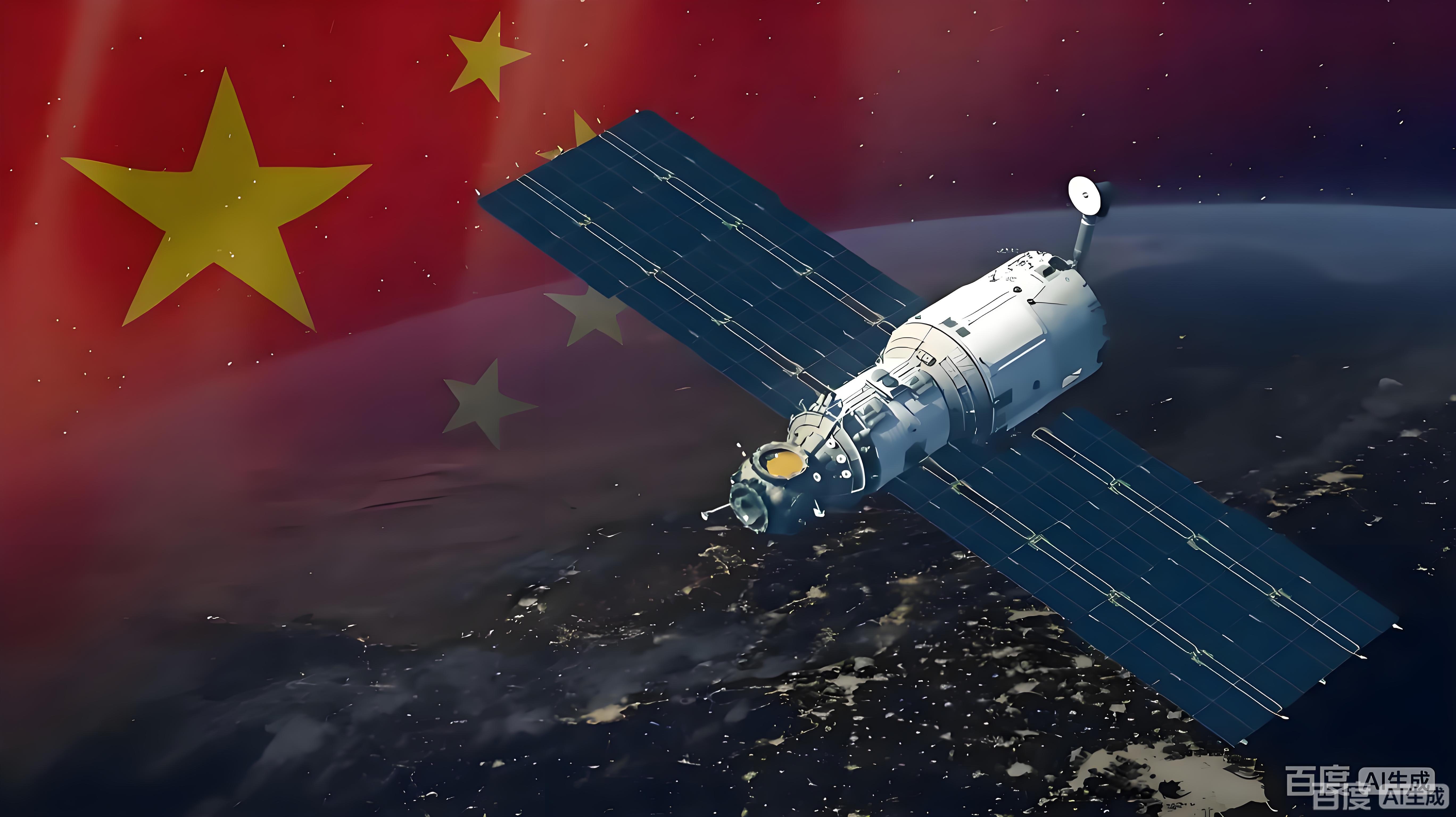
The aerospace sector has kicked off 2026 with remarkable momentum: a massive 5.2 billion RMB offshore rocket recovery base has broken ground in Hangzhou, the scale of satellite ETFs has nearly doubled within a single month, and both Zhuque-3 (朱雀三号) and Long March 12A (长征十二号甲) are aggressively pushing the boundaries of reusable technology. Behind this flurry of major developments lies a clear signal that China's commercial space industry has bid farewell to its startup phase and is now sprinting at full speed. A global race concerning vital space resources and future industries has officially begun.

Commercial spaceflight is no longer a niche track; it has become a strategic fulcrum for leveraging the future. Industry forecasts predict the global market size will skyrocket to $1.1 trillion by 2030. From low-orbit communication constellations to orbital computing centers, and from direct-to-phone satellite connectivity to supporting the burgeoning low-altitude economy, a multi-trillion-dollar blue ocean is rapidly taking shape. Furthermore, the continuous breakthroughs of SpaceX's Starship have set a new benchmark for this competition.


With the successful 11th test flight of Starship V2, reusable technology has driven launch costs down to between 14,000 and 18,000 RMB per kilogram, while mass production plans are poised to launch. More critically, space frequency bands and orbital resources are non-renewable assets allocated on a "first-come, first-served" basis. With the US and Russia already occupying 80% of the prime frequency bands, the battle for positioning in low-orbit constellations is intensifying. Haitong Securities points out that this technological gap combined with resource urgency is forcing domestic commercial space sectors to hit the "fast-forward button".

Under immense pressure, China's commercial space industry is demonstrating significant cluster-style breakthroughs. The stage, once dominated solely by the "national team," now gathers diverse forces: Liangjiang Aviation Investment is partnering with traditional aerospace enterprises to solidify the supply chain foundation; China Mobile has secured satellite internet operating licenses to layout the application end; and private enterprises are blossoming across multiple fronts. Yuanjian Technology's "Yuanxingzhe-1" has achieved a full closed-loop process for offshore recovery, and its Hangzhou base—planning an annual output of 25 rockets—aims to drive launch costs below 20,000 RMB per kilogram. Although Zhuque-3 narrowly missed the final step in its recent recovery attempt, it has successfully validated core transport capabilities, placing mature reusability just one final hurdle away.
Dual drives from capital and policy are further heating up the industry. As of January 9, the total scale of satellite industry-related ETFs surpassed 23.7 billion RMB—nearly doubling since the end of last year—with a single product exceeding 10 billion RMB, underscoring strong market confidence in the sector. The STAR Market has issued specific guidelines to open IPO channels for top-tier commercial rocket companies. Enterprises like LandSpace are raising funds to double down on reusable technologies, creating a virtuous cycle of "technological breakthrough - capital influx - iterative upgrade".

This race is far more than a simple contest of launch frequencies; it is a comprehensive showdown across the entire supply chain. While China's current active rocket payload capacity still lags behind Starship by a factor of 4 to 6, and reusable technology remains in the verification stage, distinct advantages are equally evident: a complete manufacturing system supports the localization of rocket components. Beijing is planning gigawatt-level space data centers, and Zhejiang is deploying thousands of computing satellites, placing application scenario innovation at the forefront. Major telecom carriers and leading smartphone manufacturers are actively entering the field, rapidly transitioning satellite communication from an "aerospace black tech" to widespread civilian adoption.

Transitioning from "following" to "running alongside," China's commercial space industry is entering a pivotal year of qualitative change. As the 5.2-billion-RMB rocket base rises along the Qiantang River, as satellite signals connect directly to hundreds of millions of mobile phones, and as computing power constellations begin to blueprint a space-based internet, the era of Greater Aerospace in China is no longer a distant vision. In this cosmic race involving resources, technology, and the future, we are catching up at acceleration. On the journey towards the vast sea of stars, we are writing an industrial legend that belongs to China.

Professional consultant team online, ready to provide solutions for you
Contact NowProducts
Solutions
Applications
Contact
Contact
WeChat
Contact: Manager Fan - Tel/WeChat: 135-6073-0094 Email: Flora.Fan@toprecision.com | Manager Ao - Tel/WeChat: 13560729614 Email: Olia.Ao@toprecision.com
Sales Director: Mr. Zhang - Tel: 13510369429 Email: xiaowei.zhang@zcjtech.com
© Copyright 2011 - 2026 Shenzhen Toprecision Precision Technology Co., Ltd. All Rights Reserved.
粤ICP备2025493240号-1
Cutter Screws
Thread Inserts
Sealing Products
Riveting Products
Locking Products
Direct Assembly
SMT Components
Precision Screws
Screwdriver Bits