Titanium Alloy: King of Aerospace Fasteners. This topic has recently attracted significant attention in the fastener industry, reflecting market focus on development trends.
The global fastener market exceeds 100 billion USD, with China accounting for approximately one quarter. Rapid growth in NEVs, wind and solar energy, and aerospace is driving demand for high-performance fasteners.
The industry faces challenges including raw material price volatility, trade friction, and environmental regulations. Companies must respond through innovation, lean management, and market diversification.
Toprecision will continue to track industry hot topics and share cutting-edge insights. Follow our website for more industry news and technical updates.
The Balance of Lightweight and High Strength
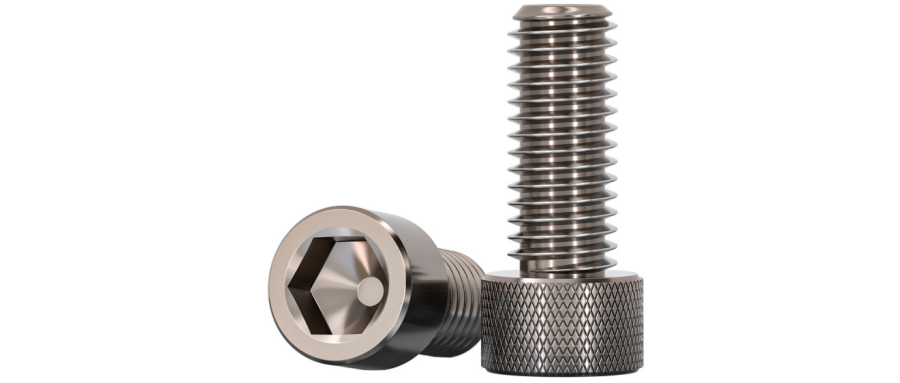
The balance between lightweight design and high strength is the core competitiveness of titanium alloys. The pursuit of weight reduction in aerospace equipment is almost fanatical; every kilogram shaved off enhances payload efficiency and expands mission boundaries. With a density of only 4.5g/cm³, titanium alloy is 43% lighter than stainless steel, yet its tensile strength can reach 800-1400MPa, boasting a specific strength far superior to both steel and aluminum alloys. For instance, the use of titanium alloy fasteners alone achieved a weight reduction of 1,814 kg on the Boeing 747. This remarkable capability for lightweighting is absolutely vital for aircraft striving for greater range and heavier payloads.
Tolerance to Extreme Environments
Its tolerance for extreme environments allows titanium alloys to stand firm against the trials of space. As aircraft travel from the ground to high altitudes, they must endure drastic temperature swings ranging from -50°C to 400°C, while also resisting challenges like high-altitude corrosion and vibration fatigue. Titanium alloys can operate stably over the long term between -50°C and 300°C. Certain grades, such as TC6, can even withstand temperatures up to 500°C, making them perfectly suited for hot-end scenarios around engines. Their exceptional corrosion resistance allows them to pass thousand-hour salt spray tests without rusting, effectively preventing galvanic corrosion triggered by high-altitude moisture and ion-rich environments, thus averting fastener failure.
Non-Magnetic Properties and Process Adaptability
Non-magnetic properties and excellent process adaptability align perfectly with the precision demands of aerospace. Equipment like satellites and radar systems is extremely sensitive to electromagnetic interference. The virtually non-magnetic nature of titanium alloys prevents any disruption to sensor signals and navigation systems—a distinct advantage that magnetic materials like stainless steel simply cannot match. Furthermore, different grades of titanium alloys can be tailored to diverse scenarios: TB2 titanium alloy offers excellent cold-forming properties, making it ideal for manufacturing cold-headed rivets; TC4 titanium alloy possesses strong processing toughness and is widely used for bolts in aircraft beams and landing gear; bimetallic rivets, which combine the plasticity of Ti-45Nb with the high strength of TC4, provide a perfect solution for connecting composite material components.
Proven Value Through History and Innovation
From historical application to technological iteration, titanium alloy fasteners have long proven their worth. As early as the 1950s, the American B-52 bomber pioneered the use of titanium alloy bolts, achieving significant weight reduction and subsequently setting a global aerospace standard. China's independently developed TB3 titanium alloy can be directly cold-headed and reaches a strength of 1100MPa after heat treatment, seeing widespread use in the manufacturing of high-strength aerospace bolts. Meanwhile, TC4 titanium alloy bolts cover a vast array of equipment including commercial airliners, satellites, and space shuttles, becoming fundamental components of the domestic aerospace industry.
Admittedly, titanium alloys present high machining difficulties and elevated costs. However, for the aerospace sector, reliability and performance take precedence far above cost. The failure of just a single titanium alloy fastener could cause an entire fighter jet or rocket to meet with catastrophic failure. On the aerospace track where the pursuit of ultimate safety is paramount, titanium alloy—armed with the comprehensive advantages of being lightweight, highly tolerant, and low-interference—has become the undisputed choice for fasteners.
These minuscule titanium components bear the critical safety mission of aerospace equipment, bearing witness to the synchronized evolution of material science and the aerospace industry. From low-altitude fighter jets to deep-space exploration, titanium alloy fasteners shoulder immense responsibilities with their "small frames," serving as an indispensable core cornerstone of China's grand aerospace era.


 135-6073-0094