
One-stop Fastener
Custom Manufacturing Expert

Solid-State Sodium Battery Rise Creates New Fastener Demand

[Abstract]:A research team at the University of Queensland has achieved a breakthrough in sodium battery technology, developing a novel solid-state sodium battery.
Solid-State Sodium Battery Rise Creates New Fastener Demand

A research team at the University of Queensland has achieved a breakthrough in sodium battery technology, developing a novel solid-state sodium battery. Laboratory tests show stable cycling exceeding 5,000 hours under 0.1 mA cm⁻² conditions. The battery replaces traditional flammable liquid electrolytes with a plastic-like solid core, fundamentally reducing overheating risk. This achievement provides a new solution for grid-scale renewable energy storage and opens targeted supporting opportunities for the upstream fastener industry.

This prototype battery was developed by a team led by Dr. Zhang Cheng at the Australian Institute for Bioengineering and Nanotechnology (AIBN) at the University of Queensland, with core positioning for grid energy storage battery packs. Compared to mainstream lithium batteries, the key innovation is using sodium extracted from table salt to replace scarce lithium resources, significantly reducing material costs while alleviating global lithium supply chain pressure. This enables countries without lithium reserves to independently pursue large-scale energy storage projects, supporting energy system diversification globally.

Sodium's advantages as a lithium substitute stem from its abundant resource availability. Both sodium and lithium belong to the alkali metal family with similar chemical properties, but sodium is far more abundant, existing in seawater, rock salt, and other natural resources. Extraction difficulty and cost are much lower than for lithium. The research team has focused on solid-state batteries, combining high-safety electrolytes with low-cost metals, and this breakthrough establishes the technical foundation for sodium battery industrialization.

The traditional pain point of sodium metal batteries has been dendrite formation in liquid electrolytes. These tiny metal spikes can puncture internal battery structures, causing short circuits, energy loss, or even fires. The flammability and overheating risk of liquid electrolytes also limit their use in large-scale energy storage. Solid-state electrolytes fundamentally solve this problem, improving battery safety while eliminating the need for heavy protective packaging, enabling battery pack miniaturization and integration.

Solid-state electrolyte development previously faced a core trade-off: materials needed sufficient strength to block dendrite growth while maintaining internal porosity for sodium ion conduction. Most candidate materials either lacked compressive strength and broke easily or had low ion conduction efficiency causing poor battery performance. The research team overcame this challenge through molecular-level electrolyte restructuring rather than simple salt replacement.

The new electrolyte uses block copolymer material composed of two different repeating chain segments forming long-chain structures. One segment adsorbs sodium ions while the other maintains smooth fluoride characteristics, providing both flame resistance and flexibility. After special treatment, the chain segments form a body-centered cubic structure, creating interconnected ion容纳 chambers and conduction tunnels, achieving low-resistance sodium ion migration while effectively blocking metal spike penetration. In full-cell tests with sodium vanadium phosphate cathodes, the battery maintained over 91% initial capacity retention after 1,000 fast charge-discharge cycles at 79.9°C.

Sodium battery advantages extend beyond cost and safety to supply chain sustainability. Unlike lithium batteries, their cathodes require no rare metals such as cobalt or nickel, avoiding mining-related pollution and labor issues while further reducing supply chain pressure. For power grids equipped with solar or wind generation, these long-life, high-stability batteries can be manufactured as containerized energy storage units installed at substations to store surplus electricity, mitigating the intermittency of wind and solar power and ensuring continuous clean energy supply.

As sodium batteries advance toward commercial grid storage deployment, their packaging and assembly processes impose strict requirements on fasteners. Containerized energy storage battery packs integrate numerous battery modules facing complex conditions including vibration, high temperature, and humidity. Fastener stability directly determines energy storage system safety and service life. Given the 79.9°C operating temperature and cycling characteristics, supporting fasteners must provide high-temperature resistance, corrosion resistance, and fatigue resistance.

For battery module fixation, trapezoidal thread bolts are suitable. These bolts feature trapezoidal threads with 30-degree flank angles, providing high load capacity and transmission efficiency for heavy-duty energy storage equipment. Material selection can include 42CrMo chromium-molybdenum alloy steel with grade 10.9 strength, paired with high-temperature zinc plating or ceramic-zinc-aluminum composite coating providing over 1,500 hours of salt spray life to resist humidity corrosion inside storage containers. For battery electrode and circuit connections, customized micro-precision fasteners ensure current conduction stability and avoid local overheating from poor contact.

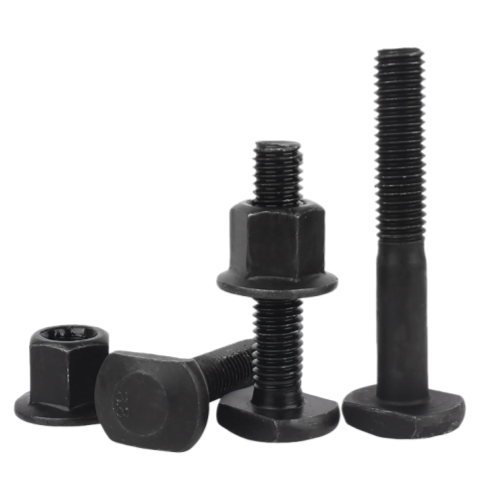
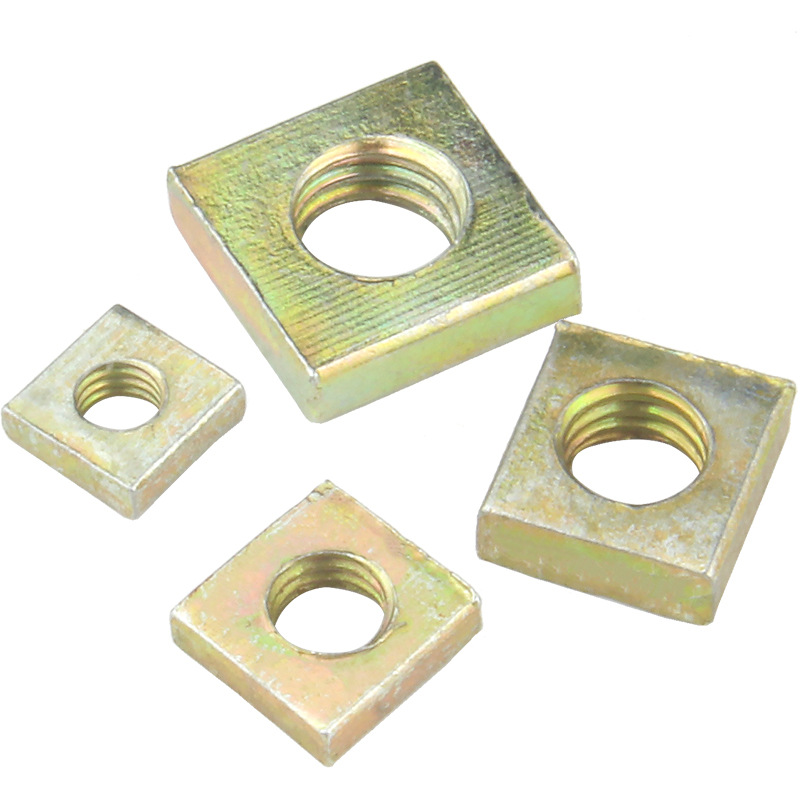
For complete battery pack encapsulation, T-slot studs are also key supporting components. The T-shaped head can directly embed into aluminum profile T-slots for sliding positioning without additional head fixation, improving battery module assembly efficiency and supporting subsequent maintenance needs. Dacromet coating provides 800 hours of salt spray life at controlled cost, meeting basic industrial-grade energy storage requirements. Precise匹配 of these fasteners fully leverages the safety advantages of sodium battery solid-state structures, avoiding battery module displacement or short circuits from connection component failure.

Current sodium battery commercialization still faces a core obstacle: while high-temperature test performance is excellent, room-temperature efficiency requires improvement. The journal Energy & Environmental Science notes that wide temperature range adaptability is key to sodium battery practical application. The research team indicates next steps will focus on optimizing room-temperature operating efficiency by adjusting internal structural modes to further improve sodium ion conduction rates, achieving safety, long life, and room-temperature performance simultaneously.

If this technical bottleneck is overcome, sodium batteries could rapidly capture the grid energy storage market, driving significant growth in supporting fastener demand. Global grid energy storage market size is expected to exceed one hundred billion dollars by 2030. Increased sodium battery penetration will directly drive demand for high-temperature alloy and precision-coated fasteners. Domestic fastener companies should plan ahead, strengthen collaborative R&D with battery manufacturers, optimize high-temperature resistance and corrosion resistance, obtain IATF 16949 quality system certification, and integrate into core supply chains.

The rise of solid-state sodium batteries not only provides a low-cost solution for renewable energy storage but also reshapes the upstream supporting industry landscape. For the fastener industry, this represents both opportunity and challenge. Companies must keep pace with battery technology iteration, upgrade precision manufacturing and surface treatment processes, capture new energy industry development opportunities with high-end supporting capabilities, and achieve mutual success with the sodium battery industry.


Professional consultant team online, ready to provide solutions for you

Contact Now
WeChat

WeChat

Scan to add WeChat

Long press to scan

Service