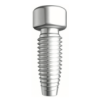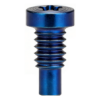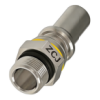






















Lightweight, high-strength, extreme-environment tolerant, and non-magnetic, titanium alloy fasteners are the premier material in aerospace.
Amidst the roaring flames and thunder of a rocket launch, hundreds of millions of components operate in perfect synergy. Among them, the unassuming fasteners serve as the "aerospace skeleton." From the fuselage joints of F-22 fighter jets to the cabin fixation of satellites, titanium alloy fasteners have always been the hidden core pillars. In the aerospace sector, where reliability requirements are extremely stringent, why can titanium alloys defeat stainless steel and aluminum alloys to become the absolute mainstay for fasteners? The answer lies in their tailor-made performance advantages.
The balance between lightweight properties and high strength is the core competitiveness of titanium alloys. Aerospace equipment pursues weight reduction with near-obsessive rigor; every kilogram reduced enhances payload efficiency and expands mission boundaries. With a density of only 4.5 g/cm³, titanium alloys are 43% lighter than stainless steel, yet their tensile strength can reach 800-1400 MPa, boasting a specific strength far exceeding that of steel and aluminum alloys. The Boeing 747 alone achieved a weight reduction of 1,814 kg simply by using titanium alloy fasteners. This lightweight capability is crucial for aircraft pursuing extended range and payload capacity.
Tolerance to extreme environments allows titanium alloys to stand firm in the trials of space. Flying from the ground to high altitudes, aircraft endure drastic temperature fluctuations from -50°C to 400°C, while also resisting high-altitude severe corrosion and vibration fatigue. Titanium alloys can operate stably over the long term at temperatures ranging from -50°C to 300°C, with the TC6 grade capable of withstanding high temperatures up to 500°C, making it suitable for hot-end scenarios around engines. Its excellent corrosion resistance allows it to pass thousands of hours in salt spray tests without rusting, effectively preventing galvanic corrosion caused by high-altitude moisture and ionic environments, thereby avoiding fastener failure.
Non-magnetic properties and process adaptability perfectly meet the precision demands of aerospace. Satellites and radar equipment are highly sensitive to electromagnetic interference. The virtually non-magnetic nature of titanium alloys prevents interference with sensor signals and navigation systems, an unmatched advantage over magnetic materials like stainless steel. Meanwhile, different titanium grades can match diverse scenarios: TB2 titanium alloy boasts excellent cold-forming properties, ideal for manufacturing cold-headed rivets; TC4 titanium alloy offers strong process toughness and is widely used for bolts in aircraft beams and landing gears; bimetallic rivets combining the plasticity of Ti-45Nb with the high strength of TC4 perfectly adapt to composite component connections.
From historical applications to technological iterations, titanium alloy fasteners have long proven their value. In the 1950s, the US B-52 bomber was among the first to adopt titanium alloy bolts, achieving significant weight reduction, and they gradually became the global aerospace standard. China's independently developed TB3 titanium alloy can be directly cold-headed and formed, reaching a strength of 1100 MPa after heat treatment, and is widely used in the manufacturing of high-strength aerospace bolts. Furthermore, TC4 titanium alloy bolts cover various equipment including commercial airliners, satellites, and space shuttles, becoming foundational components in China's domestic aerospace industry.
Admittedly, titanium alloys are difficult to machine and relatively expensive. However, for the aerospace sector, reliability and performance take precedence over cost. The failure of a single titanium alloy fastener could lead to the catastrophic loss of an entire fighter jet or rocket. On the aerospace track pursuing ultimate safety, titanium alloys, with their comprehensive advantages of being lightweight, highly tolerant, and low-interference, have become the unrivaled choice for fasteners.