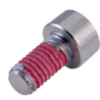
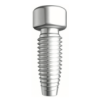
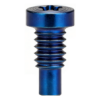
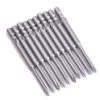
This article analyzes core precision fastener technologies: materials science, heat treatment, multi-station cold heading, and thread rolling.
As a professional fastener manufacturer, Shenzhen Yongjing Precision Technology Co., Ltd. has been deeply rooted in the industry for over a decade. We understand that although fasteners are small, they bear the critical responsibility of connection and fastening. Their technical quality directly impacts the reliability and safety of the overall structure. This article systematically analyzes the key technical elements of modern precision fasteners.
1. Materials Science and Heat Treatment Processes
Material selection is the cornerstone of fastener performance. We strictly control our raw material supply chain, providing multi-material solutions tailored to different application scenarios: our 304/316 stainless steel series is suitable for corrosion-resistant environments; alloy structural steels achieve high-strength characteristics through quenching and tempering treatment; and special alloy materials can meet the demands of extreme temperature conditions.
Heat treatment is the critical process that imparts core performance to fasteners. We employ controlled atmosphere protective heat treatment technology to precisely control the temperature and time parameters during carburizing, quenching, and tempering. Taking high-strength bolts from Grade 8.8 to 12.9 as an example, our precise heat treatment processes achieve tensile strength performance indicators of 800 MPa to 1200 MPa while maintaining sufficient toughness to avoid the risk of brittle fracture.
2. Precision Forming and Thread Machining Technology
Modern fastener forming processes have evolved from traditional cutting to multi-station cold heading. Our company has introduced Swiss Hatebur multi-station cold heading machines, which can complete multiple processes—including cutting, pre-forming, and precision forming—in a single stroke, increasing production efficiency by over 40%. The cold heading process keeps the metal fibers continuous and intact, significantly improving the fatigue resistance of the parts.
For thread processing, we utilize advanced thread rolling technology. Compared to cut threads, rolled threads form a work-hardened layer on the surface, achieving a surface roughness of Ra0.8 or below and increasing thread strength by 20% to 30%. We place special emphasis on controlling thread lead accuracy to ensure that every batch of products achieves precise mating.
3. Surface Treatment and Anti-Corrosion Systems
To address different corrosive environments, we provide comprehensive surface treatment solutions. Zinc-nickel alloy electroplating can achieve over 480 hours in neutral salt spray tests without red rust; Dacromet coating delivers salt spray resistance of over 1,000 hours; and zinc-aluminum coatings offer excellent heat resistance while providing cathodic protection. For high-strength fasteners with special requirements, we employ a composite process of phosphating followed by solid lubricant coating. This ensures anti-corrosion performance while maintaining the friction coefficient within the ideal range of 0.10–0.16.
4. Quality Inspection and Process Control
We have established a comprehensive quality control system spanning from raw material intake to finished product dispatch. Spectrometers ensure raw material compositions meet standards; metallographic microscopes monitor the microstructure resulting from heat treatment; electronic universal testing machines conduct mechanical property tests including tensile strength, shear strength, and hardness; and torque-angle testing systems verify assembly performance.
Notably, we utilize an intelligent vision measurement system to comprehensively inspect thread geometric parameters, including pitch, thread angle, and pitch diameter, ensuring that every product meets design tolerance requirements. For high-demand fasteners in the automotive, aerospace, and other sectors, we can also provide material traceability reports and complete test data.
5. Innovative R&D and Customization Capabilities
In response to the demands of emerging fields such as new energy vehicles (NEVs), 5G communications, and intelligent manufacturing, we continue to increase our R&D investment. We have currently developed specialized products, including aluminum alloy fasteners for lightweight designs, non-magnetic fasteners that meet electromagnetic compatibility (EMC) requirements, and nickel-based alloy fasteners adapted for high-temperature environments.
Our engineering team can provide comprehensive customization solutions covering material selection, structural design, and surface treatment based on specific customer needs. Through deep collaboration with clients' technical departments, we have successfully solved fastening challenges across multiple industries, such as anti-loosening designs for vibrating environments and galvanic corrosion protection for dissimilar material connections.
















 Login
Login











 Contact
 WeChat
 粤ICP备2025493240号-1