























 Login
Login





Products
Solutions
Applications





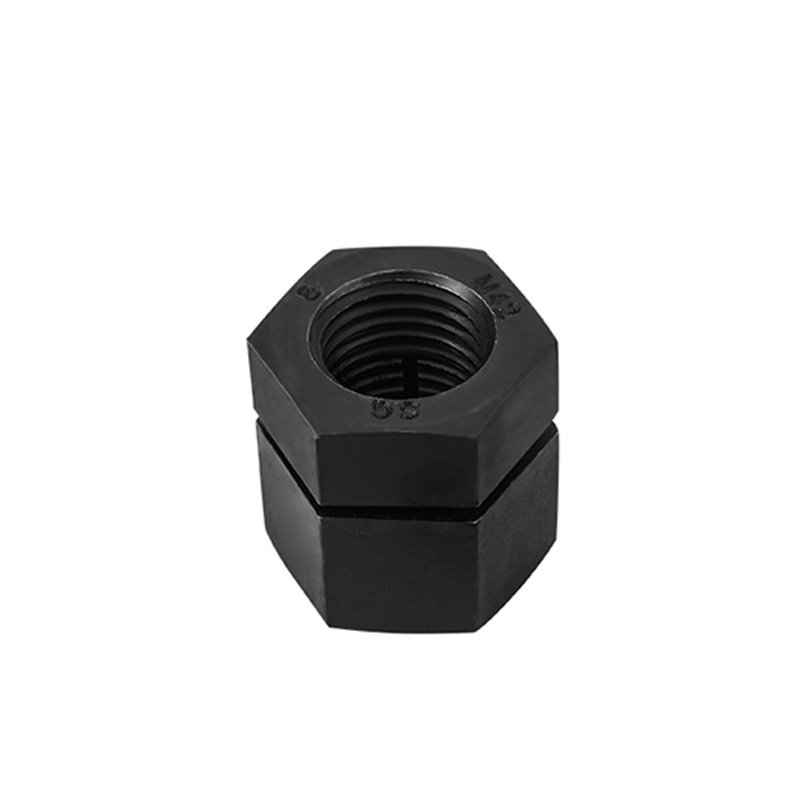
In high-vibration environments such as automotive engines, wind power equipment, and rail transportation, ordinary nuts are prone to loosening under cyclic loads, potentially leading to equipment failure or even safety accidents. Self-locking nuts, with their built-in anti-loosening structures, can achieve long-term locking without the need for additional locking components, making them the preferred fastener for such applications. Their anti-loosening performance stems from precise structural design, with different locking methods suited to different operating conditions. This article systematically reviews common anti-loosening methods for self-locking nuts, provides an in-depth analysis of their locking mechanisms, and offers selection guidelines based on application scenarios.
I. Friction-Based Anti-Loosening: Basic Locking Through Interface Pressure
Friction-based anti-loosening is the most fundamental form of self-locking nuts, achieving resistance to vibration-induced loosening by increasing the friction between the nut and the bolt or workpiece. The core principle is to maintain preload pressure on the threaded pair through structural design. Common types include nylon-insert self-locking nuts and all-metal elastic self-locking nuts, each with distinctive locking structures.
Nylon-insert self-locking nuts are the most widely used type of friction-based locking. The core locking structure is a nylon ring embedded at one end of the nut. The inner diameter of the nylon ring is slightly smaller than the major diameter of the bolt. During assembly, the bolt threads forcibly extrude the nylon ring, causing it to undergo elastic deformation and conform closely to the thread profile, creating an interference fit. This structure generates continuous friction between the threaded pair, while the elastic deformation of the nylon ring absorbs vibrational energy to prevent thread loosening. The advantages of this locking structure are low cost and ease of installation, with the nylon ring also providing corrosion resistance suitable for humid environments. However, its temperature resistance is limited, typically suitable for operating temperatures from -40°C to 120°C; exceeding this range may cause aging and failure of the nylon ring.
All-metal elastic self-locking nuts achieve friction-based locking through the elastic deformation of the metal itself. Typical structures include elastic slots cut into the threaded section or a reduced-diameter (recessed) design. For example, slotted elastic self-locking nuts feature 3–4 axial slots in the middle of the nut, dividing the threaded section into multiple elastic segments. During assembly, these segments are compressed outward by the bolt, generating radial elastic forces that keep the thread flanks in tight contact, increasing frictional resistance. Recessed self-locking nuts, on the other hand, have a slightly reduced thread diameter at the end of the nut formed by cold heading, creating a constriction. When the bolt is threaded in, it compresses this recessed area, generating elastic preload. The advantages of this structure are strong temperature resistance (capable of withstanding temperatures above 200°C) and good reusability, making them suitable for high-temperature applications such as engines and high-temperature piping. However, they require high manufacturing precision and are more costly than nylon-insert self-locking nuts.
II. Mechanical Anti-Loosening: Reliable Locking Through Structural Interference
Mechanical anti-loosening uses mechanical interference structures between the nut and the bolt or workpiece to limit relative rotation. Its reliability far exceeds that of friction-based locking alone, making it suitable for critical applications with high vibration and heavy loads. Common types include slotted self-locking nuts and self-locking nuts with locking tabs, characterized by distinct mechanical stops.
Slotted self-locking nuts feature radial slots at the end of the nut and matching cotter pins as the core locking structure. After the nut is tightened, a cotter pin is inserted through the radial slot of the nut and a hole in the end of the bolt, creating a mechanical stop that directly prevents the nut from rotating relative to the bolt. This structure provides extremely high anti-loosening reliability—once properly installed, loosening is virtually impossible, even under severe vibration and impact loads. The key design requirement is precise alignment of the radial slot position with the bolt pin hole, with the cotter pin size matching the slot width. This type is widely used in critical applications such as rail transportation and marine propulsion. However, assembly requires an additional cotter pin installation step, making the process relatively complex, and the bolt end must be pre-drilled with a pin hole, increasing manufacturing costs.
Self-locking nuts with locking tabs integrate the nut and locking tab into a single design, with the locking structure being a bendable tab integrated at the nut base. The tab has pre-formed positioning features that align with the bolt head or workpiece. After tightening the nut, the tab is bent to conform to the side of the bolt head or a locating slot on the workpiece, using rigid constraint to prevent nut rotation. This structure requires no additional components and offers higher assembly efficiency than slotted self-locking nuts, while still providing adequate anti-loosening reliability for most critical applications. It is commonly used in automotive chassis and construction machinery. The key structural requirement is the toughness and strength of the locking tab, which must be made of spring steel and heat-treated to prevent fracture during bending.
III. Deformation-Based Anti-Loosening: Long-Term Locking Through Permanent Deformation
Deformation-based anti-loosening uses localized permanent deformation of the nut or bolt to create a non-detachable locking condition, offering the most lasting locking effect, though typically for single-use applications. It is suitable for scenarios with extremely high reliability requirements and no need for disassembly. Common types include indentation self-locking nuts and weld self-locking nuts.
Indentation self-locking nuts feature raised indentations preformed on the thread surface of the nut. During assembly, the bolt threads extrude these indentations as they are threaded in, causing them to plastically deform and embed into the flank clearances of the bolt threads, forming a mechanical interlock. Typically, 3–6 indentations are evenly distributed around the thread circumference to ensure uniform force distribution. The advantages of this structure are that there is no risk of loosening after locking, and it offers small size and light weight, making it suitable for weight-sensitive applications such as aerospace. However, disassembly damages the threads and prevents reuse, and it requires extremely high manufacturing precision, with indentation height needing precise control (typically 0.1–0.3 mm).
Weld self-locking nuts achieve permanent locking through welding. The locking structure consists of a welding chamfer or locating boss at the base of the nut. During assembly, the nut is positioned on the workpiece via the locating boss, and then arc welding or resistance welding is used to fuse the nut base to the workpiece, creating a rigid connection that completely prevents rotation. This structure is suitable for stationary component connections, such as steel structure brackets and equipment bases, providing absolute anti-loosening reliability. However, disassembly is impossible after assembly, and welding can cause thermal deformation, requiring careful process control to avoid affecting thread precision.
IV. Combined Anti-Loosening: Enhanced Locking Through Multi-Mechanism Synergy
To address extreme operating conditions, combined anti-loosening self-locking nuts integrate two or more anti-loosening mechanisms, achieving enhanced locking through structural synergy. They are the preferred choice for high-end equipment. Typical examples are "friction + mechanical" combination structures, such as nylon-insert plus slotted self-locking nuts, and elastic-slot plus locking-tab self-locking nuts.
Nylon-insert plus slotted self-locking nuts combine the dual advantages of friction-based and mechanical anti-loosening: the nylon insert provides basic friction locking to absorb routine vibration, while the slot and cotter pin provide mechanical restraint to withstand severe impacts. The locking structure features a nylon ring at one end and radial slots at the other. During assembly, the nut is first tightened to generate preload via the nylon ring, and then the cotter pin is inserted for mechanical locking. This structure is suitable for extreme conditions such as aircraft engines and wind turbine main shafts, offering the highest level of anti-loosening reliability. However, the structure is complex and costly, and is typically used only in critical applications.
V. Selection and Application: Core Principles for Scenario Matching
The selection of self-locking nuts should focus on four core factors: operating temperature, vibration intensity, assembly efficiency, and reusability requirements. For room-temperature, low-to-medium vibration applications (such as home appliances and general machinery), nylon-insert self-locking nuts are the preferred choice for the best cost-performance ratio. For high-temperature, medium-vibration applications (such as engines and high-temperature piping), all-metal elastic self-locking nuts are selected, balancing temperature resistance and reliability. For high-vibration, critical applications (such as rail transportation and marine equipment), mechanically locked nuts with slots or locking tabs are chosen to ensure absolute reliability. For single-use, weight-sensitive critical applications (such as aerospace), indentation self-locking nuts are suitable. For stationary structural components, weld self-locking nuts are the choice.
Assembly precautions: Nylon-insert self-locking nuts should not be used beyond their temperature limits; during initial assembly, ensure smooth bolt thread engagement to avoid damaging the nylon ring. For mechanical locking nuts, ensure the locking mechanism is fully engaged (e.g., cotter pins fully inserted, locking tabs properly bent and conforming). For deformation-locking nuts, control assembly torque to prevent excessive deformation that could damage the threads.
Conclusion: The anti-loosening performance of self-locking nuts stems from their precise structural design. Different locking methods—friction-based, mechanical interference, or permanent deformation—address different operating requirements. As fastener professionals, it is essential to thoroughly understand the principles and advantages of each locking structure and select the appropriate type based on actual application scenarios, in order to ensure equipment safety while optimizing costs and fully realizing the anti-loosening value of self-locking nuts.
Professional consultant team online, ready to provide solutions for you
Contact NowProducts
Solutions
Applications
Contact
 Contact
 WeChat
Contact: Manager Fan - Tel/WeChat: 135-6073-0094 Email: Flora.Fan@toprecision.com | Manager Ao - Tel/WeChat: 13560729614 Email: Olia.Ao@toprecision.com
Sales Director: Mr. Zhang - Tel: 13510369429 Email: xiaowei.zhang@zcjtech.com
© Copyright 2011 - 2026 Shenzhen Toprecision Precision Technology Co., Ltd. All Rights Reserved.
 粤ICP备2025493240号-1


Cutter Screws
Thread Inserts
Sealing Products
Riveting Products
Locking Products
Direct Assembly
SMT Components
Precision Screws
Screwdriver Bits