














 Login
Login



Products
Solutions
Applications





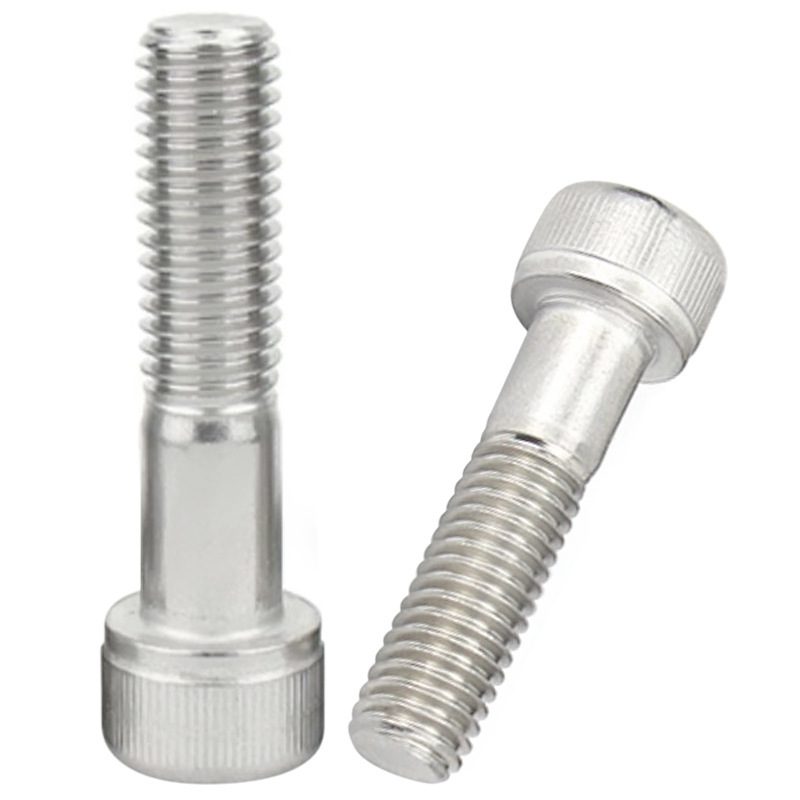
Recently, Ford Motor (China) Co., Ltd. filed a recall plan with the State Administration for Market Regulation, in accordance with the Regulations on the Administration of Defective Automotive Products Recall and relevant provisions, deciding to recall 2,286 vehicles of certain models manufactured between March 2024 and August 2024, effective immediately. The root cause of this recall points directly to a detail that is easily overlooked yet critically important—seat fixing bolts not tightened to the specified torque, posing serious safety hazards. As practitioners in the fastening industry, this incident not only highlights the central role of fasteners in automotive manufacturing but also exposes key pain points in quality control across the entire supply chain.
According to the official recall announcement from Ford, during the assembly of driver or passenger seats on the production line, the fixing bolts at the base of the seats were not tightened to the specified torque in accordance with standard process requirements. From the perspective of fastener application principles, seat fixing bolts are the core load-bearing components connecting the seat to the vehicle body, and their tightening torque directly determines the mounting stability of the seat. During vehicle operation, the seat must bear the weight of the occupants, inertial forces during acceleration and deceleration, and impact forces during emergency braking. Substandard tightening torque can cause the bolts to gradually loosen during use, and in extreme cases, may lead to seat displacement or even detachment while driving, severely endangering occupant safety. This is particularly critical in the event of a collision, where a loose seat can significantly reduce the effectiveness of protective devices such as airbags.
Root Cause Analysis: Dual Failures in Fastening Process and Quality Inspection
An in-depth analysis of this recall reveals that the root cause is not a quality issue with the fasteners themselves, but rather failures in two key areas: assembly process execution and quality inspection. On automotive final assembly lines, seat bolt tightening is typically performed using pneumatic or electric torque wrenches in automated operations. Under normal conditions, equipment is preset with standard torque parameters and equipped with torque-achievement detection feedback. The fastening defects in this case likely stem from two sources: first, parameter drift or calibration deviations in torque wrenches during certain production batches, resulting in actual output torque falling short of design requirements; second, lapses in the quality inspection process on the production line, where substandard products were not detected through sampling or full inspection, allowing defective vehicles to reach the market.
From a fastening operations perspective, the automotive industry imposes extremely stringent control standards on fastening quality for critical fasteners, typically employing a three-tier control system of "process parameter locking + in-process torque monitoring + outgoing sampling and re-inspection." Taking seat bolts as an example, standard tightening torque for mainstream OEMs generally ranges from 35–50 N·m, and tools with torque traceability are required, with fastening data for each bolt uploaded in real time to the production system for record-keeping. The issues identified in this Ford recall suggest gaps in process control on certain production lines, possibly due to process simplification driven by production pressure, or inspection failures resulting from untimely equipment maintenance. Notably, while the recall scale of 2,286 vehicles is relatively modest, the involved components are directly safety-critical, warranting heightened industry vigilance regarding fastener assembly quality.
Industry Warning: Small Parts Carry Great Safety Responsibility
This recall once again confirms the industry consensus that "fasteners may be small, but safety responsibility is immense." In automotive manufacturing, fasteners are used across body, chassis, powertrain, interior, and other systems, with total fastener counts reaching several thousand per vehicle, of which approximately 30% are safety-critical components, including seat bolts, chassis suspension bolts, and brake system bolts. According to data from the China Association of Automobile Manufacturers, fastener-related issues account for approximately 12% of domestic automotive recalls in recent years, ranking third behind electronic/electrical failures and engine problems, with the main issues concentrated in substandard tightening torque, bolt misalignment during assembly, and anti-loosening structure failures.
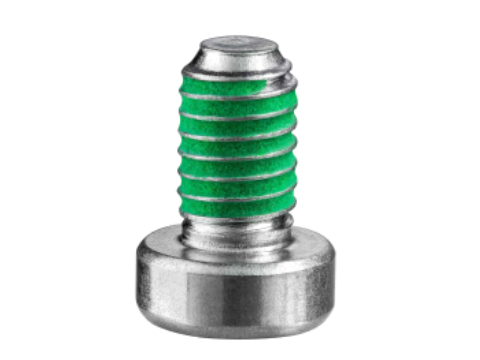
For fastener companies, this incident provides important guidance for customer service. In collaboration with OEMs, beyond supplying fastener products that meet material and strength standards, it is essential to actively participate in customers' assembly process optimization. For example, offering customized anti-loosening solutions tailored to different application scenarios, such as adhesive-coated bolts, toothed lock washers, and other anti-loosening designs; simultaneously providing torque testing and process training services to help OEMs establish more robust fastening quality control systems. Furthermore, with the advancement of smart manufacturing, fastener companies can collaborate with equipment manufacturers to develop IoT-enabled smart torque tools, enabling full-lifecycle traceability of fastening data and reducing assembly defect risks at the source.
Rectification Direction: Industry-Wide Collaboration to Fortify Quality Defenses
In response to this recall, Ford officially stated that it will conduct free inspections of seat bolt fastening conditions for vehicles within the recall scope and retighten substandard bolts to standard torque to eliminate safety hazards. While this corrective measure addresses the immediate issue, it is more important to drive the establishment of long-term prevention mechanisms across the industry. From the OEM perspective, it is necessary to strengthen regular calibration and maintenance of production line equipment, shortening calibration intervals for torque wrenches and other critical tools from quarterly to monthly, and introducing AI vision inspection systems for real-time monitoring of bolt assembly conditions. In the quality inspection phase, sampling rates for critical fasteners should be increased, and when necessary, non-destructive testing techniques such as ultrasonic inspection should be employed to ensure fastening quality compliance.
From the perspective of supply chain collaboration, fastener companies and OEMs should establish closer quality linkage mechanisms. Fastener suppliers should provide detailed product instruction manuals to OEMs, clearly specifying recommended tightening torque, assembly methods, and anti-loosening precautions; OEMs, in turn, should promptly report field assembly issues to suppliers to facilitate product design optimization. For example, regarding the seat bolt issue in this recall, both parties could jointly develop bolts with torque-indicating features, allowing visual inspection after assembly to determine whether fastening meets standards, thereby improving inspection efficiency.
This Ford recall serves as a safety wake-up call for both the automotive industry and the fastening sector. As fastener operations professionals, we must not only deeply recognize the core role our products play in the safety chain but also proactively engage in customers' quality control systems, leveraging technological innovation and service upgrades to help vehicle manufacturers fortify product safety defenses. Looking ahead, with the development of new energy vehicles and intelligent connected vehicles, even higher requirements will be placed on the assembly precision and reliability of fasteners. Only through coordinated efforts across the entire supply chain can we achieve the industry goal of "small bolts safeguarding great safety."
Professional consultant team online, ready to provide solutions for you
Contact NowProducts
Solutions
Applications
Contact
 Contact
 WeChat
Contact: Manager Fan - Tel/WeChat: 135-6073-0094 Email: Flora.Fan@toprecision.com | Manager Ao - Tel/WeChat: 13560729614 Email: Olia.Ao@toprecision.com
Sales Director: Mr. Zhang - Tel: 13510369429 Email: xiaowei.zhang@zcjtech.com
© Copyright 2011 - 2026 Shenzhen Toprecision Precision Technology Co., Ltd. All Rights Reserved.
 粤ICP备2025493240号-1

Cutter Screws
Thread Inserts
Sealing Products
Riveting Products
Locking Products
Direct Assembly
SMT Components
Precision Screws
Screwdriver Bits