













 Login
Login



Products
Solutions
Applications





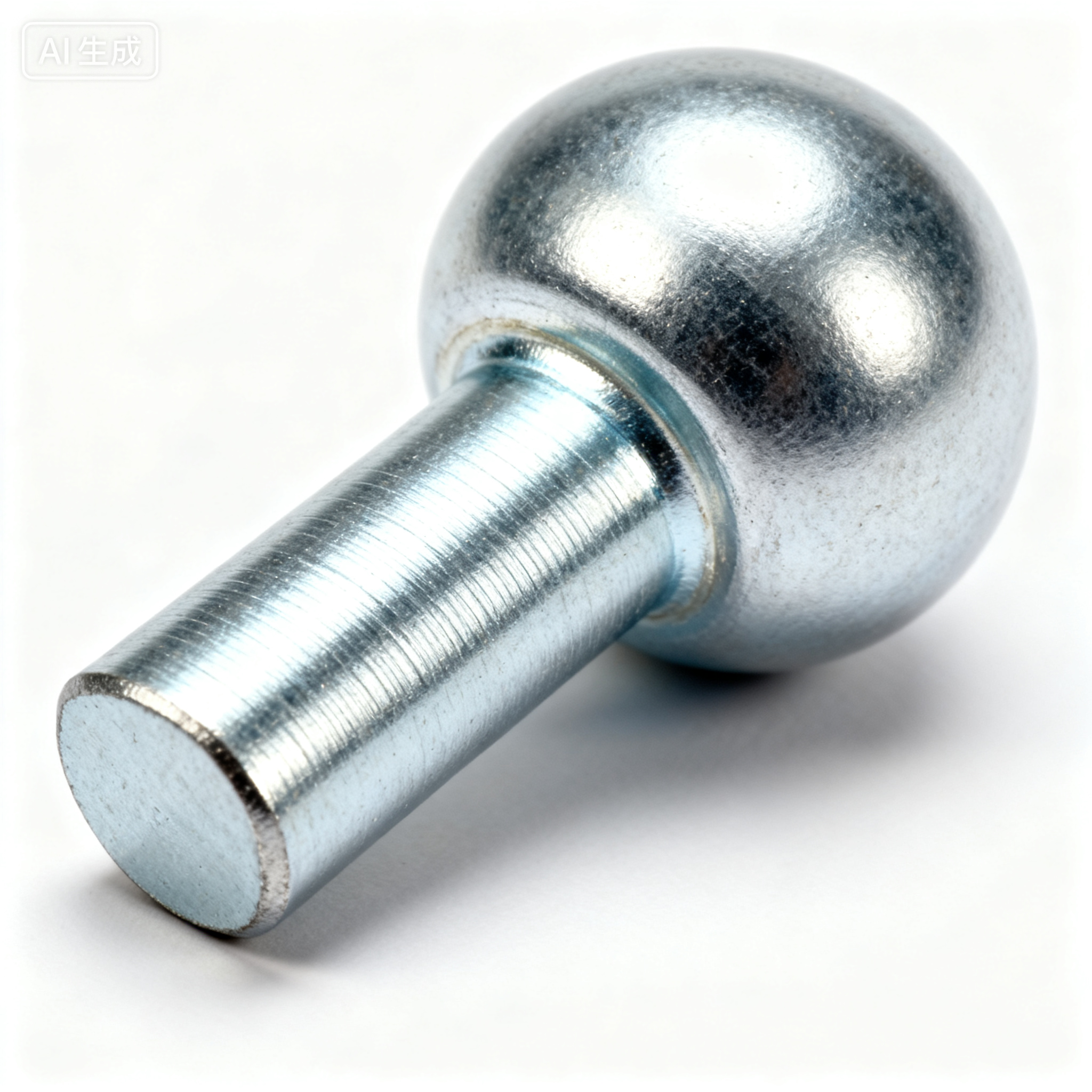
Recently, Mercedes-Benz (China) Auto Sales Co., Ltd. and Beijing Benz Automotive Co., Ltd. successively filed recall plans with the State Administration for Market Regulation, announcing two separate vehicle recalls. Notably, the root cause of both recalls points to fastening quality issues—critical bolts in the steering system and high-voltage battery system failed to meet standard torque requirements, affecting a total of 316 vehicles. As practitioners in the fastening industry, this incident once again highlights the fundamental truth that "small bolts carry great safety," and serves as a critical wake-up call for fastening application and quality control across the automotive supply chain.
Imported Vehicle Batch: Loose Steering Bolts May Lead to Loss of Steering Control
The first recall targets imported models, covering 302 vehicles, including certain imported GLC and EQE vehicles manufactured between October 20, 2022, and May 20, 2025. According to official disclosures, the core issue lies in the steering system's critical connection point—the connecting bolts of the steering coupling may not have been tightened to the correct torque.
From the operational principle of automotive steering systems, the steering coupling is the core transmission component connecting the steering wheel to the steering rack, and the connecting bolts serve as the "lifeline" ensuring the stability of this transmission chain. During vehicle operation, the steering coupling must continuously transmit the driver's steering input while withstanding reverse impact forces from road irregularities. If the connecting bolts fail to meet design torque requirements, they will gradually loosen over time under prolonged vibration and load cycling. Early symptoms may include abnormal noise or increased play when turning the steering wheel. As loosening intensifies, the mechanical connection between the steering wheel and the steering rack progressively weakens, and in extreme cases, may become completely disengaged, resulting in instantaneous loss of steering capability. This hazard poses a severe risk of major traffic accidents under high-speed driving or complex road conditions, threatening the safety of occupants and other road users.
To address this batch, Mercedes-Benz (China) Auto Sales Co., Ltd. has authorized its dealerships to perform free specialized inspections on affected vehicles, focusing on verifying the tightening torque of the steering coupling connecting bolts. For vehicles found to have substandard torque, bolts will be retightened to original factory specifications to ensure they meet design requirements, thereby fundamentally eliminating the steering safety risk.
Domestic Vehicle Batch: Loose Battery Bolts May Cause Power Interruption
The second recall targets domestic models, involving 14 locally produced EQB vehicles manufactured between April 11, 2022, and March 22, 2023. Unlike the steering bolt issue in the imported batch, this recall focuses on the core component of new energy vehicles—the high-voltage traction battery—specifically, the fixing bolts of the high-voltage busbar may not have been properly tightened.
The high-voltage busbar is a critical current transmission pathway within the high-voltage traction battery, responsible for aggregating electrical energy from multiple battery modules and delivering it to the vehicle's overall control system. The tightening quality of the fixing bolts directly determines the connection stability between the busbar and the battery modules and control system. If bolts are not properly tightened, contact resistance at the connection points increases, generating excessive heat during current flow. This not only reduces power transmission efficiency but may also cause localized overheating, accelerating insulation aging. More critically, loose bolts can lead to poor busbar contact, resulting in intermittent power transmission failure—the vehicle may suddenly lose power while driving. This is especially dangerous during high-speed driving or overtaking maneuvers, where sudden power loss can easily lead to rear-end collisions, posing significant safety risks.
Given the integrated design of high-voltage traction batteries, simply retightening bolts is insufficient to ensure overall high-voltage system safety. Beijing Benz Automotive Co., Ltd. has therefore adopted a more comprehensive corrective measure: replacing the entire high-voltage traction battery free of charge for vehicles within the recall scope, thereby completely eliminating the safety hazard through core component replacement.
Industry Warning: Fastening Control Must Extend Across the Entire Supply Chain
Although these two recall events involve different vehicle volumes and different affected components, the common root cause—"bolts not tightened to standard"—points to a fundamental process issue, delivering multiple warnings to both the automotive and fastening industries. From the OEM perspective, both steering systems and high-voltage traction batteries are core safety components and should be subject to the strictest process controls. The issues exposed in these recalls suggest lapses in process execution or quality inspection on certain production lines. Given the high level of automation in today's automotive assembly, steering and battery bolts are typically tightened using intelligent torque wrenches. If equipment calibration is not performed in a timely manner, parameters are incorrectly set, or an effective torque data traceability system is not in place, non-conforming products may enter the market.
From the fastening operations standpoint, this incident reaffirms that "fasteners are not merely connecting components but safety-critical parts." In automotive industry collaborations, fastening companies should not limit themselves to supplying products that meet material and strength standards; they must also actively participate in customers' assembly process optimization. For example, providing customized anti-loosening solutions tailored to different scenarios such as steering and battery applications (e.g., adhesive-coated anti-loosening bolts, torque-indicating bolts); assisting OEMs in establishing bolt fastening process training programs to guide production line operators in proper equipment usage; and collaborating with equipment manufacturers to develop IoT-enabled smart fastening tools capable of real-time data upload and lifetime traceability for each bolt's fastening data, thereby reducing process execution risks at the source.
Additionally, the notification mechanisms in these recalls are worth noting. Both companies clearly stated they would notify affected vehicle owners via registered mail to ensure every owner is promptly informed. This practice sets a positive example for the industry—timely and transparent communication is the prerequisite for effective recall execution and can minimize the time hazardous vehicles remain on the road.
Overall, while the Mercedes-Benz dual-batch recall involves a relatively limited number of vehicles, the issues it exposes are highly representative. For the automotive supply chain, it reinforces the principle that "details determine safety," and fastening quality control must be embedded throughout the entire process—from R&D and production to inspection and after-sales service. For fastening companies, this incident should serve as an opportunity to deepen collaboration with OEMs, transitioning from mere product supply to comprehensive "product + service + process optimization" solutions, jointly fortifying the first line of defense in automotive safety.
Professional consultant team online, ready to provide solutions for you
Contact NowProducts
Solutions
Applications
Contact
 Contact
 WeChat
Contact: Manager Fan - Tel/WeChat: 135-6073-0094 Email: Flora.Fan@toprecision.com | Manager Ao - Tel/WeChat: 13560729614 Email: Olia.Ao@toprecision.com
Sales Director: Mr. Zhang - Tel: 13510369429 Email: xiaowei.zhang@zcjtech.com
© Copyright 2011 - 2026 Shenzhen Toprecision Precision Technology Co., Ltd. All Rights Reserved.
 粤ICP备2025493240号-1

Cutter Screws
Thread Inserts
Sealing Products
Riveting Products
Locking Products
Direct Assembly
SMT Components
Precision Screws
Screwdriver Bits