



















 Login
Login





Products
Solutions
Applications





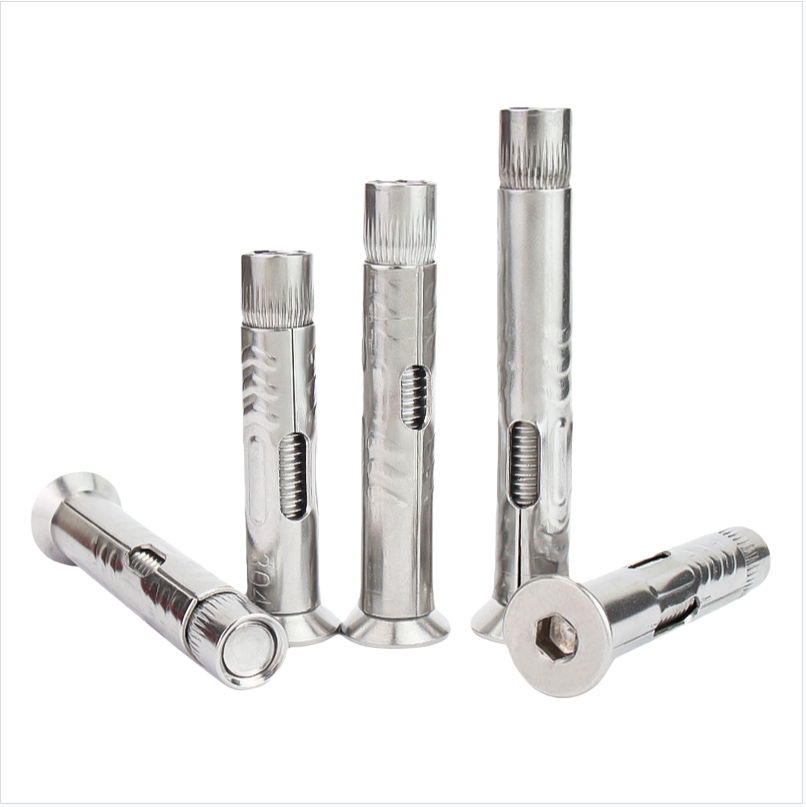
How to Select High-Temperature Fasteners
In industrial sectors such as aerospace, petrochemicals, and energy & power, the safe operation of equipment under high-temperature conditions is of paramount importance. As the "backbone" of connection structures, the performance of fasteners at elevated temperatures directly determines the reliability and service life of the entire system. Shenzhen Yongjing Precision Technology Co., Ltd., drawing on years of practical experience, provides a systematic explanation of the key points for selecting high-temperature fasteners.
I. Understanding the Effects of High Temperature on Fasteners
High temperatures trigger a series of material performance degradations. It is essential to fully understand these impact mechanisms before selection:
Decreased strength and hardness: As temperature increases, the yield strength and tensile strength of materials drop significantly, which can cause fasteners to fail under loads well below their room-temperature rated capacity.
Creep: Under sustained high temperatures and constant stress, materials undergo slow plastic deformation. Even when the stress is below the yield strength, prolonged exposure may lead to elongation or even fracture of the fastener.
Stress relaxation: Under constant total deformation (e.g., after a bolt is tightened), high temperatures cause elastic deformation to gradually convert into plastic deformation, resulting in a loss of preload and loosening of the connection system.
Oxidation and corrosion: High temperatures accelerate oxidation reactions on metal surfaces, forming oxide scales that consume the effective cross-section and degrade material properties. In certain environments, high-temperature corrosion such as sulfidation and carburization may also occur.
Thread galling: At high temperatures, microscopic diffusion and adhesion may occur on the thread contact surfaces between bolts and nuts, making disassembly difficult or even impossible.
II. Material Selection for High-Temperature Fasteners
Materials are the core defense against high-temperature challenges. Based on operating temperature ranges, they are primarily classified as follows:
Carbon Steel and Alloy Steel (Temperature Range: -50°C to +350°C):
Plain carbon steel (e.g., Grade 4.8, 8.8): Typically suitable only for environments below 350°C. Above this temperature, strength drops sharply and oxidation resistance is poor.
Medium-temperature alloy steel (e.g., 35CrMo, 42CrMo, B7): Through the addition of alloying elements such as chromium and molybdenum, these materials offer improved high-temperature strength and certain creep resistance, making them an economical choice for the 350°C to 550°C range.
Stainless Steel (Temperature Range: -200°C to +650°C):
Austenitic stainless steel (e.g., 304, 316, A2-70/A4-80): Offer good high-temperature oxidation resistance and corrosion resistance, but strength drops noticeably above 500°C and creep resistance is relatively poor.
Martensitic stainless steel (e.g., 410, 630/17-4PH): Can maintain relatively high strength at moderate elevated temperatures, but oxidation resistance is inferior to that of austenitic stainless steels.
Superalloys (Temperature Range: 550°C to Over 1100°C):
Iron-based superalloys (e.g., GH2132/A-286): Offer excellent strength, creep resistance, and oxidation resistance in the 650°C to 700°C range.
Nickel-based superalloys (e.g., Inconel 600, 601, 718, Hastelloy X): This is the top-tier choice for high-temperature fasteners. In extreme environments from 700°C to 1100°C, they maintain exceptionally high strength and outstanding oxidation and corrosion resistance.
Cobalt-based superalloys (e.g., Haynes 25/L605): Offer excellent thermal fatigue resistance and wear resistance, commonly used in demanding aerospace engine applications.
III. Key Performance Parameters and Selection Considerations
Determine the maximum operating temperature: Consider not only the ambient temperature but also the actual temperature of the fastener, which may be affected by frictional heating and heat conduction from adjacent heat sources.
Consult high-temperature strength data: The mechanical properties of materials at elevated temperatures differ from those at room temperature. It is essential to refer to high-temperature yield strength (σ₀.₂) and creep rupture strength data provided in relevant standards (such as GB/T and ASTM).
Consider thermal expansion coefficient matching: The thermal expansion coefficients of the bolt and the components being joined should be as close as possible. Otherwise, additional thermal stresses will arise during temperature cycling, leading to changes in preload or component deformation.
Surface treatment selection:
Zinc plating and cadmium plating: Not suitable for high temperatures, as coatings may melt or form brittle phases.
Dacromet: Can withstand temperatures around 300°C.
Silver plating: Serves as a solid lubricant at high temperatures, effectively preventing thread galling.
Aluminum diffusion coating: Significantly raises the upper temperature limit for oxidation resistance of steel.
Structural and design details:
Choose fine-pitch threads, which generally offer higher fatigue strength and better high-temperature performance.
Consider using elastic washers or disc springs to compensate for preload loss due to stress relaxation.
Conclusion
The selection of high-temperature fasteners is a systematic engineering process that requires a comprehensive trade-off among factors such as temperature, load, environment, and cost. Shenzhen Yongjing Precision Technology Co., Ltd. recommends engaging with professional technical engineers early in the design phase of critical high-temperature fastening applications. With an extensive product portfolio and deep selection expertise, we can provide comprehensive solutions—from material recommendations and process selection to installation guidance—ensuring the absolute reliability of connection systems under high-temperature conditions.
Professional consultant team online, ready to provide solutions for you
Contact NowProducts
Solutions
Applications
Contact
 Contact
 WeChat
Contact: Manager Fan - Tel/WeChat: 135-6073-0094 Email: Flora.Fan@toprecision.com | Manager Ao - Tel/WeChat: 13560729614 Email: Olia.Ao@toprecision.com
Sales Director: Mr. Zhang - Tel: 13510369429 Email: xiaowei.zhang@zcjtech.com
© Copyright 2011 - 2026 Shenzhen Toprecision Precision Technology Co., Ltd. All Rights Reserved.
 粤ICP备2025493240号-1

Cutter Screws
Thread Inserts
Sealing Products
Riveting Products
Locking Products
Direct Assembly
SMT Components
Precision Screws
Screwdriver Bits