













 Login
Login



Products
Solutions
Applications





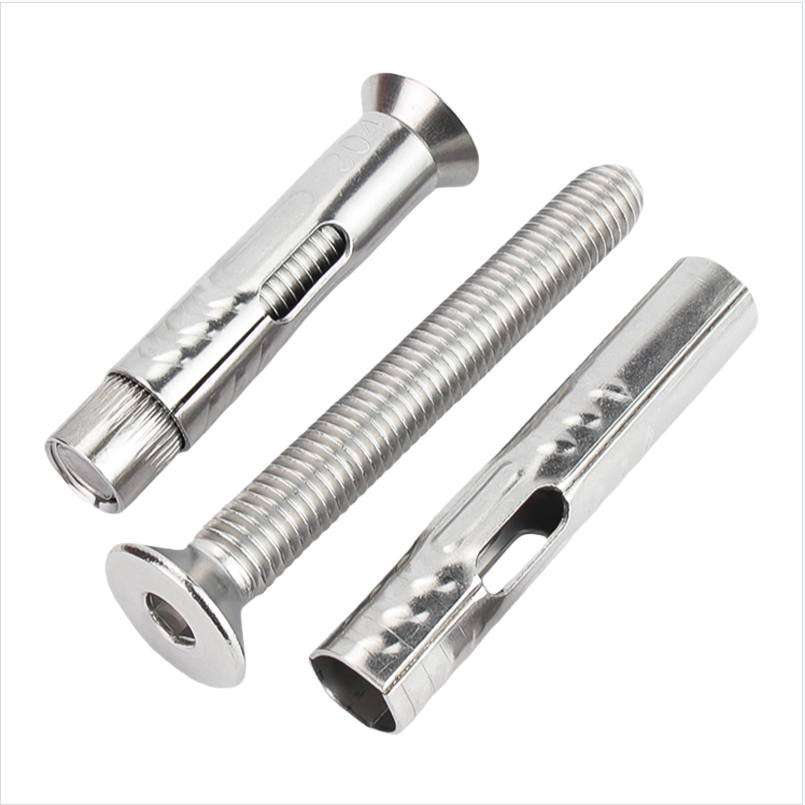
Surface treatment for fasteners is not merely about enhancing aesthetics; it is a critical process that endows fasteners with additional properties such as corrosion resistance, wear resistance, and fatigue strength. Choosing the appropriate surface treatment process can extend the service life of fasteners—and entire equipment assemblies—by several times or even tens of times. Shenzhen Yongjing Precision Technology Co., Ltd. provides an in-depth analysis of mainstream surface treatment processes to serve as a reference for your correct selection.
I. Core Objectives of Surface Treatment
Corrosion protection: Isolating the fastener from corrosive media is the primary function of surface treatment.
Decorative finishing: Providing desired colors and lusters, such as bright chrome or black nickel.
Special functions: Increasing surface hardness for wear resistance; reducing friction coefficients for easier tightening; providing sealing properties, etc.
Surface repair: Compensating for dimensional deficiencies on fasteners that are slightly undersized.
II. Detailed Overview of Mainstream Surface Treatment Processes
1. Electroplating
Electroplating deposits a layer of metal or alloy coating onto the fastener surface through electrolysis.
Zinc plating: The most commonly used and economical process, offering a silver-white appearance. Corrosion resistance is generally moderate, but after passivation treatments such as blue-white, yellow (iridescent), or black zinc, corrosion resistance can be significantly improved (e.g., yellow passivation can achieve 72–200 hours of neutral salt spray resistance). The main drawback is the risk of hydrogen embrittlement; high-strength bolts must undergo dehydrogenation treatment after electroplating.
Nickel plating: Offers an attractive, slightly yellowish-white appearance. It provides good corrosion resistance, high hardness, and good wear resistance. Commonly used for decorative and functional applications. Cost is higher than zinc plating.
Chromium plating: Divided into decorative chrome and hard chrome. Decorative chrome is highly lustrous and corrosion-resistant; hard chrome has extremely high hardness and wear resistance, but at a higher cost.
Copper plating: Primarily used as an underlayer to improve the adhesion of subsequent coatings, or as a shielding layer for carburizing prevention.
2. Dacromet (Zinc-Chromium Coating)
A non-electrolytic sintered coating. A water-based coating containing zinc powder, aluminum powder, and chromic acid is dip-coated or spray-coated onto the workpiece, then baked and sintered to form a film.
Advantages: No hydrogen embrittlement risk; excellent corrosion resistance (far superior to electroplated zinc at equivalent film thickness); good heat resistance (up to 300°C); good permeability with no dead corners.
Disadvantages: Coating hardness is relatively low with poor wear resistance; limited color options (silver-gray); contains hexavalent chromium, raising environmental concerns (chromium-free Dacromet variants are now available).
Applications: High-demand sectors such as automotive, wind power, and rail transportation.
3. Hot-Dip Galvanizing
Fasteners are immersed in molten zinc to form a relatively thick zinc-iron alloy coating.
Advantages: Thick coating with extremely long corrosion protection life, especially suitable for harsh outdoor environments (e.g., power transmission towers, highway guardrails).
Disadvantages: Uneven coating thickness, particularly on threads, which affects assembly and typically requires thread re-tapping; the high-temperature process can affect substrate properties; rough appearance.
4. Mechanical Plating
At room temperature, metal powder is "cold-welded" onto the fastener surface through a combination of physical impact and chemical activation.
Advantages: No hydrogen embrittlement, no thermal effects; uniform coating with minimal thread clogging; high production efficiency.
Disadvantages: Slightly lower coating adhesion compared to electroplating; currently predominantly used for zinc plating.
Applications: Suitable for high-strength fasteners sensitive to hydrogen embrittlement and thin-walled components.
5. Oxidation (Blackening/Bluing)
A dense magnetite (Fe₃O₄) film is formed on the steel surface through chemical or electrochemical methods.
Advantages: Simple process, low cost; no dimensional change to components.
Disadvantages: Very limited rust prevention capability; must be supplemented with oil coating for protection.
Applications: Mainly used for internal structures, applications with low corrosion protection requirements, or military equipment requiring matte finishes.
6. Phosphating
An insoluble phosphate film is formed on the metal surface through chemical reaction.
Advantages: The film provides lubrication, making it particularly suitable as a paint base or as a lubricating layer for cold heading and wire drawing; rust prevention is better than blackening.
Disadvantages: Corrosion resistance is only moderate.
III. Selection Guide and Precautions
Evaluate the corrosive environment: Indoor, dry environments may be suitable for electroplated zinc; outdoor or humid industrial environments favor Dacromet or hot-dip galvanizing; marine environments require higher-grade protection.
Consider fit tolerances: Hot-dip galvanizing and thick Dacromet coatings significantly increase dimensions; allowances must be reserved during design.
Pay attention to hydrogen embrittlement risk: For high-strength steel fasteners of Grade 8.8 and above, processes without hydrogen embrittlement risk (such as Dacromet, mechanical plating) should be prioritized, or ensure that dehydrogenation is strictly performed after electroplating.
Temperature limitations: Zinc plating begins to fail above approximately 200°C; Dacromet can withstand 300°C; some specialized coatings can tolerate even higher temperatures.
Conclusion
No single surface treatment process is universally applicable. Shenzhen Yongjing Precision Technology Co., Ltd. recommends that users make comprehensive decisions based on specific application scenarios, performance requirements, and cost budgets. Our technical team can provide professional consultation on surface treatment solutions, ensuring that the Yongjing fasteners you select achieve optimal performance while delivering the longest service life and the highest economic efficiency.
Professional consultant team online, ready to provide solutions for you
Contact NowProducts
Solutions
Applications
Contact
 Contact
 WeChat
Contact: Manager Fan - Tel/WeChat: 135-6073-0094 Email: Flora.Fan@toprecision.com | Manager Ao - Tel/WeChat: 13560729614 Email: Olia.Ao@toprecision.com
Sales Director: Mr. Zhang - Tel: 13510369429 Email: xiaowei.zhang@zcjtech.com
© Copyright 2011 - 2026 Shenzhen Toprecision Precision Technology Co., Ltd. All Rights Reserved.
 粤ICP备2025493240号-1

Cutter Screws
Thread Inserts
Sealing Products
Riveting Products
Locking Products
Direct Assembly
SMT Components
Precision Screws
Screwdriver Bits