




















 Login
Login




Products
Solutions
Applications





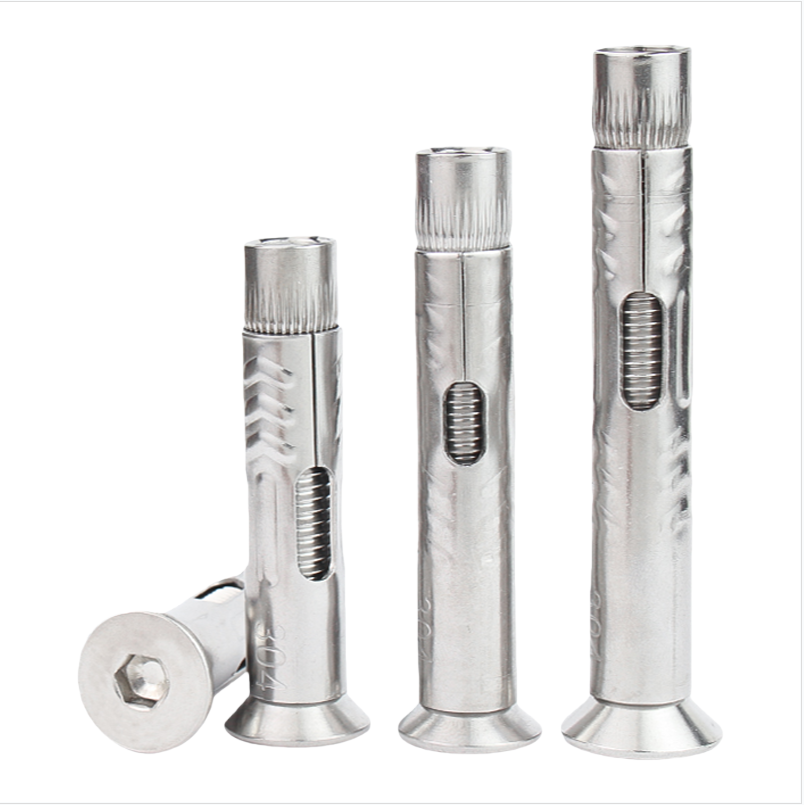
High-strength bolts are core components in modern steel structures, heavy machinery, and critical equipment connections. Their proper selection directly determines the safety and reliability of the entire structure. Shenzhen Yongjing Precision Technology Co., Ltd., leveraging its deep expertise in the precision fastener field, systematically outlines the key points for selecting high-strength bolts to ensure foolproof connections.
I. Understanding High-Strength Bolts
The fundamental difference between high-strength bolts and ordinary bolts lies in the fact that high-strength bolts rely not only on the shear capacity of the bolt shank but, more importantly, on the application of substantial preload to generate strong frictional forces between the contact surfaces of the connected parts, thereby transmitting loads. This "friction-type connection" offers excellent fatigue resistance, high connection stiffness, and large load-bearing capacity.
II. Performance Grades and Material Requirements
According to national standards (GB/T) and international standards (ISO), the performance grades of high-strength bolts are typically denoted by two numbers, such as Grade 8.8, 10.9, and 12.9.
The first number: Indicates 1/100 of the nominal tensile strength (σb), in MPa. For example, the "8" in Grade 8.8 indicates a tensile strength of 800 MPa.
The second number: Indicates 10 times the ratio of the nominal yield strength (σs) or specified non-proportional extension strength (σ0.2) to the nominal tensile strength. For example, the ".8" in Grade 8.8 indicates that the yield strength is 800 MPa × 0.8 = 640 MPa.
Thus, a Grade 10.9 bolt must achieve a tensile strength of 1000 MPa and a yield strength of 900 MPa. To achieve these high strength levels, materials typically used include medium-carbon steel and alloy steels (such as 35VB, 42CrMo, B7), processed through quenching and tempering heat treatment.
III. Key Points for Selecting High-Strength Bolts
1. Grade Selection:
Grade 8.8: Suitable for general heavy machinery, automotive chassis, medium-sized steel structures, etc.
Grade 10.9: The most widely used grade, suitable for bridges, factory steel structures, heavy mechanical equipment, engine connections, and other important applications.
Grade 12.9: The highest grade, used in applications requiring ultimate strength and where space is constrained, such as aerospace, high-performance engines, and precision molds. However, it is also the most sensitive to hydrogen embrittlement.
2. Connection Type Determination:
Friction-type connection: Relies on friction at the contact surfaces to transmit force, requiring extremely high bolt preload. This is the most commonly used form.
Bearing-type connection: When the load exceeds the frictional capacity, force is transmitted through shear resistance of the bolt shank and bearing pressure on the hole wall. Suitable for secondary structures subjected to static loads or indirect dynamic loads.
3. Preload Control:
The core of high-strength bolts is the application of the specified preload (axial force). Insufficient preload can lead to joint loosening; excessive preload may cause bolt elongation or even fracture. Control methods include:
Torque method: The most commonly used. Preload (F) is indirectly controlled by controlling the tightening torque (T), with the formula T = K · F · d (where K is the torque coefficient and d is the nominal diameter). The K value is highly influenced by the friction coefficient, making stability crucial.
Turn-of-nut method: Initial tightening to a certain torque, followed by a specified additional angle of rotation. This controls preload using the bolt's elastic deformation range, offering higher precision.
Torque-turn method: A combination of both, this is the mainstream method for critical connections such as automotive engines.
Direct axial force measurement: Using hydraulic tensioners or sensors embedded in bolts to directly control preload—this offers the highest precision but at the highest cost.
4. Matching Nuts and Washers:
Nuts matching the bolt performance grade must be used. For example, a Grade 10.9 bolt should be paired with a Grade 10 nut to ensure thread strength compatibility and to prevent thread stripping.
Washers (such as high-strength hardened washers) are used to distribute pressure, protect the surfaces of the connected parts, and ensure stable friction coefficients.
5. Surface Treatment and Hydrogen Embrittlement Risk:
High-strength bolts are highly susceptible to absorbing hydrogen atoms during pickling and electroplating processes, leading to "hydrogen embrittlement"—a delayed fracture phenomenon under stress. The following measures must be taken:
Prioritize surface treatment processes without hydrogen embrittlement risk, such as Dacromet and mechanical plating.
If electroplating is unavoidable, dehydrogenation heat treatment (typically at 190–230°C for over 4 hours) must be performed within 4 hours after plating.
Conclusion
Selecting high-strength bolts is a rigorous, systematic engineering process. Shenzhen Yongjing Precision Technology Co., Ltd. recommends that every step—from design selection and procurement acceptance to on-site installation—be strictly controlled. We not only provide high-strength bolt products that meet or exceed standard requirements, but also offer comprehensive technical support including connection design consultation, torque coefficient testing, and installation process development, ensuring the safety of your structures.
Professional consultant team online, ready to provide solutions for you
Contact NowProducts
Solutions
Applications
Contact
 Contact
 WeChat
Contact: Manager Fan - Tel/WeChat: 135-6073-0094 Email: Flora.Fan@toprecision.com | Manager Ao - Tel/WeChat: 13560729614 Email: Olia.Ao@toprecision.com
Sales Director: Mr. Zhang - Tel: 13510369429 Email: xiaowei.zhang@zcjtech.com
© Copyright 2011 - 2026 Shenzhen Toprecision Precision Technology Co., Ltd. All Rights Reserved.
 粤ICP备2025493240号-1

Cutter Screws
Thread Inserts
Sealing Products
Riveting Products
Locking Products
Direct Assembly
SMT Components
Precision Screws
Screwdriver Bits