



















 Login
Login



Products
Solutions
Applications





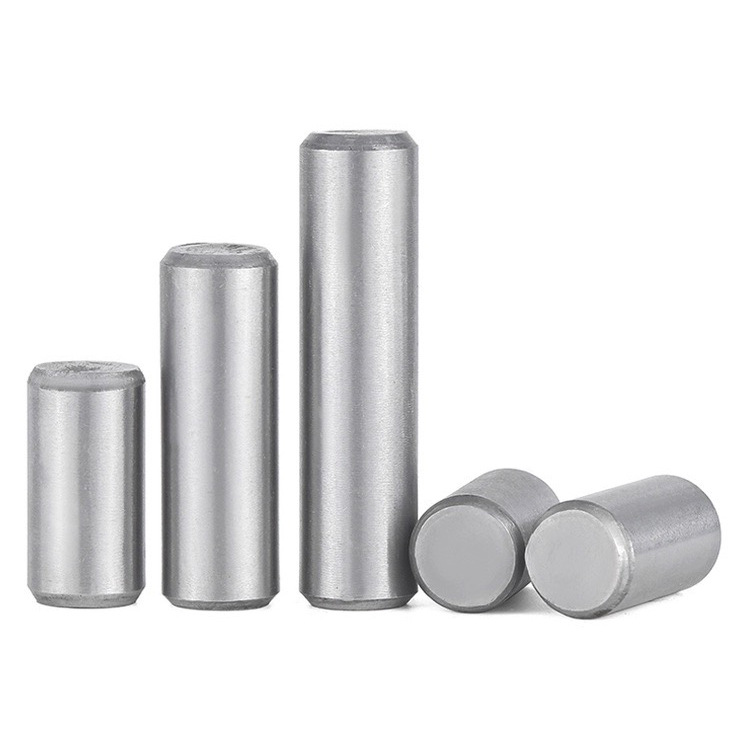
Though small in size, fasteners serve as the "safety guards" of equipment, and their failure can often lead to catastrophic consequences. Systematic analysis of fastener failure modes and the implementation of targeted preventive measures are key to ensuring equipment reliability. Shenzhen Yongjing Precision Technology Co., Ltd., drawing on engineering practice, provides an in-depth analysis of common fastener failure modes.
I. Methodology of Failure Analysis
Failure analysis typically follows these steps: on-site investigation → macroscopic morphology observation → fracture analysis (microscopic) → metallographic structure examination → hardness and mechanical property testing → chemical composition analysis → comprehensive analysis and conclusion.
II. Major Failure Modes and Prevention
1. Fatigue Fracture
Mechanism and characteristics: Under alternating stress, microcracks initiate at stress concentration points (such as thread roots and the transition radius under the bolt head). Cracks gradually propagate and eventually lead to instantaneous fracture. The fracture surface typically consists of two zones: a smooth fatigue propagation zone (often with "beach marks") and a rough instantaneous fracture zone.
Main causes: Insufficient preload causing the bolt to bear bending stress; insufficient joint stiffness; severe stress concentration; excessive alternating loads.
Preventive measures:
Use fine-pitch threads to improve stress distribution.
Increase the fillet radius under the bolt head to reduce stress concentration.
Ensure adequate preload to reduce alternating stress amplitude.
Use rolled threads to introduce compressive stress at the thread root, significantly improving fatigue strength.
Consider using flexible bolts or damping washers.
2. Overload Tension (Single-Stage Tensile Fracture)
Mechanism and characteristics: Fracture occurs when the applied load exceeds the bolt's tensile strength. The fracture surface exhibits a typical "cup-and-cone" shape with obvious plastic deformation (necking) characteristics.
Main causes: Excessive tightening torque; selection of an insufficient strength grade; unexpected overload.
Preventive measures: Correctly calculate loads and select the appropriate performance grade; use torque wrenches and other tools to precisely control preload.
3. Hydrogen Embrittlement
Mechanism and characteristics: Hydrogen atoms penetrate into the steel, gather at triaxial stress zones under stress concentration, combine into hydrogen molecules, and generate immense pressure, leading to delayed (typically within 24 hours after assembly) low-stress brittle fracture. The fracture surface is macroscopically flat and microscopically exhibits a "rock candy"-like intergranular fracture morphology.
Main causes: High-strength steel (typically > Grade 8.8) absorbs hydrogen during pickling, electroplating, and other processes, with inadequate or absent subsequent dehydrogenation treatment.
Preventive measures:
For high-strength bolts, prioritize hydrogen-embrittlement-free processes such as Dacromet and mechanical plating.
If electroplating is necessary, strictly perform post-plating dehydrogenation heat treatment.
Avoid prolonged immersion in pickling solutions.
4. Stress Corrosion Cracking (SCC)
Mechanism and characteristics: Brittle fracture occurs under the combined action of tensile stress and specific corrosive media (e.g., chloride ions for austenitic stainless steel, ammonia for copper alloys). The fracture surface also exhibits intergranular or transgranular brittle characteristics, but corrosion products are typically found on the surface.
Main causes: Incorrect material–environment matching; presence of sustained tensile stress.
Preventive measures:
In SCC-prone environments, select materials with SCC resistance (e.g., replace 304 with 316 stainless steel, or use ferritic stainless steel).
Use surface treatments (such as cadmium plating or coatings) to isolate corrosive media.
Introduce compressive stress through surface rolling to offset tensile stress.
5. Thread Galling (Seizing)
Mechanism and characteristics: During tightening of the bolt and nut, microscopic cold welding and material transfer occur on the thread contact surfaces, making disassembly impossible.
Main causes: Overly tight thread fit; high surface roughness; insufficient or improper lubrication; soft or similar materials (e.g., stainless steel against stainless steel).
Preventive measures:
Use specialized anti-seize lubricants (such as pastes containing molybdenum disulfide or graphite).
For stainless steel thread pairs, select bolts and nuts of different materials or apply surface treatments (e.g., zinc-plated bolts with phosphated nuts).
Control tightening speed to avoid excessive heat generation.
Conclusion
Fastener failure is often the result of multiple factors acting together. Shenzhen Yongjing Precision Technology Co., Ltd. recommends establishing a full-lifecycle quality control system—from design, material selection, manufacturing, and installation to maintenance—as the fundamental approach to preventing failures. We not only provide high-quality fastener products but also assist customers in failure analysis, addressing problems at their root and enhancing overall equipment reliability.
Professional consultant team online, ready to provide solutions for you
Contact NowProducts
Solutions
Applications
Contact
 Contact
 WeChat
Contact: Manager Fan - Tel/WeChat: 135-6073-0094 Email: Flora.Fan@toprecision.com | Manager Ao - Tel/WeChat: 13560729614 Email: Olia.Ao@toprecision.com
Sales Director: Mr. Zhang - Tel: 13510369429 Email: xiaowei.zhang@zcjtech.com
© Copyright 2011 - 2026 Shenzhen Toprecision Precision Technology Co., Ltd. All Rights Reserved.
 粤ICP备2025493240号-1

Cutter Screws
Thread Inserts
Sealing Products
Riveting Products
Locking Products
Direct Assembly
SMT Components
Precision Screws
Screwdriver Bits