















 Login
Login



Products
Solutions
Applications


Tool Screws
Thread Inserts
Sealing Products
Riveting Products
Locking Products
Direct Assembly
UQD
SMT Chips
Precision Screws
Screwdriver Bits
Other Screws
Tool Screws
High-precision cutting fit, firm fastening, ensuring stable tool operation
Thread Inserts
Expert in precision thread repair, high strength and durability, stable locking without loosening
Riveting Products
Integral riveting molding, firm connection, compression resistant and not easy to loose
Locking Products
Multiple locking and anti-loosening, shockproof and stable, resist vibration for continuous fastening
Direct Assembly
Auxiliary-free convenient assembly, precise alignment, simplified process for efficient installation
UQD
Quick release buckle design, smooth docking, easy disassembly and assembly, universal efficiency
SMT Chips
Precision chip fitting, flat adhesion, suitable for automated mounting operations
Precision Screws
Micron-level precision molding, standard size, suitable for various precision components
Screwdriver Bits
High-precision bits, strong toughness and wear resistance, precise engagement for efficient operation
Others
Universal specification fit, stable fastening, meet various conventional assembly needs
Engineering Plastics
Light Alloys

PCB Applications
Sheet Metal Applications

Hard Alloys
Locking Applications
Lightweight Applications

Waterproof Sealing
Multi-function Applications
Surface Treatment
Miniature Precision
Ultra-high Strength Bolts

Magnesium Alloy Galvanic Corrosion

Humanoid Robots

Carbon Fiber Materials
 Ask me anything
 Contact information for headquarters sales
Contact information for Indonesia sales
Contact information for India sales
Contact information for headquarters sales
Contact information for Indonesia sales
Contact information for India sales



Thread Inserts

Screwdriver Bits

Inserts

Riveting Products

Locking Products

Direct Assembly

SMT Chips

Precision Screws

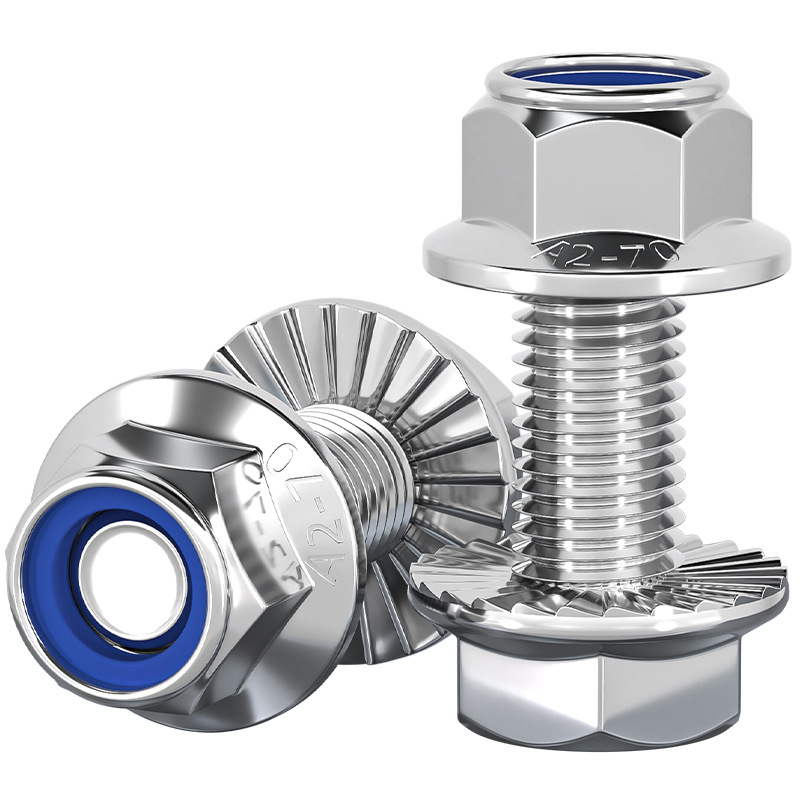
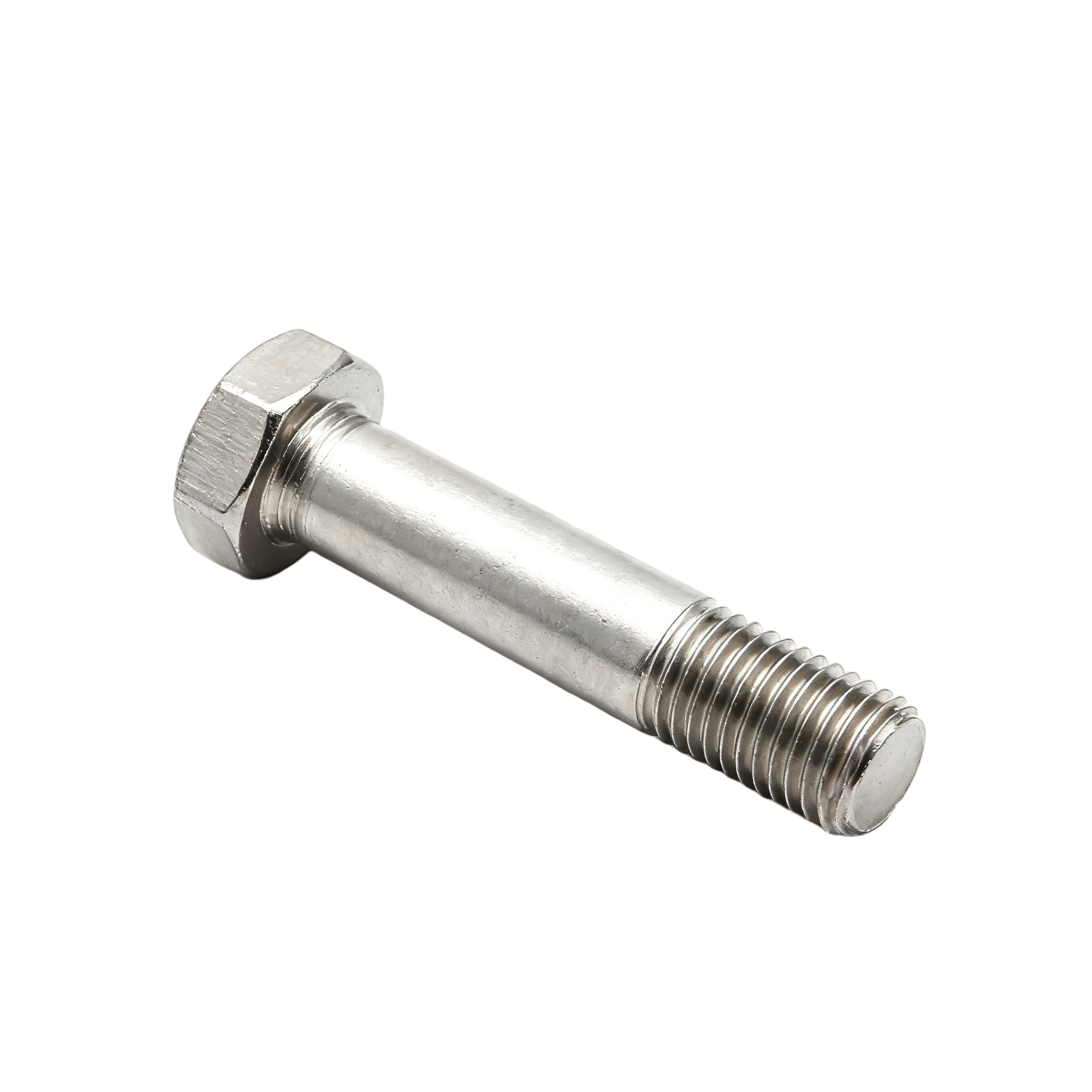
In load-bearing connections of highway and railway bridges, in hydraulic system fixations of cranes and excavators, and in pipeline flange connections of industrial plants, flange screws play the core role of "load-bearing hubs." This type of fastener, consisting of a hex head, an integrated flange, and external threads, leverages the structural advantages of "integrated washer and uniform force distribution" to become the preferred choice for scenarios requiring pressure distribution, anti-loosening, and anti-slip. The design, where the flange and hex head are fixed as one, eliminates the need for separate washer assembly while increasing the contact area with the workpieces, effectively avoiding deformation of thin-walled components under pressure. However, the connection reliability of flange screws depends not only on the product's own characteristics but also on scientific tightening methods. Improper tightening operations can lead to uneven flange face loading, seal failure, and even serious accidents such as equipment leakage or structural collapse. This article starts with the characteristics of flange screws and systematically analyzes their tightening methods, process key points, and scenario adaptation strategies.
Understanding the classification characteristics of flange screws is the foundation for accurately selecting tightening methods. By head shape, they are divided into two types: flat head and concave head. Flat head flange screws have a flat top surface, suitable for assembly scenarios with limited space, avoiding head protrusion that could interfere with other components. Concave head flange screws have a concave arc-shaped head, which can disperse stress when subjected to impact loads, suitable for severe vibration scenarios such as construction machinery. By flange structure, they are divided into flat base and toothed types. The toothed surface of toothed flange screws can embed into the workpiece surface, increasing anti-slip torque by more than 40% compared to flat base types, making them indispensable in high-frequency vibration scenarios such as automotive chassis and wind power flanges. Regarding surface treatment, white zinc (zinc plating) is low-cost and suitable for indoor dry environments. Olive drab passivation (zinc plating + olive drab chromate treatment) offers improved corrosion resistance, suitable for outdoor bridge components. Color yellow (zinc plating + color passivation) provides both decorative appearance and basic corrosion resistance, used for exposed parts of civil buildings. Dacromet treatment achieves "never rust" performance, with salt spray corrosion resistance exceeding 1000 hours, making it the preferred choice for highly corrosive scenarios such as offshore platforms and chemical pipelines. Additionally, reamed flange screws require precise fit with hole diameters, specifically for connections subject to transverse forces. Flange screws with holes in the shank can be locked with pins to enhance anti-loosening. Reduced-shank flange screws, with a smaller shank diameter, better accommodate elastic deformation under variable load conditions.
The core principles for tightening flange screws are "uniform force distribution and precise force control." Tightening methods must be selected based on load level, sealing requirements, and other factors of the connection scenario. The main methods fall into three categories: basic manual tightening, professional tool tightening, and intelligent tightening.
Basic manual tightening is suitable for small-size, light-load scenarios, such as low-pressure pipeline flange connections in civil buildings. Tools include open-end wrenches and combination wrenches, relying on operator experience to achieve the feel of correct torque. This method is simple to operate but depends heavily on operator skill, with torque error up to ±20%, and it is difficult to ensure uniform force distribution among multiple screws. It is only suitable for non-critical scenarios with screws below M12 and working pressure below 1 MPa.
Professional tool tightening is the mainstream choice for industrial scenarios, significantly improving tightening accuracy and efficiency. It is divided into two types: torque wrench tightening and hydraulic wrench tightening. Torque wrench tightening achieves precise control by presetting a torque value. When the set torque is reached, the wrench emits an audible signal or slips, preventing over-tightening and screw fracture. For flange connections, the key is the "diagonal symmetrical tightening" principle. Force must be applied gradually over 2-3 rounds in the order "clockwise - diagonal - clockwise." The first round tightens all screws until the flange faces contact (pre-torque approximately 30% of the rated torque). The second round applies 70% of the rated torque. The third round applies the full rated torque, ensuring uniform flange face contact and avoiding damage to the sealing gasket due to localized overloading. Taking an industrial pipeline connected with M20 high-strength flange screws as an example, the rated torque is 350 N·m. After using the three-round tightening method, the flatness error of the flange face is controlled within 0.1 mm, and the seal leakage rate is reduced by 90%.
Hydraulic wrench tightening is suitable for large-size, heavy-load scenarios, such as bridge steel structure flanges and wind power tower flanges. These scenarios require tightening high-strength flange screws above M30, where manual tools cannot provide sufficient torque. Hydraulic wrenches use hydraulic power to deliver stable torque, with a torque range from 100 N·m to 10,000 N·m and an error of only ±5%. They can be paired with torque sensors for data recording. In high-speed railway bridge flange connections, the "layered diagonal" method is used with hydraulic wrenches: tighten the inner flange screws first, then the outer screws, increasing torque by 20% each round, ultimately achieving uniform force distribution on the flange face, ensuring long-term stability under high-frequency vibration from passing trains.
Intelligent tightening is the development direction for high-end manufacturing, suitable for scenarios with extremely high tightening accuracy requirements, such as automotive and aerospace applications. Intelligent tightening systems, driven by servo motors, collect real-time data on torque, angle, and rotational speed, generating a "tightening data report" for each screw, enabling quality traceability. In new energy vehicle battery pack flange connections, the intelligent system can precisely control the tightening process of M16 flange screws, not only ensuring torque error less than ±3% but also using the torque-angle curve to detect issues such as false tightening or thread stripping. The system stops and alerts immediately if abnormalities occur, significantly improving connection reliability.
Tightening key points vary significantly across different application scenarios, requiring customized solutions. For highway and bridge flange connections, select reduced-shank flange screws, use hydraulic wrenches with the layered diagonal method, apply Dacromet surface treatment, and coat with anti-rust grease after tightening to adapt to outdoor temperature variations and rain erosion. For heavy machinery such as cranes, select toothed flange screws, tighten to the rated torque with a torque wrench, and then use cotter pins to lock the shank holes, creating dual protection of "torque control + mechanical anti-loosening." For chemical pipeline flange connections, select reamed flange screws with fluororubber sealing gaskets, and use an intelligent tightening system to ensure precise torque, avoiding leakage of chemical media.
Post-tightening inspection and maintenance are equally critical. In industrial scenarios, connection quality should be checked by torque re-inspection (within 1-2 hours after tightening) and ultrasonic testing. In outdoor scenarios, regularly inspect the flange face seal, clean and reapply anti-rust compound if rust is found. In severe vibration scenarios, conduct quarterly torque spot checks and re-tighten any loose screws. Additionally, when disassembling flange screws, gradually unload torque in the reverse diagonal order to avoid flange face deformation due to stress concentration.
In summary, tightening flange screws is by no means a simple operation of "just tighten them." It is a systematic engineering task that integrates product characteristics, scenario requirements, and tool selection. The technological progression from basic manual tightening to intelligent tightening reflects the manufacturing industry's pursuit of "precision and controllability." For fastener practitioners, mastering tightening methods and key points for different scenarios not only enhances product application value but also builds the "last line of defense" for equipment operational safety, driving the industry toward high-quality development.
Professional consultant team online, ready to provide solutions for you
Contact NowProducts
Solutions
Applications
Contact
 Contact
 WeChat
Contact: Manager Fan - Tel/WeChat: 135-6073-0094 Email: Flora.Fan@toprecision.com | Manager Ao - Tel/WeChat: 13560729614 Email: Olia.Ao@toprecision.com
Sales Director: Mr. Zhang - Tel: 13510369429 Email: xiaowei.zhang@zcjtech.com
© Copyright 2011 - 2026 Shenzhen Toprecision Precision Technology Co., Ltd. All Rights Reserved.
 粤ICP备2025493240号-1
Cutter Screws
Thread Inserts
Sealing Products
Riveting Products
Locking Products
Direct Assembly
SMT Components
Precision Screws
Screwdriver Bits