































 Contact information for headquarters sales


 Login
Login






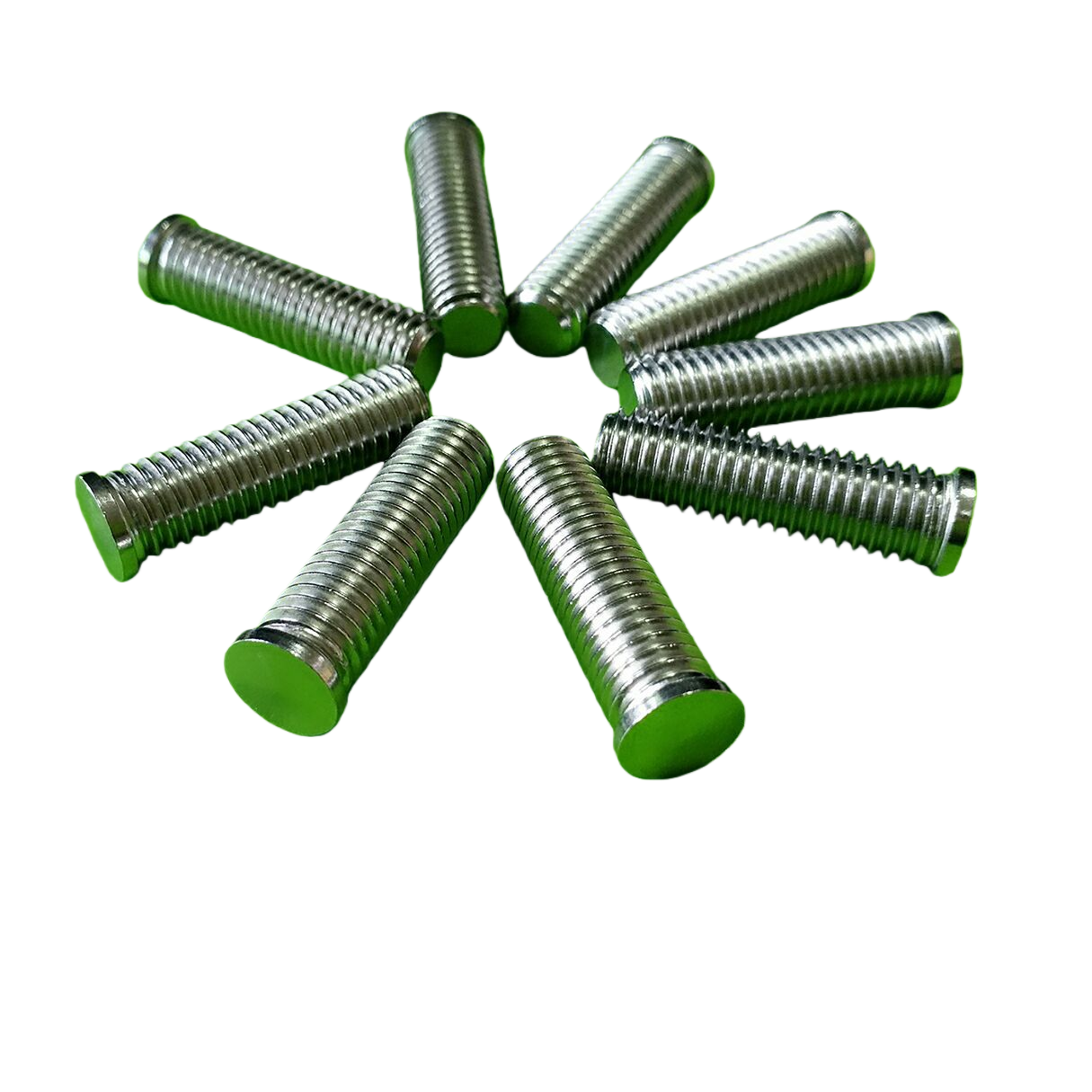
In the field of fastener manufacturing, the consensus that "surface performance determines core value" has become industry standard. Whether the thickness of the zinc plating on a bolt meets requirements, whether there are micro-cracks on the thread surface, whether the chemical state of the passivation layer is stable — these seemingly minor surface characteristics directly determine the corrosion resistance, anti-loosening performance, and fatigue life of fasteners. Surface analysis technology, as the "discerning eye" for analyzing these microscopic characteristics, examines the composition, structure, and energy state of the thin outer atomic layers of solid surfaces. It provides precise data support for everything from raw material screening to finished product inspection, from failure analysis to process optimization, making it a core technical means of ensuring product quality.
The core value of surface analysis technology lies in breaking through the limitations of macroscopic observation to achieve precise decoding of the microscopic surface world. Unlike traditional appearance inspection and dimensional measurement, surface analysis focuses on "atomic-level and molecular-level" surface characteristics, encompassing three core dimensions: morphology analysis, composition analysis, and structure analysis. For fasteners, the results of these three dimensions are directly related to key performance: morphology determines friction coefficient (affecting anti-loosening effectiveness), composition determines corrosion resistance (affecting service life), and structure determines bonding strength (affecting coating adhesion). For example, in a failure case of wind power flange bolts, appearance inspection only showed surface rust, but surface analysis revealed the presence of an oxide interlayer between the zinc plating and the substrate, causing insufficient coating adhesion and peeling, which pointed the way for process optimization.
Scanning Electron Microscopy (SEM) analysis is the primary technology for observing the surface morphology of fasteners. It scans the sample surface with an electron beam to generate high-resolution three-dimensional morphology images, with magnifications up to hundreds of thousands of times, clearly revealing details such as thread profiles, coating textures, and micro-cracks. In fastener production, SEM is widely used for surface treatment quality inspection. Zinc-plated bolts require SEM observation to check for defects such as pinholes and peeling in the coating — pinholes larger than 5 μm in diameter significantly reduce corrosion resistance. The tooth surface morphology of toothed flange screws needs SEM verification to ensure that tooth sharpness meets anti-slip requirements. After one automotive bolt manufacturer introduced SEM inspection, the coating defect rate dropped from 3.2% to 0.8%, significantly improving the product pass rate.
Energy Dispersive Spectroscopy (EDS), as the "golden partner" of SEM, can simultaneously perform qualitative and quantitative analysis of surface composition. Its principle involves detecting the characteristic X-rays excited by the electron beam to determine the types and contents of elements. EDS plays an irreplaceable role in fastener coating inspection. For Dacromet coatings, EDS must verify whether the zinc-to-aluminum content ratio is 7:3, as this ratio directly determines salt spray resistance. For stainless steel bolts, EDS must detect chromium and nickel content to ensure compliance with 304 (chromium ≥18%, nickel ≥8%) or 316 (chromium ≥16%, nickel ≥10%) material standards. In raw material screening, EDS can quickly identify "pseudo-high-end bolts" made from refurbished scrap steel, avoiding safety hazards caused by substandard materials.
X-ray Photoelectron Spectroscopy (XPS) is a precise tool for analyzing surface chemical states, capable of detecting chemical valence states and chemical bond types of elements, with a detection depth of 2-10 nm. For inspection of passivation treatment on fasteners, XPS is a core detection method. For colored passivation layers on zinc-plated bolts, XPS must verify whether chromium is primarily in the trivalent (Cr³⁺) state — the presence of hexavalent chromium (Cr⁶⁺) would indicate non-compliance with environmental standards. For phosphate-treated bolts, XPS must detect the crystalline state of zinc phosphate in the phosphating film to ensure firm bonding with the substrate. One high-end fastener manufacturer used XPS to optimize its passivation process, increasing product salt spray resistance from 48 hours to 72 hours and successfully entering the high-end automotive supply chain.
Surface analysis technology also plays a critical role in failure analysis of fasteners. In one case, bolts on construction machinery loosened after three months of use, and conventional testing could not determine the cause. Surface analysis revealed that the lubricating coating on the bolt thread surface had carbonized due to high temperature, causing the friction coefficient to rise from 0.18 to 0.32, disrupting the anti-loosening balance. Based on this finding, the company replaced the coating with a high-temperature-resistant lubricating coating, completely solving the loosening problem. Additionally, in fatigue failure analysis, Atomic Force Microscopy (AFM) can analyze the micro-roughness at the thread root to accurately determine whether stress concentration caused by machining marks exists, providing a basis for optimizing machining processes.
As the fastener industry moves toward higher-end products, surface analysis technology is extending from "post-inspection" to "pre-control." Leading enterprises have integrated it into the entire production process. Upon raw material receipt, EDS verifies composition. During surface treatment, SEM monitors coating morphology in real time. Before finished products leave the factory, XPS confirms chemical state. This full-process control model has increased batch pass rates for fasteners from 95% to over 99%, significantly enhancing product competitiveness.
For fastener industry practitioners, mastering the application logic of surface analysis technology is key to improving quality control levels. From selecting the appropriate analysis technique (SEM for morphology, EDS for composition, XPS for chemical state) to interpreting data in the context of working conditions, surface analysis technology provides quantifiable, traceable scientific evidence for fastener quality improvement. In the future, with the spread of intelligent analysis equipment, surface analysis will serve fastener manufacturing more efficiently and accurately, helping the industry transition from "scale expansion" to "quality improvement."




 粤ICP备2025493240号-1