














 Login
Login



Products
Solutions
Applications


Tool Screws
Thread Inserts
Sealing Products
Riveting Products
Locking Products
Direct Assembly
UQD
SMT Chips
Precision Screws
Screwdriver Bits

Other Screws
Tool Screws
High-precision cutting fit, firm fastening, ensuring stable tool operation
Thread Inserts
Expert in precision thread repair, high strength and durability, stable locking without loosening
Riveting Products
Integral riveting molding, firm connection, compression resistant and not easy to loose
Locking Products
Multiple locking and anti-loosening, shockproof and stable, resist vibration for continuous fastening
Direct Assembly
Auxiliary-free convenient assembly, precise alignment, simplified process for efficient installation
UQD
Quick release buckle design, smooth docking, easy disassembly and assembly, universal efficiency
SMT Chips
Precision chip fitting, flat adhesion, suitable for automated mounting operations
Precision Screws
Micron-level precision molding, standard size, suitable for various precision components
Screwdriver Bits
High-precision bits, strong toughness and wear resistance, precise engagement for efficient operation
Others
Universal specification fit, stable fastening, meet various conventional assembly needs
Engineering Plastics
Light Alloys

PCB Applications
Sheet Metal Applications

Hard Alloys
Locking Applications
Lightweight Applications

Waterproof Sealing
Multi-function Applications
Surface Treatment
Miniature Precision
Ultra-high Strength Bolts
Magnesium Alloy Galvanic Corrosion

Humanoid Robots

Carbon Fiber Materials
 Ask me anything
 Contact information for headquarters sales
Contact information for Indonesia sales
Contact information for India sales
Contact information for headquarters sales
Contact information for Indonesia sales
Contact information for India sales



Thread Inserts

Screwdriver Bits

Inserts

Riveting Products

Locking Products

Direct Assembly

SMT Chips

Precision Screws

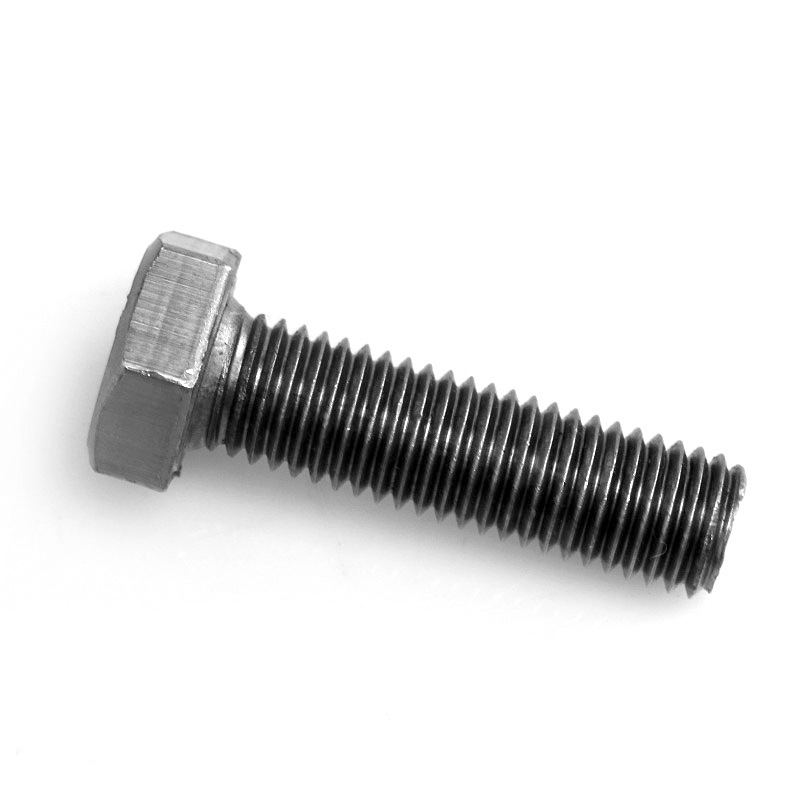
In the production of plastic fasteners, modified plastic raw materials, and similar fields, the twin-screw extruder is a core piece of equipment due to its uniform mixing and high extrusion efficiency. However, during long-term processing, plastic raw materials such as PP, PA, and PPS form deposits on the screw flights and barrel inner walls due to high-temperature melting and shearing. If not cleaned promptly, these deposits gradually carbonize and cross-link, leading to defects like black spots and color mixing in extruded products—affecting fastener dimensional accuracy and appearance—as well as increased screw wear, higher energy consumption, and even screw seizure in severe cases. Industry data shows that standardized screw cleaning can extend equipment life by 30% and improve product pass rates by over 15%. Mechanical cleaning, chemical cleaning, and high-temperature degradation cleaning, as the three most mainstream methods, are each suited to different production scenarios and deposit types. The following is a systematic analysis from principles to practical application.
Mechanical cleaning is the most widely used basic method. Its core principle is physical scraping and grinding to remove screw surface deposits. Leveraging "no chemical residues and broad adaptability," it is the first choice for most fastener manufacturers. The principle relies on hardness differences between tools and deposits, using manual or semi-automatic equipment to precisely clean screw flights, meshing gaps, flange surfaces, and other key areas, thoroughly removing physically adhered plastic residues and lightly carbonized layers. The procedure follows: safe disassembly → step-by-step cleaning → fine polishing → inspection and maintenance. First, stop the machine per operating procedures, cool the barrel to below 60°C, then disassemble components such as the screw coupling and flange. Pull out the twin screws as a whole to avoid deformation from forced pulling. During cleaning, select tools based on deposit thickness: use nylon brushes and copper scrapers for soft surface deposits, and tungsten carbide grinding heads (80–120 grit) for stubborn deposits. Avoid steel scrapers or wire brushes to prevent damaging the screw's nitrided or alloy coating. For hard-to-reach areas like meshing gaps and thread roots, use a high-pressure air gun (0.6–0.8 MPa) to blow away residues. After cleaning, wipe the screw surface with a clean cloth, check that threads and leads are intact, and apply anti-rust oil or a specialized protectant to prevent moisture-induced corrosion.
Mechanical cleaning suits a wide range of scenarios, especially for removing residues of conventional plastics like PP, PE, and ABS, and for low color or material change frequency. Advantages: low cost, low operational threshold—basic tools only—and no chemical residues affecting subsequent quality. Limitations: long cleaning time (2–4 hours per unit), high labor intensity, offline only (no online cleaning), and limited effectiveness against severely carbonized or cross-linked deposits. Key points: control grinding force—the screw's nitrided layer is only 0.1–0.3 mm thick, and excessive grinding damages the protective layer, leading to increased wear and sticking; ensure proper phase alignment when reinstalling screws to maintain extrusion stability.
Chemical cleaning uses dissolution or swelling of deposits via chemical solvents, offering high efficiency and labor savings. It suits tough, adhesive, hard-to-remove deposits and is frequently used for engineering plastic fasteners such as PA, PC, and PBT. The principle uses targeted solvents based on the residual plastic's chemical characteristics, breaking molecular chains or swelling deposits so they detach, avoiding physical damage. The operation follows: solvent selection → safety pretreatment → cleaning → residue removal. Solvent selection follows "like dissolves like": for polar plastics like PA and PU, use polar solvents such as formic acid or acetic acid; for non-polar plastics like PE and PP, use non-polar solvents such as toluene or xylene. Alternatively, use industry-specific screw cleaning compounds (containing effective solvents). Before cleaning, ensure safety: wear solvent-resistant gloves and goggles, ensure good ventilation to avoid volatile solvent vapor accumulation. Cleaning methods: immersion (place disassembled screws in a solvent tank for 4–8 hours, up to 12 hours for stubborn deposits) or circulation (add solvent or cleaning compound to the barrel, set temperature 20–30°C above the plastic's melting point, run screws at low speed (5–10 rpm) for 30–60 minutes). After cleaning, rinse screw surfaces with water or a specialized cleaner, then dry at high temperature (120–150°C) to ensure no solvent remains, preventing raw material contamination in subsequent processing.
Advantages: high efficiency—handling stubborn deposits 3–5 times faster than mechanical—and reaching dead corners like thread gaps, with lower labor intensity. Limitations: many solvents are corrosive or volatile, requiring strict usage control and environmentally sound disposal. Some solvents may damage screw coatings, so compatibility tests on non-critical screw areas are needed. Residual solvents must be thoroughly removed to avoid degrading plastic properties, which could cause fastener brittleness or cracking. Practical tips: precisely control solvent concentration (typically 5–15%)—too high risks equipment corrosion, too low reduces effectiveness; adjust immersion time based on deposit softening to avoid substrate damage. Waste solvents must be collected and disposed of by professional agencies, not discharged directly.
High-temperature degradation cleaning targets heat-resistant engineering plastics such as PPS, PEEK, and LCP. These have high melting points and strong adhesion, making conventional mechanical or chemical cleaning ineffective. The principle uses differences in thermal stability: raise the barrel temperature to the deposit's degradation temperature (typically 80–150°C above the plastic's melting point), hold to decompose the deposit into low-molecular-weight compounds or a carbonized layer, then remove mechanically. Operation requires strict temperature and time control: set temperature according to residual plastic type (e.g., 400–450°C for PPS, 450–500°C for PEEK), with a heating rate of 5–10°C/min to avoid local overheating that could damage barrel and screws. Hold for 1–2 hours, rotating screws at low speed (3–5 rpm) every 15 minutes to promote uniform degradation. After holding, cool to 150–200°C, remove the carbonized layer with copper scrapers or carbon fiber brushes, and blow away residual dust with a high-pressure air gun. If stubborn carbonized spots remain, lightly grind with fine-grit tools. Finally, cool to room temperature, inspect screws, and apply protectant.
Advantages: handles heat-resistant plastic deposits that other methods cannot, meeting high-end engineering plastic fastener production needs; requires no chemical solvents, more environmentally friendly than chemical cleaning. Disadvantages: high energy consumption; prolonged high temperatures can age the screw nitrided layer or deform barrel liners, reducing equipment life; possible emission of hazardous gases during carbonization, requiring exhaust gas treatment equipment. Practical precautions: strictly control maximum temperature and holding time to avoid exceeding the screw coating's tolerance (typically 500°C); operate ventilation systems during cleaning to exhaust gases; thoroughly inspect screws afterward—repair or replace if coating loss or thread damage is found.
Each method has suitable scenarios. In production, choice depends on deposit type, equipment condition, and production rhythm. For conventional plastics and low material-change frequency, mechanical cleaning balances cost and safety. For tough, stubborn deposits requiring high efficiency, chemical cleaning can be used, with attention to environmental protection and safety. For heat-resistant plastic residues, high-temperature degradation cleaning is the only option, with equipment protection measures. Industry practice shows that combining methods yields better results—for example, using high-temperature degradation to remove stubborn deposits, followed by mechanical cleaning for refinement, and finally wiping with a small amount of eco-friendly solvent—to ensure cleaning effectiveness while minimizing equipment damage.
As twin-screw extruders evolve toward intelligence and high efficiency, cleaning technologies are also advancing. Some high-end equipment now features online cleaning systems using special screw designs, automatic temperature control, and spray functions for rapid cleaning without shutdown. Environmentally friendly chemical cleaners and degradable cleaning materials are also becoming R&D hotspots, reducing environmental impact while maintaining cleaning effectiveness. For fastener manufacturers, mastering key operational points of core cleaning methods and establishing a regular cleaning schedule (e.g., daily pre-shift inspection, weekly minor cleaning, monthly deep cleaning) are essential to avoid deposit-related risks and ensure stable equipment operation and product quality compliance.
Professional consultant team online, ready to provide solutions for you
Contact NowProducts
Solutions
Applications
Contact
 Contact
 WeChat
Contact: Manager Fan - Tel/WeChat: 135-6073-0094 Email: Flora.Fan@toprecision.com | Manager Ao - Tel/WeChat: 13560729614 Email: Olia.Ao@toprecision.com
Sales Director: Mr. Zhang - Tel: 13510369429 Email: xiaowei.zhang@zcjtech.com
© Copyright 2011 - 2026 Shenzhen Toprecision Precision Technology Co., Ltd. All Rights Reserved.
 粤ICP备2025493240号-1
Cutter Screws
Thread Inserts
Sealing Products
Riveting Products
Locking Products
Direct Assembly
SMT Components
Precision Screws
Screwdriver Bits