




























 Login
Login




Products
Solutions
Applications





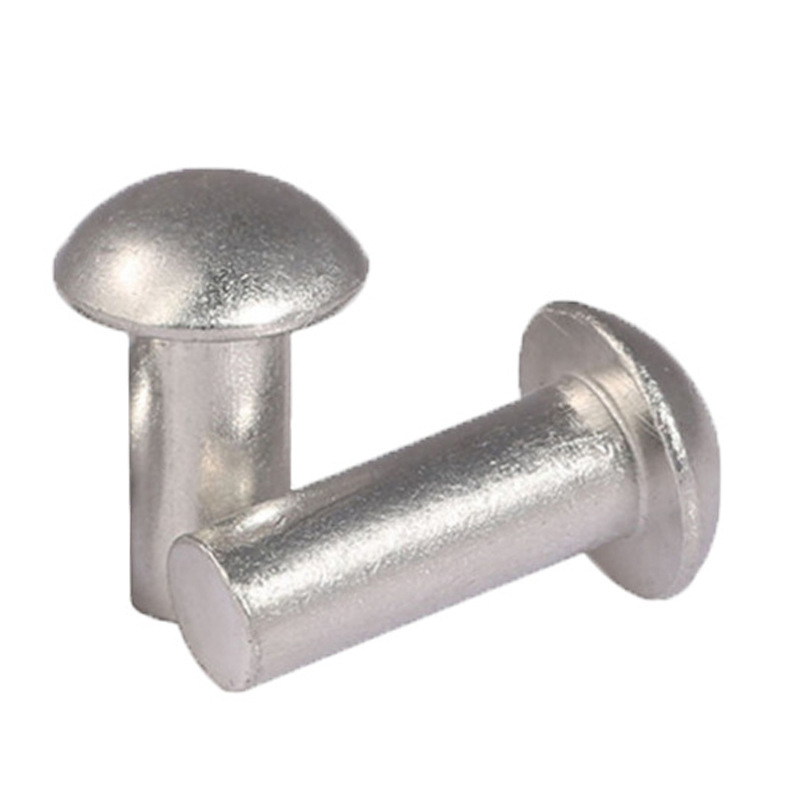
In the fastener industry, heat treatment is essential for achieving performance requirements. The "Four Industrial Fires" — annealing, normalizing, quenching, and tempering — precisely control temperature and time to give metal materials different mechanical properties.
Annealing is the foundation conditioner. It improves internal structure and eliminates internal stress by heating the fastener blank to a specific temperature, holding for sufficient time, and slowly cooling in the furnace. This eliminates internal stress from cold heading, refines grains, and reduces hardness to improve machinability.
Normalizing is the high-efficiency adjuster. The key difference from annealing is cooling speed — normalizing uses air cooling, which is faster than furnace cooling. This results in finer structure, slightly higher hardness and strength, shorter production cycles, and lower cost. Normalizing is often used for low or medium carbon steel blanks and can even serve as the final heat treatment for some fasteners.
Quenching is the performance transformer. It significantly increases hardness, strength, and wear resistance by heating the fastener and rapidly cooling in water, oil, or salt baths. This forms martensite or bainite, dramatically increasing hardness. However, quenched fasteners become very brittle with high internal stress and must be paired with tempering.
Tempering is the precision regulator. It works as quenching's partner by reheating the quenched fastener to a temperature below Ac1 and then cooling. Based on temperature, tempering is divided into low temperature (150-250°C) for high hardness and wear resistance, medium temperature (350-500°C) for elasticity and fatigue strength, and high temperature (500-650°C) for high-strength bolts requiring both high strength and toughness.
In actual production, the Four Industrial Fires work together. For example, a Grade 12.9 high-strength engine bolt follows this route: raw material cutting → cold heading → stress relief annealing → thread machining → quenching (860°C, oil cooling) → high temperature tempering (580°C, air cooling). For ordinary construction bolts, the process simplifies to: blank forming → normalizing.
As the fastener industry moves toward higher precision, vacuum furnaces and atmosphere protection furnaces with intelligent temperature control are replacing traditional furnaces, achieving temperature control accuracy of ±5°C. Digital management of process parameters makes production traceable.
For fastener professionals, understanding the Four Industrial Fires is key to quality control. Whether choosing between annealing and normalizing for pre-treatment or determining quenching temperature and tempering time for final heat treatment, decisions must be based on material properties, product standards, and application conditions.
Professional consultant team online, ready to provide solutions for you
Contact NowProducts
Solutions
Applications
Contact
 Contact
 WeChat
Contact: Manager Fan - Tel/WeChat: 135-6073-0094 Email: Flora.Fan@toprecision.com | Manager Ao - Tel/WeChat: 13560729614 Email: Olia.Ao@toprecision.com
Sales Director: Mr. Zhang - Tel: 13510369429 Email: xiaowei.zhang@zcjtech.com
© Copyright 2011 - 2026 Shenzhen Toprecision Precision Technology Co., Ltd. All Rights Reserved.
 粤ICP备2025493240号-1


Cutter Screws
Thread Inserts
Sealing Products
Riveting Products
Locking Products
Direct Assembly
SMT Components
Precision Screws
Screwdriver Bits