



















 Login
Login



Products
Solutions
Applications





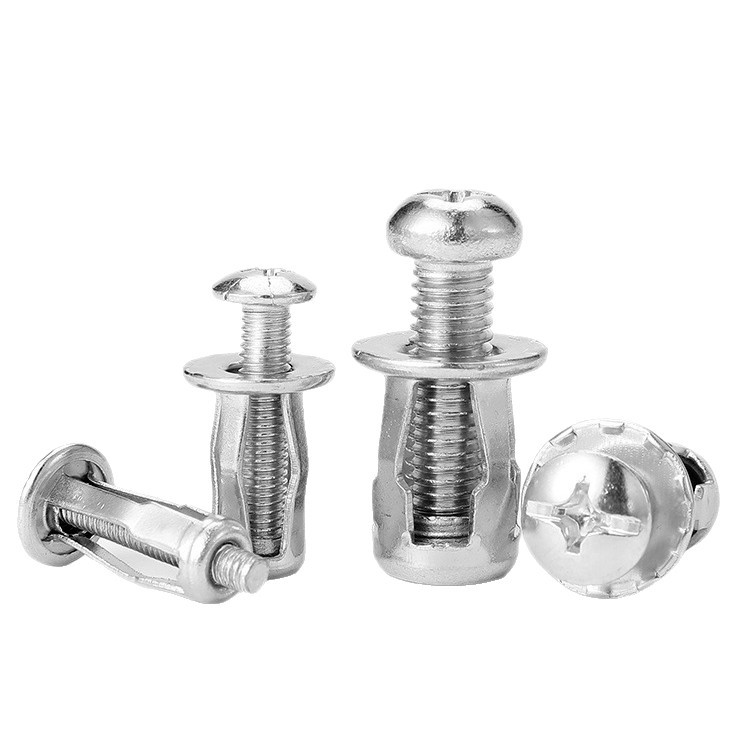
Selecting the appropriate fastener material is the foundation for ensuring connection performance, durability, and cost-effectiveness. Faced with multiple choices including carbon steel, stainless steel, and non-ferrous metals, how should one decide? Shenzhen Yongjing Precision Technology Co., Ltd. provides you with a detailed material comparison guide.
I. Carbon Steel Fasteners
This is the largest and most economical category of fastener materials, with performance primarily adjusted through carbon content and heat treatment.
Low-carbon steel (e.g., Q235, 1008):
Properties: Low strength (Grade 4.8 and below), good plasticity, easy to cold-head.
Applications: Low-load, non-critical connections such as furniture and light packaging.
Medium-carbon steel (e.g., 35# steel, 45# steel) and quenched and tempered alloy steel:
Properties: Through quenching and tempering, strengths from Grade 8.8 to Grade 12.9 can be achieved. They are the mainstay of heavy machinery and steel structures.
Advantages: High strength, good cost-effectiveness, mature technology.
Disadvantages: Poor corrosion resistance; surface treatment is mandatory.
Applications: Extremely wide-ranging, from automotive chassis to building bridges.
II. Stainless Steel Fasteners
Characterized primarily by excellent corrosion resistance, available in numerous types.
Austenitic stainless steel (e.g., 304, 316):
Properties: Non-magnetic, excellent corrosion resistance, relatively lower strength and hardness (A2-70, A4-80). 316, containing molybdenum, offers better pitting resistance than 304.
Advantages: Broad-spectrum corrosion resistance, attractive appearance.
Disadvantages: Higher cost than carbon steel; may be susceptible to stress corrosion cracking in chloride-containing environments; limited maximum strength.
Applications: Food processing equipment, chemical industry, marine, medical, and outdoor decoration.
Martensitic stainless steel (e.g., 410, 420):
Properties: Can be strengthened through heat treatment, offering relatively high strength and hardness, but corrosion resistance is far inferior to austenitic stainless steel.
Applications: Applications requiring strength and wear resistance where the corrosive environment is not severe, such as valves and pump shafts.
Precipitation-hardening stainless steel (e.g., 630/17-4PH):
Properties: Achieves high strength (up to 1500 MPa) through aging treatment while maintaining better corrosion resistance than martensitic grades.
Applications: High-end fields such as aerospace and high-performance engines.
III. Copper and Copper Alloy Fasteners
Properties: Excellent electrical and thermal conductivity; resistance to seawater and atmospheric corrosion; non-magnetic; good friction resistance (self-lubricating).
Advantages: Good electrical conductivity, explosion-proof (no sparks upon impact), corrosion-resistant.
Disadvantages: Low strength (approximately at the level of low-carbon steel), high cost, relatively high density.
Applications: Electrical connections, marine, chemical explosion-proof environments, art pieces, and architectural hardware.
IV. Aluminum Alloy Fasteners
Properties: Low density, extremely light weight; good electrical and thermal conductivity; forms an oxide film in the atmosphere, providing some corrosion resistance.
Advantages: Excellent lightweighting effect, good specific strength (strength/density), oxidation resistance.
Disadvantages: Low strength, low hardness, threads easily damaged; susceptible to galvanic corrosion when in contact with dissimilar metals.
Applications: Aerospace, electronic equipment (e.g., hard drives, laptops), racing vehicles, outdoor lightweight equipment.
V. Titanium and Titanium Alloy Fasteners
Properties: Outstanding specific strength (higher than many high-strength steels), excellent corrosion resistance (especially to chloride ions), good biocompatibility.
Advantages: High strength, light weight, excellent corrosion resistance, non-magnetic.
Disadvantages: Extremely expensive; difficult to machine at room temperature; poor wear resistance.
Applications: Aerospace, military, high-end medical implants, deep-sea equipment, chemical corrosion-resistant environments.
VI. Nickel-Based Superalloy Fasteners (e.g., Inconel 718, Hastelloy)
Properties: Maintains high strength and microstructural stability at elevated temperatures (above 550°C) and in extreme corrosive environments.
Advantages: Excellent high-temperature strength, creep resistance, oxidation resistance, and corrosion resistance.
Disadvantages: Extremely costly, difficult to manufacture and process.
Applications: Aircraft engines, gas turbines, nuclear industry, extreme chemical environments.
Conclusion
There is no "best" material, only the "most suitable" material. Shenzhen Yongjing Precision Technology Co., Ltd. recommends that selection should involve comprehensive evaluation of strength requirements, corrosive environment, operating temperature, weight constraints, electrical/magnetic requirements, and budget. Our team of professional sales engineers can provide unbiased material selection advice to ensure you obtain the most reliable connection solution at the optimal cost-benefit ratio.
Professional consultant team online, ready to provide solutions for you
Contact NowProducts
Solutions
Applications
Contact
 Contact
 WeChat
Contact: Manager Fan - Tel/WeChat: 135-6073-0094 Email: Flora.Fan@toprecision.com | Manager Ao - Tel/WeChat: 13560729614 Email: Olia.Ao@toprecision.com
Sales Director: Mr. Zhang - Tel: 13510369429 Email: xiaowei.zhang@zcjtech.com
© Copyright 2011 - 2026 Shenzhen Toprecision Precision Technology Co., Ltd. All Rights Reserved.
 粤ICP备2025493240号-1

Cutter Screws
Thread Inserts
Sealing Products
Riveting Products
Locking Products
Direct Assembly
SMT Components
Precision Screws
Screwdriver Bits