



























 Login
Login



Products
Solutions
Applications





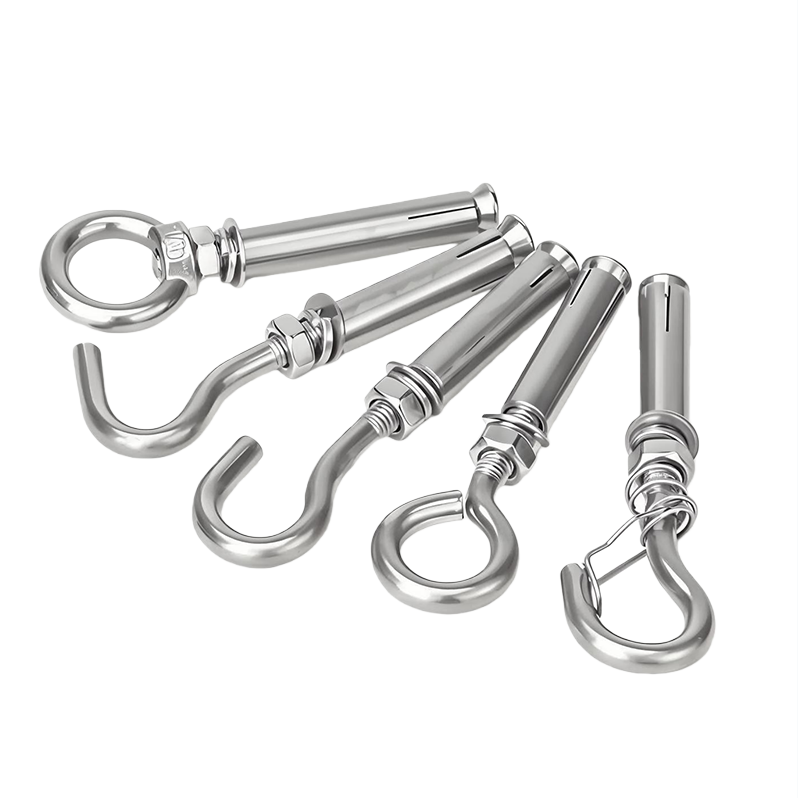
In bolted connections, applying torque (T) is a means to an end—the true objective is to achieve accurate and sufficient preload (F, i.e., axial force). Understanding the complex relationship between these two parameters is the foundation for achieving reliable fastening. Shenzhen Yongjing Precision Technology Co., Ltd. provides an in-depth analysis of the intrinsic connection between torque and preload to help you improve assembly quality.
I. Fundamental Relationship Between Torque and Preload
The torque applied to a nut or bolt head is not entirely converted into preload that tensions the bolt; rather, it is consumed in three parts:
Tf (50%): Overcoming friction between the threads (the largest proportion).
Tw (40%): Overcoming friction between the nut bearing surface and the mating part.
Tp (10%): Work used to generate the preload that elongates the bolt (useful work).
This relationship can be expressed by the classic formula:
T = K × F × d
T: Tightening torque (N·m)
F: Preload (N, i.e., axial force)
d: Nominal bolt diameter (m)
K: Torque coefficient (dimensionless)
II. The Decisive "K" Factor – Torque Coefficient
The torque coefficient K is a comprehensive variable that reflects the influence of friction conditions on the efficiency of torque-to-preload conversion. Its calculation formula is:
K = (1/2d) × [ (p/π) + (μth × d₂ / cosβ) + (μb × dm ) ]
(Where p is thread pitch, μth is thread friction coefficient, d₂ is pitch diameter, β is half the thread angle, μb is bearing surface friction coefficient, and dm is the equivalent friction diameter of the bearing surface.)
This demonstrates that the K value is primarily governed by the thread friction coefficient (μth) and the bearing surface friction coefficient (μb). Any factor affecting these friction coefficients will cause fluctuations in the K value, resulting in scattered preload values under the same applied torque.
III. Key Factors Affecting Friction Coefficient and K Value
Surface treatment and coatings: Different coatings such as zinc plating, phosphating, and Dacromet exhibit vastly different friction coefficients.
Lubrication condition:
Dry friction: High and unstable friction coefficient, large K value, wide preload scatter.
Lubricating oils/greases: Significantly reduce and stabilize the friction coefficient—this is the most effective method for controlling K value.
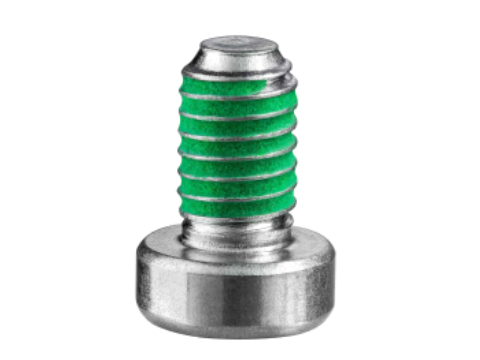
Pre-applied coatings (microcapsules): Release lubricant upon rupture during tightening, providing both anti-loosening and stable friction coefficient.
Fastener quality: Thread precision, surface roughness, bearing surface flatness.
Mating part condition: Surface hardness, roughness, flatness.
Tightening speed: Generally, lower speeds facilitate the formation of a stable lubricant film, yielding a more stable K value.
IV. Methods for Controlling Preload
1. Torque Method:
Principle: Direct control of tightening torque T, based on the formula T = K × F × d.
Advantages: Simple, low cost, most widely used.
Disadvantages: Low preload accuracy (scatter up to ±30%) due to K value fluctuations.
Improvement: Accuracy can be enhanced by experimentally determining the average K value for a specific combination (bolt + nut + washer + lubricant).
2. Torque-Turn Method (Torque-Angle Method):
Principle: Initially tighten with a small torque (snug torque) to bring parts into contact, then rotate the nut through a specified angle from that point.
Advantages: Utilizes the linear elongation characteristic of bolts within their elastic range; offers high preload accuracy (±15%) and overcomes the influence of friction coefficient variations.
Disadvantages: Requires intelligent tightening tools capable of measuring both torque and angle; demands high consistency in bolt stiffness.
Applications: Critical connections such as automotive engines and chassis.
3. Yield-Point Control Method:
Principle: Monitors the slope change of the torque-angle curve and tightens until the bolt just reaches its yield point.
Advantages: Maximizes material load capacity; offers the highest preload accuracy (±8%).
Disadvantages: Complex equipment and algorithms; bolts are single-use only, resulting in higher cost.
4. Direct Axial Force Measurement Method:
Principle: Uses hydraulic tensioners or bolts with ultrasonic length-measuring capability to directly measure or control bolt elongation, thereby precisely calculating preload.
Advantages: Highest accuracy.
Disadvantages: High cost, low efficiency; suitable for large bolts and special applications.
Conclusion
For the vast majority of applications, the torque method remains the preferred choice. However, the key to its success lies in stabilizing and reducing the scatter of the torque coefficient K. Shenzhen Yongjing Precision Technology Co., Ltd. recommends that for critical connections, a "fastener system" approach should be adopted—specifying a complete kit including bolt, nut, washer, and lubricant—and conducting torque coefficient testing to determine the most scientific and reliable assembly torque. We can provide relevant test data and technical support to ensure every critical connection you make is precise and reliable.
Professional consultant team online, ready to provide solutions for you
Contact NowProducts
Solutions
Applications
Contact
 Contact
 WeChat
Contact: Manager Fan - Tel/WeChat: 135-6073-0094 Email: Flora.Fan@toprecision.com | Manager Ao - Tel/WeChat: 13560729614 Email: Olia.Ao@toprecision.com
Sales Director: Mr. Zhang - Tel: 13510369429 Email: xiaowei.zhang@zcjtech.com
© Copyright 2011 - 2026 Shenzhen Toprecision Precision Technology Co., Ltd. All Rights Reserved.
 粤ICP备2025493240号-1


Cutter Screws
Thread Inserts
Sealing Products
Riveting Products
Locking Products
Direct Assembly
SMT Components
Precision Screws
Screwdriver Bits