














 Login
Login



Products
Solutions
Applications





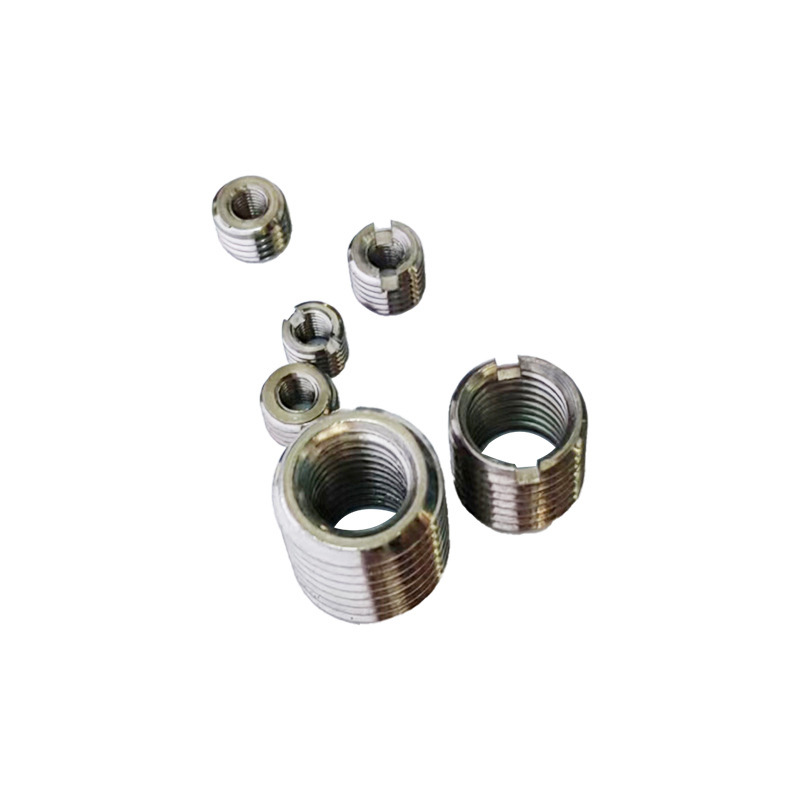
Stainless steel fasteners are widely used due to their excellent corrosion resistance and attractive appearance. However, "stainless steel" is not a single material; its internal family is large, with varying characteristics. Incorrect selection can lead to corrosion failure, insufficient strength, or cost waste. Shenzhen Yongjing Precision Technology Co., Ltd. provides you with a detailed selection guide to help you precisely match your requirements.
I. Main Types of Stainless Steel Fasteners
The corrosion resistance of stainless steel primarily originates from the chromium-rich oxide film (passivation film) formed on its surface. Based on metallurgical structure, it can be divided into the following categories:
1. Austenitic Stainless Steel
This is the most commonly used material for stainless steel fasteners and is non-magnetic.
304 (A2): General-purpose chromium-nickel austenitic stainless steel. Offers good corrosion resistance to atmosphere, fresh water, and food media. The most widely used grade.
316 (A4): Molybdenum (Mo) is added to the 304 base. Significantly improves resistance to chloride pitting and crevice corrosion. The preferred choice for marine environments or chloride-containing industrial environments.
303: Contains sulfur or selenium added to improve machinability. Corrosion resistance is slightly lower than 304; not recommended for severe corrosive environments.
2. Martensitic Stainless Steel
Can be strengthened through heat treatment and is magnetic.
410: Basic martensitic stainless steel. Can achieve relatively high strength (e.g., Grade 70) through heat treatment, but corrosion resistance is far inferior to austenitic stainless steel; suitable only for mild environments.
420: Higher carbon content; after quenching, it achieves higher hardness and wear resistance, commonly used for manufacturing screwdriver bits, etc.
3. Ferritic Stainless Steel
High chromium content with low or no nickel, magnetic, and cannot be strengthened by heat treatment.
430: Typical chromium ferritic stainless steel. Corrosion resistance is between austenitic and martensitic grades. Has good resistance to nitric acid and organic acids, but has poor toughness and is less commonly used for manufacturing high-strength fasteners.
II. Core Performance Comparison and Selection Considerations
1. Corrosion Resistance: Environment is the Primary Factor
Mild environments (indoor, dry atmosphere): 304 (A2) is fully applicable.
Highly corrosive environments (coastal areas, chemical plants, swimming pools, de-icing salt environments): 316 (A4) must be selected. The molybdenum content effectively resists chloride ion attack.
Special note – Stress Corrosion Cracking (SCC): Austenitic stainless steel is susceptible to SCC under the combined action of tensile stress and specific media (e.g., chloride ions, high-temperature water). Solutions include selecting duplex stainless steel with better SCC resistance or reducing stress through design.
2. Strength Grades
Austenitic stainless steel (304, 316): Strength grades are typically marked as A2-70 or A4-80. The "70" and "80" represent 1/10 of the nominal tensile strength (i.e., 700 MPa and 800 MPa, respectively). This means the upper strength limit of austenitic stainless steel is approximately 800 MPa (A4-80), lower than high-strength alloy steel.
Martensitic stainless steel (410): Can achieve 700 MPa or even higher strength through heat treatment, meeting many strength-requiring applications.
3. Magnetism
Austenitic stainless steel is generally non-magnetic or weakly magnetic in the solution-annealed condition. However, cold working (such as cold heading, thread rolling) may induce partial martensitic transformation, thereby exhibiting weak magnetism.
Martensitic and ferritic stainless steels are both magnetic. If your application requires non-magnetic properties (e.g., electromagnetic instruments, certain electronic devices), you should explicitly specify and verify the non-magnetic nature of the austenitic material.
4. Thread Galling (Seizing)
Stainless steel, especially between similar austenitic grades, is prone to thread galling during tightening.
Causes: Poor thermal conductivity (friction heat is not easily dissipated); strong work-hardening tendency; tendency for oxide film adhesion.
Preventive measures:
Use lubricants: Specialized anti-seize pastes (containing molybdenum disulfide, graphite, etc.) are essential.
Reduce tightening speed: Avoid rapid accumulation of friction heat.
Different material combinations: For example, use A4-80 bolts with phosphated or zinc-plated carbon steel nuts (if the environment permits).
Use different grades: Select bolts and nuts of different hardness stainless steel grades.
5. Cost Considerations
316 is generally more expensive than 304 due to the addition of molybdenum. Rational selection can save costs while meeting performance requirements.
III. Recommended Selection Process
Define the corrosive environment: This is the primary step. Determine the presence of chlorides, acid/alkaline media, their concentrations, and temperature.
Determine strength requirements: Calculate the minimum preload required for the connection and deduce the required bolt performance grade. Avoid blindly pursuing higher strength.
Check special requirements: Is non-magnetic property required? Are there high- or low-temperature operating conditions?
Formulate an anti-galling strategy: Based on assembly process and conditions, determine the lubrication plan.
Make the final selection: Based on the above factors, select the most economical and applicable material grade and performance level.
Conclusion
The selection of stainless steel fasteners is a process of balancing corrosion resistance, strength, physical properties, and cost. Shenzhen Yongjing Precision Technology Co., Ltd. recommends consulting professional technical personnel for complex or critical applications. We offer a full range of stainless steel fasteners—from 304 and 316 to higher grades—and can provide complete solutions including material verification and lubrication recommendations tailored to your specific requirements, ensuring durable and reliable connections.
Professional consultant team online, ready to provide solutions for you
Contact NowProducts
Solutions
Applications
Contact
 Contact
 WeChat
Contact: Manager Fan - Tel/WeChat: 135-6073-0094 Email: Flora.Fan@toprecision.com | Manager Ao - Tel/WeChat: 13560729614 Email: Olia.Ao@toprecision.com
Sales Director: Mr. Zhang - Tel: 13510369429 Email: xiaowei.zhang@zcjtech.com
© Copyright 2011 - 2026 Shenzhen Toprecision Precision Technology Co., Ltd. All Rights Reserved.
 粤ICP备2025493240号-1

Cutter Screws
Thread Inserts
Sealing Products
Riveting Products
Locking Products
Direct Assembly
SMT Components
Precision Screws
Screwdriver Bits