



















 Login
Login



Products
Solutions
Applications





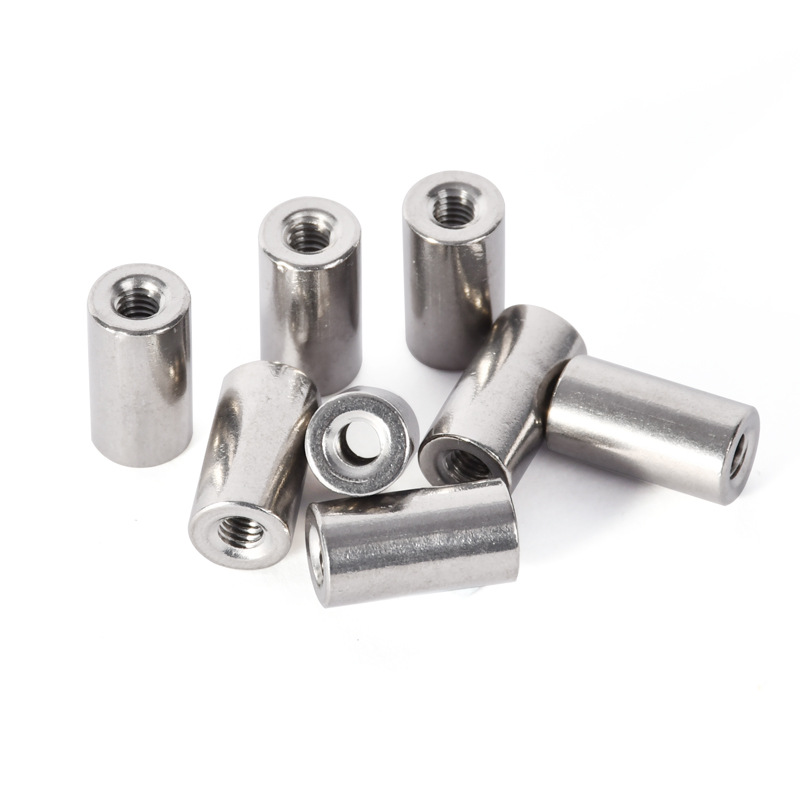
Anti-loosening is an eternal theme in the field of fastening technology. Faced with harsh operating conditions such as vibration, impact, and variable loads, the reliability of a single bolt-nut connection is often inadequate. Shenzhen Yongjing Precision Technology Co., Ltd. systematically reviews mainstream anti-loosening technologies and categorizes them into three major approaches, helping you build a robust anti-loosening system.
I. Overview of Anti-Loosening Technology Classification
Based on their working principles, anti-loosening technologies can be divided into three categories:
Friction-based anti-loosening: Achieves anti-loosening by increasing or maintaining friction within the threaded pair.
Mechanical anti-loosening: Uses additional components to directly prevent relative rotation between the nut and bolt.
Permanent anti-loosening: Prevents disassembly by destroying the relative movement of the threaded pair.
II. Friction-Based Anti-Loosening Technologies
This category is the most widely used, primarily achieving anti-loosening by increasing pressure or altering the friction coefficient.
1. Spring Washers
Split lock washers:
Principle: Utilizes the sharp corners of the split ring to bite into the bearing surfaces and the nut, along with the elastic rebound force of the washer itself, to provide some anti-loosening effect.
Evaluation: Limited anti-loosening effectiveness, especially under strong vibration. Mostly used in non-critical connections. Not recommended for use with softer base materials (such as aluminum alloys) to avoid surface scoring.
Curved/Belleville-type spring washers: Provide flexible spring pressure, suitable for applications requiring thermal expansion compensation or with soft base materials.
2. Self-Locking Nuts
This is one of the most effective friction-based anti-loosening methods.
Nylon-insert lock nuts: Utilize the elasticity of nylon to generate continuous radial pressure. Reliable and reusable.
All-metal lock nuts: Generate radial pressure through elastic deformation (recessed, slotted) of the metal portion. High-temperature resistant.
Spiralock nuts: Use a wedge-shaped ramp at the thread root to lock onto the bolt thread under load, achieving excellent anti-loosening without damaging the bolt.
3. Double Nuts (Jam Nuts)
Principle: Two nuts are tightened against each other, extending the stressed length of the bolt thread and increasing friction through tension between the nuts.
Evaluation: Simple method, but increases weight and dimensions. Anti-loosening effectiveness is not optimal and is gradually being replaced by more reliable solutions in modern designs.
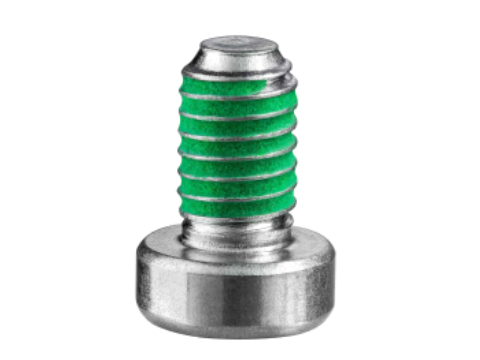
4. Thread-Locking Adhesives
Principle: Anaerobic liquid adhesives are applied to thread surfaces. After assembly, they cure in the absence of air, forming a high-friction thermosetting plastic that effectively fills thread clearances and prevents loosening.
Advantages: Combines anti-loosening and sealing functions, suitable for any threaded pair, uniform distribution.
Disadvantages: Requires significant torque for disassembly; some grades require heating for removal; single use.
Grades: Low strength (removable), medium strength (removable), and high strength (permanent).
III. Mechanical Anti-Loosening Technologies
These technologies use physical interference to directly lock the connection, offering very high reliability.
1. Cotter Pins and Castle Nuts
Principle: After the nut is tightened, a cotter pin is inserted through the slots in the nut and the hole at the end of the bolt, and the pin ends are bent apart, physically preventing nut rotation.
Advantages: Absolutely reliable; the preferred choice for critical safety applications.
Disadvantages: Assembly is cumbersome; requires pre-drilled holes in the bolt; the nut cannot be locked at arbitrary positions.
2. Lock Wire (Safety Wire)
Principle: Low-carbon steel wire is passed through dedicated holes in a group of nuts and tightened in a "series" manner (so that any tendency for one nut to loosen tightens the others).
Advantages: Reliable; suitable for groups of nuts, such as on engine cylinder heads.
Disadvantages: Assembly is time-consuming; requires design of dedicated holes.
3. Locking Tabs/Lock Washers
Types: Internal-tab lock washers, external-tab lock washers, single-ear/double-ear lock washers.
Principle: One side of the washer is bent and engages into a slot on the component or nut, directly preventing rotation.
Applications: Commonly used for bearing retention and shaft-end component positioning.
IV. Permanent Anti-Loosening Technologies
Used for applications where disassembly is never intended.
Staking/Punching: After tightening, a hole is drilled at the contact point between the nut and bolt, and a punch is used to deform localized material into the hole, creating a mechanical interlock.
Welding: The nut is welded to the bolt or base material.
Bonding: High-strength (permanent) thread-locking adhesive is used.
V. Anti-Loosening Technology Selection Strategy
Assess operating conditions: Determine the severity of vibration and impact, whether frequent disassembly is needed, and the operating temperature range.
Determine the required level:
General conditions: Spring washers, double nuts.
Moderate vibration: Nylon-insert lock nuts, pre-coated nuts, low/medium-strength thread-locking adhesives.
Strong vibration and impact: All-metal lock nuts, Spiralock nuts, high-strength thread-locking adhesives, cotter pins.
Critical safety locations: Cotter pins, lock wire.
Permanent connections: Staking, high-strength thread-locking adhesives.
Consider cost and efficiency: Thread-locking adhesives and self-locking nuts are suitable for automated assembly with high efficiency; mechanical anti-loosening methods are time-consuming but offer unparalleled reliability.
Conclusion
No single anti-loosening technology is universally applicable. The most reliable designs often combine multiple technologies—for example, "self-locking nut + thread-locking adhesive." Shenzhen Yongjing Precision Technology Co., Ltd. recommends that thorough vibration testing and validation be conducted when designing anti-loosening solutions. We offer a full range of products and solutions—from friction-based to mechanical anti-loosening—and can perform testing and recommendations based on your specific operating conditions, providing the most robust anti-loosening protection for your equipment.
Professional consultant team online, ready to provide solutions for you
Contact NowProducts
Solutions
Applications
Contact
 Contact
 WeChat
Contact: Manager Fan - Tel/WeChat: 135-6073-0094 Email: Flora.Fan@toprecision.com | Manager Ao - Tel/WeChat: 13560729614 Email: Olia.Ao@toprecision.com
Sales Director: Mr. Zhang - Tel: 13510369429 Email: xiaowei.zhang@zcjtech.com
© Copyright 2011 - 2026 Shenzhen Toprecision Precision Technology Co., Ltd. All Rights Reserved.
 粤ICP备2025493240号-1


Cutter Screws
Thread Inserts
Sealing Products
Riveting Products
Locking Products
Direct Assembly
SMT Components
Precision Screws
Screwdriver Bits