






















 Login
Login



Products
Solutions
Applications





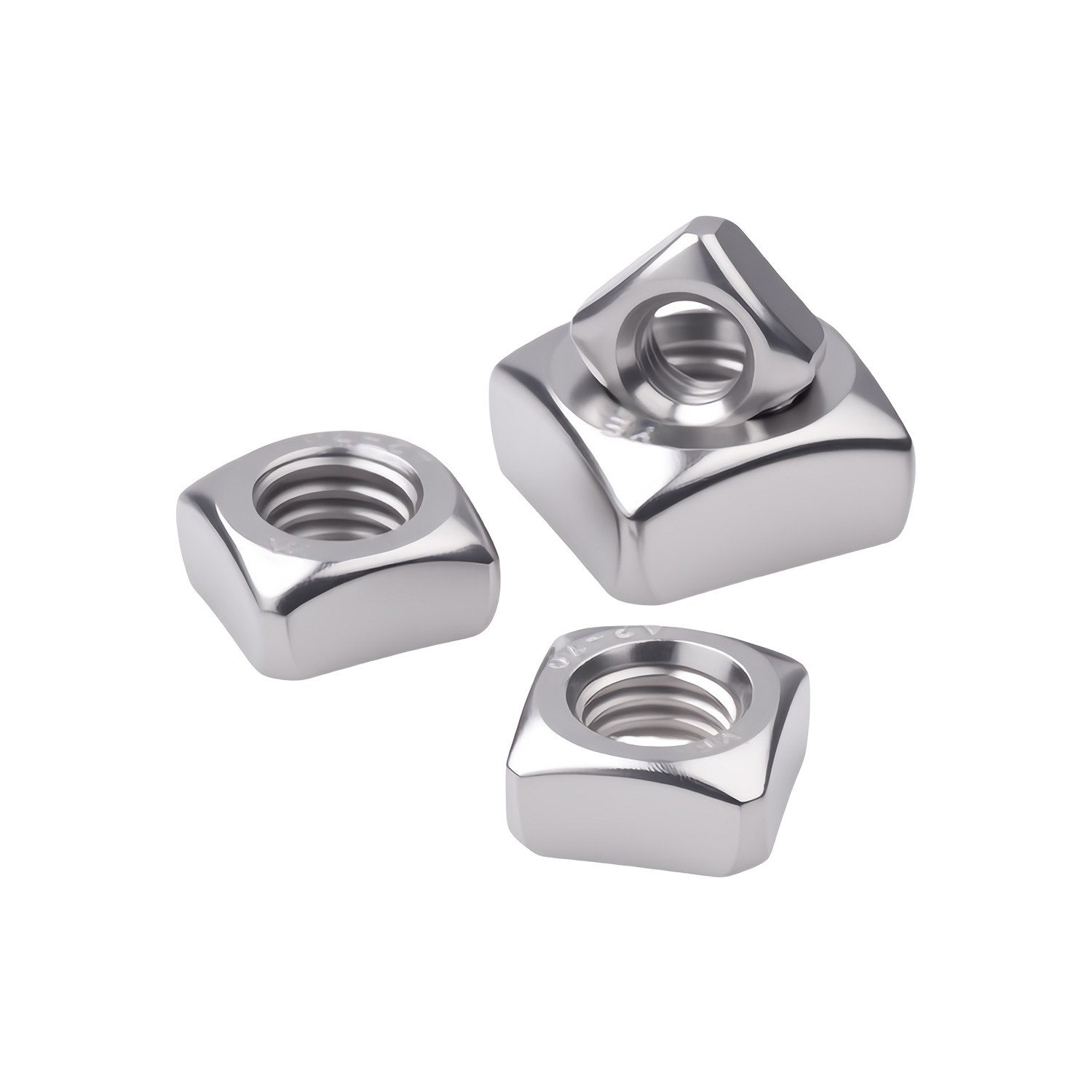
In environments with vibration, impact, and variable loads, ordinary threaded connections may loosen or even detach due to reduced friction. Lock nuts, through their specialized structural designs, provide sustained and effective anti-loosening capabilities and are critical components for ensuring the safe operation of equipment. Shenzhen Yongjing Precision Technology Co., Ltd. provides a detailed explanation of the working principles of various types of lock nuts.
I. Mechanism of Threaded Connection Loosening
Loosening primarily originates from transverse sliding. When a connection pair is subjected to a transverse load perpendicular to the bolt axis, minute relative sliding occurs on the thread contact surfaces between the bolt and nut. Each slide may cause the nut to rotate by a tiny angle ("back-off"). Over repeated cycles, the preload is progressively lost, eventually leading to complete loosening.
II. Classification and Working Principles of Lock Nuts
Based on their anti-loosening principles, lock nuts can be divided into the following major categories:
1. Friction-Type Lock Nuts
Achieve anti-loosening by increasing friction on the threaded pair or bearing surfaces.
Nylon-insert lock nuts (e.g., DIN 985, DIN 982):
Structure: A nylon ring is embedded at the top of the nut, with an inner diameter slightly smaller than the bolt diameter.
Principle: During insertion, the bolt threads compress the nylon ring, causing it to elastically deform and generate substantial radial pressure, thereby creating sustained, uniform friction across all thread contact surfaces. This friction is perpendicular to the vibration direction and effectively resists transverse sliding.
Advantages: Reliable anti-loosening, can be reused multiple times (typically more than 5 times), good vibration resistance, insulating.
Disadvantages: Not high-temperature resistant (long-term service temperature of nylon generally <120°C); unsuitable for extreme high-temperature applications.
All-metal lock nuts:
Structure: Typically achieved through deformation processes such as recessing, slotting, or flattening at the top or middle of the nut to create elastic deformation of the threads.
Principle: Similar to nylon-insert nuts, utilizing the metal's own elastic recovery force to generate radial clamping pressure on the bolt threads. Common forms include two-point recessed, three-point recessed, and elliptical recessed types.
Advantages: High-temperature resistant; performance is not affected by temperature.
Disadvantages: Fewer reuse cycles than nylon-insert lock nuts; may cause minor wear on bolt threads.
2. Mechanical Interference-Type Lock Nuts
Prevent nut rotation through direct mechanical interference.
Castle nuts with cotter pins:
Structure: Slots are cut at the top of the nut, and a radial hole is drilled through the bolt shank.
Principle: After the nut is tightened, a cotter pin is inserted through the slots in the nut and the hole in the bolt, with the pin ends bent apart to physically prevent nut rotation.
Advantages: Absolutely reliable; the best anti-loosening effectiveness.
Disadvantages: Cumbersome assembly; requires pre-drilled holes; cannot be locked at arbitrary positions.
Lock wire (safety wire):
Principle: A wire is passed through dedicated holes in a group of nuts and tightened in a series pattern. When one nut tends to loosen, the wire pulls on another nut, making it tighter.
Applications: Commonly used in aerospace, engine cylinder heads, and other applications requiring grouped nuts.
3. Structural Locking Type
Spiralock nuts:
Structure: A 30° wedge-shaped ramp is designed at the thread root of the nut.
Principle: When the bolt is threaded in, the thread crests easily slide past the wedge surface. However, when the bolt attempts to back out under load, the thread flanks are caught by the wedge surface, converting radial force into force that lifts the bolt, thereby tightening it further.
Advantages: Excellent anti-loosening performance; does not damage the bolt; reusable.
Double nuts (e.g., Tang's nuts):
Principle: Two nuts with opposite threads are used, with the tightening force of the upper nut counteracting the loosening force of the lower nut. Alternatively, one thin and one thick nut with the same thread direction are used—the thin nut is tightened first, then the thick nut is jammed against it.
Advantages: Low cost, simple.
Disadvantages: Increases connection dimensions and weight; anti-loosening effectiveness is not optimal.
III. Selection Guide
General vibration environments: Nylon-insert lock nuts are the most cost-effective choice.
High-temperature environments (>120°C): Choose all-metal lock nuts or Spiralock nuts.
Frequent disassembly required: Nylon-insert lock nuts or Spiralock nuts.
Critical safety applications, strong impact: Prioritize mechanical locking methods such as castle nuts with cotter pins.
Soft base materials (e.g., aluminum): Lock nuts can distribute loads and protect the base threads.
Conclusion
Selecting the correct lock nut requires comprehensive consideration of vibration intensity, operating temperature, disassembly frequency, cost, and space constraints. Shenzhen Yongjing Precision Technology Co., Ltd. offers a full range of lock nut products—from standard nylon-insert lock nuts to high-performance all-metal and Spiralock nuts. Our technical experts can help you analyze your operating conditions and recommend the most suitable anti-loosening solution, equipping your equipment with reliable "anti-loosening armor."
Professional consultant team online, ready to provide solutions for you
Contact NowProducts
Solutions
Applications
Contact
 Contact
 WeChat
Contact: Manager Fan - Tel/WeChat: 135-6073-0094 Email: Flora.Fan@toprecision.com | Manager Ao - Tel/WeChat: 13560729614 Email: Olia.Ao@toprecision.com
Sales Director: Mr. Zhang - Tel: 13510369429 Email: xiaowei.zhang@zcjtech.com
© Copyright 2011 - 2026 Shenzhen Toprecision Precision Technology Co., Ltd. All Rights Reserved.
 粤ICP备2025493240号-1


Cutter Screws
Thread Inserts
Sealing Products
Riveting Products
Locking Products
Direct Assembly
SMT Components
Precision Screws
Screwdriver Bits