














 Login
Login



Products
Solutions
Applications


Tool Screws
Thread Inserts
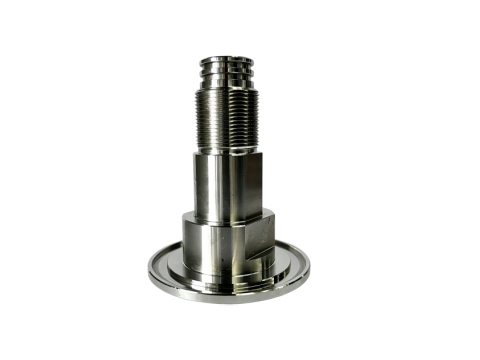
Sealing Products
Riveting Products
Locking Products
Direct Assembly
UQD
SMT Chips
Precision Screws
Screwdriver Bits
Other Screws
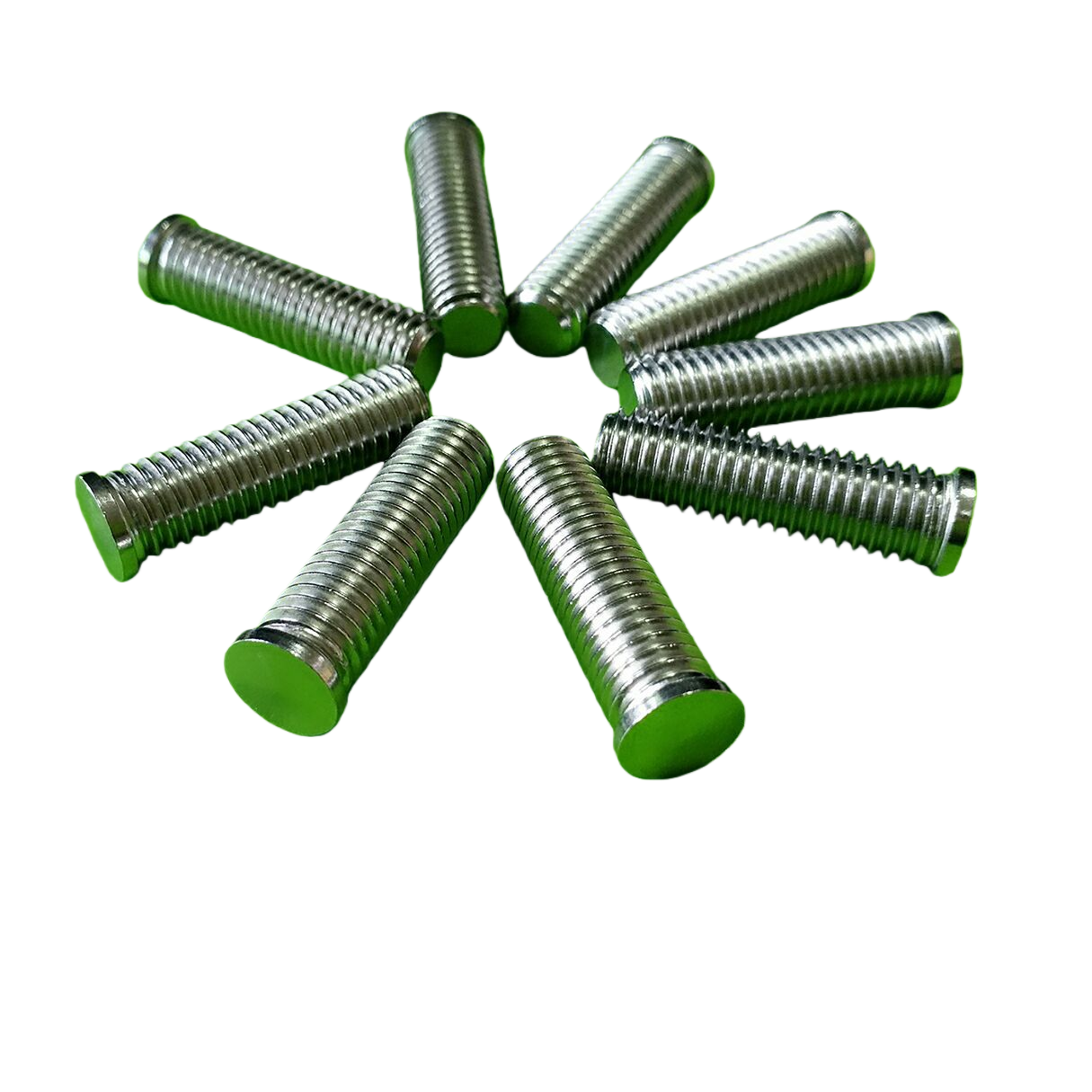
Tool Screws
High-precision cutting fit, firm fastening, ensuring stable tool operation
Thread Inserts
Expert in precision thread repair, high strength and durability, stable locking without loosening
Riveting Products
Integral riveting molding, firm connection, compression resistant and not easy to loose
Locking Products
Multiple locking and anti-loosening, shockproof and stable, resist vibration for continuous fastening
Direct Assembly
Auxiliary-free convenient assembly, precise alignment, simplified process for efficient installation
UQD
Quick release buckle design, smooth docking, easy disassembly and assembly, universal efficiency
SMT Chips
Precision chip fitting, flat adhesion, suitable for automated mounting operations
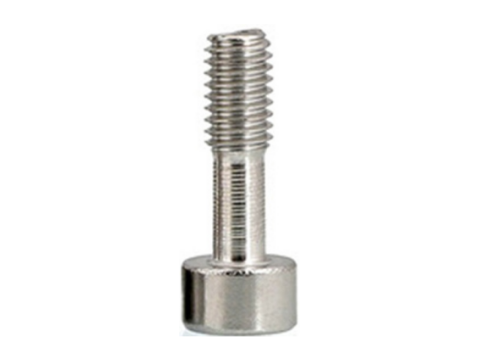
Precision Screws
Micron-level precision molding, standard size, suitable for various precision components
Screwdriver Bits
High-precision bits, strong toughness and wear resistance, precise engagement for efficient operation
Others
Universal specification fit, stable fastening, meet various conventional assembly needs
Engineering Plastics
Light Alloys

PCB Applications
Sheet Metal Applications

Hard Alloys
Locking Applications
Lightweight Applications

Waterproof Sealing
Multi-function Applications
Surface Treatment
Miniature Precision
Ultra-high Strength Bolts

Magnesium Alloy Galvanic Corrosion

Humanoid Robots
Carbon Fiber Materials
 Ask me anything
 Contact information for headquarters sales
Contact information for Indonesia sales
Contact information for India sales
Contact information for headquarters sales
Contact information for Indonesia sales
Contact information for India sales



Thread Inserts

Screwdriver Bits

Inserts

Riveting Products

Locking Products

Direct Assembly

SMT Chips

Precision Screws

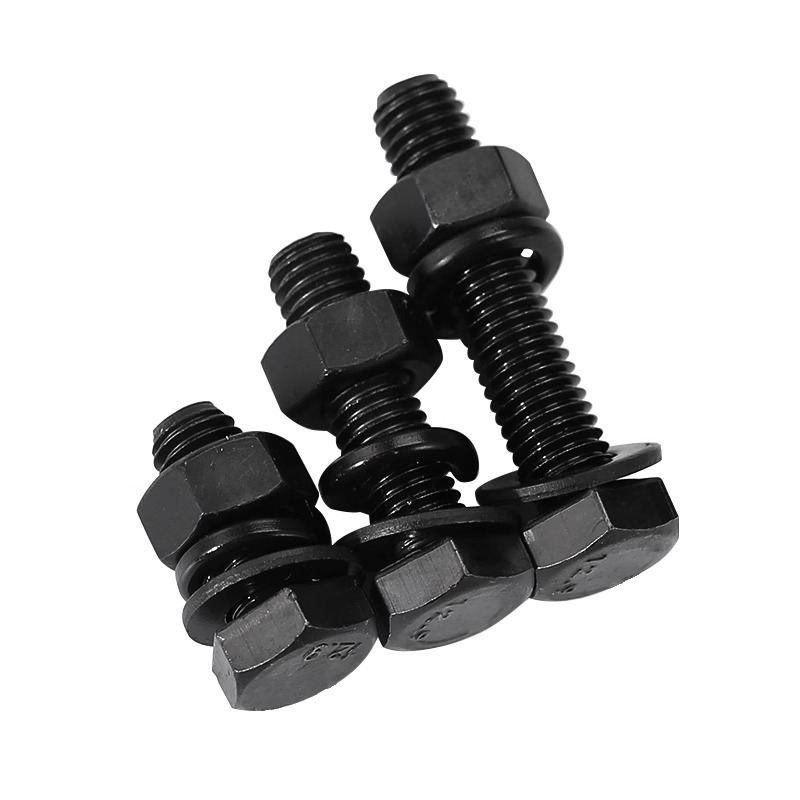
The second category is alloy structural steel, which is the "workhorse material" for high-strength bolts. It covers multiple steel grades such as 40Cr, 42CrMo, SCM435, and 35CrMoA, suitable for bolts from grade 8.8 to grade 12.9, and widely used in core fields such as automotive, wind power, and construction machinery. 40Cr steel is a classic choice for grade 10.9 bolts, with carbon content of 0.37%-0.44% and chromium content of 0.80%-1.10%. The addition of chromium improves hardenability and wear resistance. After quenching and tempering (quenching at 850°C + tempering at 520°C), the tensile strength can reach over 1000 MPa, with yield strength ≥900 MPa. With moderate cost and stable performance, it is the preferred material for automotive transmission bolts and construction machinery flange bolts.
42CrMo steel is the benchmark material for grade 12.9 bolts. Based on 40Cr, it adds 0.15%-0.25% molybdenum. Molybdenum significantly improves the material's high-temperature strength and tempering stability. After quenching and tempering (quenching at 860°C + tempering at 540°C), the tensile strength can reach over 1200 MPa, with yield strength ≥1080 MPa, and the performance is stable within a temperature range of -20°C to 300°C. This material has excellent comprehensive mechanical properties, offering both high strength and good toughness, suitable for extreme heavy-load scenarios such as engine cylinder head bolts and wind power main shaft bolts. SCM435 steel (Japanese grade, corresponding to domestic 35CrMo steel) has similar properties to 42CrMo. Due to its high smelting purity and low inclusion content, it is widely used in the high-end automotive sector, with fatigue life more than 20% higher than ordinary 42CrMo steel.
35CrMoA steel is an alloy steel containing vanadium. Vanadium refines the grain structure and improves the material's fatigue strength. After quenching and tempering, the tensile strength can reach 980 MPa, suitable for grade 10.9 bolts, especially for high-frequency vibration conditions such as automotive drive shaft bolts and generator end cover bolts. The core advantage of these alloy structural steels is the "balance between strength and toughness." By adjusting alloying element content and the quenching and tempering process, they can precisely match different strength grade requirements, making them the mainstream development direction for high-strength bolt materials.
The third category is special-purpose materials for specific working conditions, designed with customized alloy compositions for extreme environments such as high temperature, corrosion, and low temperature. For high-temperature conditions (such as boilers and steam turbines), 30CrMoTiA steel is commonly used. Its titanium content improves high-temperature stability, maintaining more than 80% of room-temperature strength at 400°C, suitable for grade 8.8 high-temperature bolts. For corrosive environments (such as offshore platforms), 2205 duplex stainless steel is used, containing 22% chromium and 5% nickel. After quenching and tempering, it not only achieves a tensile strength of 1000 MPa (grade 10.9) but also provides excellent salt spray corrosion resistance, with a corrosion life more than 10 times that of ordinary zinc-plated bolts. For low-temperature conditions (such as polar construction machinery), 16MnNiCrMoV steel is selected. The nickel content improves low-temperature toughness, maintaining impact toughness ≥40 J even at -60°C, avoiding brittle fracture of the bolt.
Material selection must also be deeply coordinated with the quenching and tempering process to maximize performance potential. Taking the manufacture of a grade 12.9 bolt from 42CrMo steel as an example: the quenching temperature must be precisely controlled at 850-870°C, with holding time calculated based on diameter (30 minutes per 10 mm of thickness) to ensure complete austenitization. The cooling medium is fast oil to avoid pearlite precipitation. The tempering temperature is controlled at 520-550°C, achieving a balance of "high strength + high toughness" through a tempered martensite structure. If the tempering temperature is too high, strength decreases; if too low, toughness is insufficient, leading to brittleness. Therefore, the compatibility of material and process is key to meeting the performance requirements of high-strength bolts.
With the development of high-end equipment manufacturing, high-strength bolt materials are moving toward "higher strength, better toughness, and greater resistance to extreme environments." For example, the aerospace industry has begun to use grade 14.9 bolts made of 40CrNiMoA steel. After vacuum smelting and quenching and tempering, the tensile strength reaches 1400 MPa, while also providing excellent fatigue life. The new energy vehicle industry is driving material lightweighting, developing aluminum alloy high-strength bolts that achieve grade 8.8 strength while reducing weight by 30% through microalloying and aging treatment. The research, development, and application of these new materials are continuously pushing the performance boundaries of high-strength bolts.
In summary, the material selection for high-strength bolts is the combined result of "standard constraints, performance matching, and working condition adaptation." From high-quality carbon steel to high-end alloy steel, from conventional conditions to extreme environments, each material has a clear position. For manufacturers, precise control of material element content and the quenching and tempering process is required. For users, scientific material selection must combine strength grade requirements with working conditions. Only in this way can high-strength bolts truly play their role as the "industrial backbone," building a solid foundation for the safe operation of high-end equipment. In the future, with advances in materials science and heat treatment technology, high-strength bolt materials will achieve even more precise performance customization, driving the fastener industry toward higher-end development.
Professional consultant team online, ready to provide solutions for you
Contact NowProducts
Solutions
Applications
Contact
 Contact
 WeChat
Contact: Manager Fan - Tel/WeChat: 135-6073-0094 Email: Flora.Fan@toprecision.com | Manager Ao - Tel/WeChat: 13560729614 Email: Olia.Ao@toprecision.com
Sales Director: Mr. Zhang - Tel: 13510369429 Email: xiaowei.zhang@zcjtech.com
© Copyright 2011 - 2026 Shenzhen Toprecision Precision Technology Co., Ltd. All Rights Reserved.
 粤ICP备2025493240号-1
Cutter Screws
Thread Inserts
Sealing Products
Riveting Products
Locking Products
Direct Assembly
SMT Components
Precision Screws
Screwdriver Bits