















 Login
Login



Products
Solutions
Applications


Tool Screws
Thread Inserts
Sealing Products
Riveting Products
Locking Products
Direct Assembly
UQD
SMT Chips
Precision Screws
Screwdriver Bits
Other Screws
Tool Screws
High-precision cutting fit, firm fastening, ensuring stable tool operation
Thread Inserts
Expert in precision thread repair, high strength and durability, stable locking without loosening
Riveting Products
Integral riveting molding, firm connection, compression resistant and not easy to loose
Locking Products
Multiple locking and anti-loosening, shockproof and stable, resist vibration for continuous fastening
Direct Assembly
Auxiliary-free convenient assembly, precise alignment, simplified process for efficient installation
UQD
Quick release buckle design, smooth docking, easy disassembly and assembly, universal efficiency
SMT Chips
Precision chip fitting, flat adhesion, suitable for automated mounting operations
Precision Screws
Micron-level precision molding, standard size, suitable for various precision components
Screwdriver Bits
High-precision bits, strong toughness and wear resistance, precise engagement for efficient operation
Others
Universal specification fit, stable fastening, meet various conventional assembly needs
Engineering Plastics
Light Alloys

PCB Applications
Sheet Metal Applications

Hard Alloys
Locking Applications
Lightweight Applications

Waterproof Sealing
Multi-function Applications
Surface Treatment
Miniature Precision
Ultra-high Strength Bolts

Magnesium Alloy Galvanic Corrosion

Humanoid Robots
Carbon Fiber Materials
 Ask me anything
 Contact information for headquarters sales
Contact information for Indonesia sales
Contact information for India sales
Contact information for headquarters sales
Contact information for Indonesia sales
Contact information for India sales



Thread Inserts

Screwdriver Bits

Inserts

Riveting Products

Locking Products

Direct Assembly

SMT Chips

Precision Screws

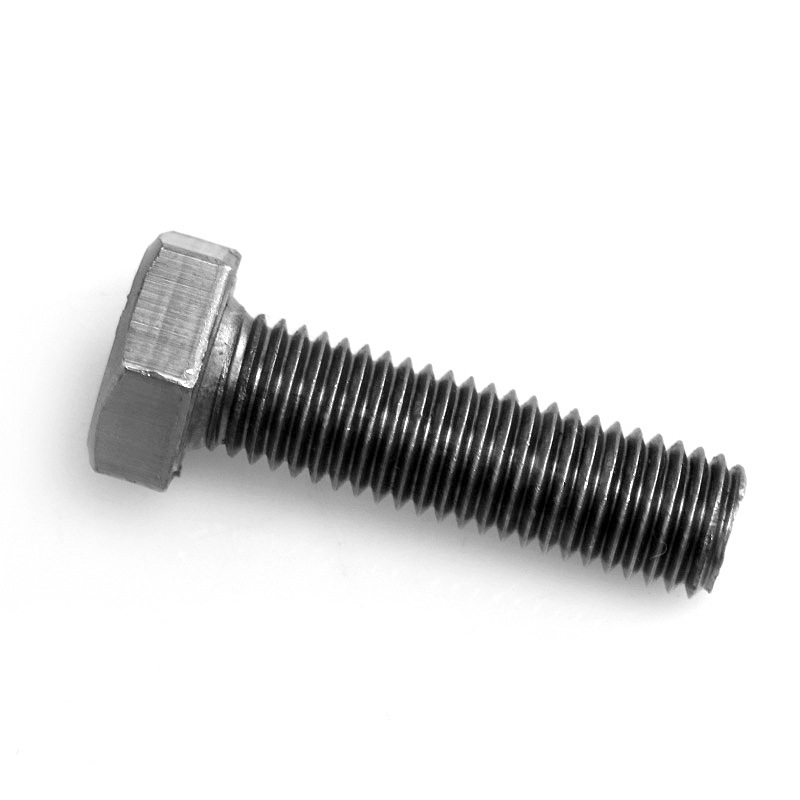
On industrial work sites, problems caused by bolt loosening are common: loose chassis bolts in automobiles cause abnormal driving noises, loose wind power flange bolts cause equipment vibration, and even loose bolts in building steel structures create safety hazards. More insidiously, bolt loosening reduces preload, leading to a reduction in fatigue life of more than 50%. Many practitioners are puzzled: why do bolts of the same specification from others stay tightly fastened for a long time while theirs loosen frequently? In fact, long-lasting bolt tightness is by no means achieved by brute force tightening. It is the result of preload control, anti-loosening solutions, material processes, and assembly details working together. The core secrets behind this are worth analyzing in depth.
Precise control of preload is the primary prerequisite for bolts to "tighten securely." Many people have a misconception: they think the tighter the bolt, the better. This is not true. Insufficient preload leads to insufficient friction between thread pairs, making them prone to slipping under vibration. Excessive preload causes the bolt to exceed its yield limit, leading to plastic deformation or even fracture. The key operation that others perform is to control preload through quantitative means rather than relying solely on experience.
Mainstream preload control methods are divided into three levels. The basic torque control method sets the torque value of the tightening tool, suitable for scenarios such as furniture and light steel structures, but it is significantly affected by friction coefficient, with an error of ±15%. The more advanced torque-angle control method first tightens to a snug torque, then rotates by a fixed angle, precisely controlling force through bolt elongation, reducing error to ±5%. This is the preferred method for critical applications such as automotive engine cylinder heads. One automaker adopted the process of "50 N·m pre-tightening + 90° turn," controlling preload fluctuation within 3%. The high-end yield point control method monitors the sudden change in the torque-angle curve to determine the yield point, with an error of less than ±3%, suitable for extreme conditions such as aerospace.
Scientifically adapted anti-loosening measures are the core guarantee for bolts to "stay tight for a long time." Anti-loosening is not a single solution; it must be selected based on working conditions. Mechanical anti-loosening, with its reliability of physical locking, serves as a "safety valve" for severe vibration scenarios. For example, crankshaft bolts in construction machinery use a "cotter pin + slotted nut" combination. After tightening, the cotter pin is bent to lock it, remaining tight for years under high-frequency vibration. Friction anti-loosening wins with convenient assembly and disassembly. Nylon insert lock nuts, commonly used in automotive interior bolts, use a nylon ring to squeeze and fill the thread gap, providing three times the anti-loosening effect of ordinary nuts. Chemical anti-loosening achieves "seamless locking" through adhesives. After applying medium-strength threadlocker to sensor screws in electronic equipment, the cured adhesive layer provides 15 MPa shear strength, both locking and sealing.
Under complex working conditions, "combined anti-loosening" shows even greater advantages. Wind power flange bolts use a scheme of "torque-angle tightening + wedge-locking washer + threadlocker," operating stably for 20 years in environments from -40°C to 120°C. Automotive engine cylinder head bolts use a combination of "lock nut + cotter pin," balancing maintenance convenience with heavy-duty vibration reliability. These combination strategies achieve anti-loosening effects where 1+1 > 2.
Precise matching of material and heat treatment provides the "innate foundation" for fastening performance. For bolts of the same specification, material differences lead to vastly different fastening results. Others select according to needs: Q235 carbon steel for light-load scenarios, 42CrMo alloy steel for heavy-load scenarios. After quenching and high-temperature tempering, the tensile strength increases from 400 MPa to over 1200 MPa, making them grade 12.9 high-strength bolts. For corrosive environments such as offshore platforms, 316L stainless steel is selected, combined with passivation treatment, providing both corrosion protection and strength, avoiding thread seizure caused by rust.
Attention to assembly process details is the "last line of defense" for fastening effectiveness. Cleanliness, often overlooked, is actually a hidden risk of loosening. Oil and rust on thread surfaces reduce the friction coefficient by 20%, leading to insufficient actual preload. Professional operations first clean the threads with alcohol, allow them to dry, and then apply specialized lubricating grease to ensure a stable friction coefficient. Tightening sequence also hides secrets. For multi-bolt connections such as flanges, diagonal symmetrical tightening is required, applying force gradually over 2-3 rounds to ensure uniform stress distribution among all bolts. After wind power flanges adopted this method, the probability of loosening failure decreased by 60%.
Additionally, customized design for working conditions is indispensable. High-temperature environments require high-temperature alloy bolts with a "hot tightening process" to avoid preload loss due to thermal expansion. For equipment with frequent vibration, an elastic section is designed in the bolt shank to absorb impact energy. One construction machinery manufacturer, targeting a hydraulic system with high-frequency vibration, adopted a combination of "elastic shank bolt + toothed flange + medium-strength threadlocker," reducing the bolt loosening rate from 15% to 0.5%.
In summary, bolts from others are "tighter" because of the combined result of precise preload control, scientifically adapted anti-loosening solutions, matched material and process, and attention to assembly details. For fastener practitioners, abandoning the crude mindset of "tightening by experience" and establishing the philosophy of "quantitative control + systematic adaptation" is the only way to achieve long-lasting bolt tightness. Mastering these core secrets will not only enhance product competitiveness but also build a solid foundation for the safe operation of mechanical equipment.
Professional consultant team online, ready to provide solutions for you
Contact NowProducts
Solutions
Applications
Contact
 Contact
 WeChat
Contact: Manager Fan - Tel/WeChat: 135-6073-0094 Email: Flora.Fan@toprecision.com | Manager Ao - Tel/WeChat: 13560729614 Email: Olia.Ao@toprecision.com
Sales Director: Mr. Zhang - Tel: 13510369429 Email: xiaowei.zhang@zcjtech.com
© Copyright 2011 - 2026 Shenzhen Toprecision Precision Technology Co., Ltd. All Rights Reserved.
 粤ICP备2025493240号-1
Cutter Screws
Thread Inserts
Sealing Products
Riveting Products
Locking Products
Direct Assembly
SMT Components
Precision Screws
Screwdriver Bits